
Ever wondered how a heap of loose chicken manure, straw powder, and probiotics transforms into a uniform, dough-like mixture ready for granulation? The secret lies in the double shaft mixer and its two tirelessly working “arms.” It’s the mixing heart of any organic fertilizer line, responsible for blending disparate ingredients into a harmonious whole.
The story typically begins with a crusher, which tears bulky organics into consistent fine powder. But these powders remain segregated—some from manure, some from straw, some from mineral additives. Enter the double shaft mixer. Two parallel shafts, fitted with precisely angled paddles, rotate in opposite directions inside a U-shaped or W-shaped trough. This counter-rotating action creates a unique flow field: material is lifted from the bottom, tossed into the air, collides in the central zone, and is pulled back down the sides—forming a continuous “fold-knead-refold” cycle.
What’s even more fascinating is the “zero-gravity mixing” effect. As the high-speed paddles throw material to the top of the chamber, particles experience a brief moment of weightlessness—like water droplets in space—tumbling freely and making full contact before falling back into the mixing zone. This mechanism ensures that even materials with vastly different densities (e.g., light straw powder vs. heavy minerals) achieve exceptional uniformity within 30 seconds to a few minutes, with a coefficient of variation below 10%. If needed, an overhead spray system can add water or liquid inoculants during mixing, combining hydration with homogenization.
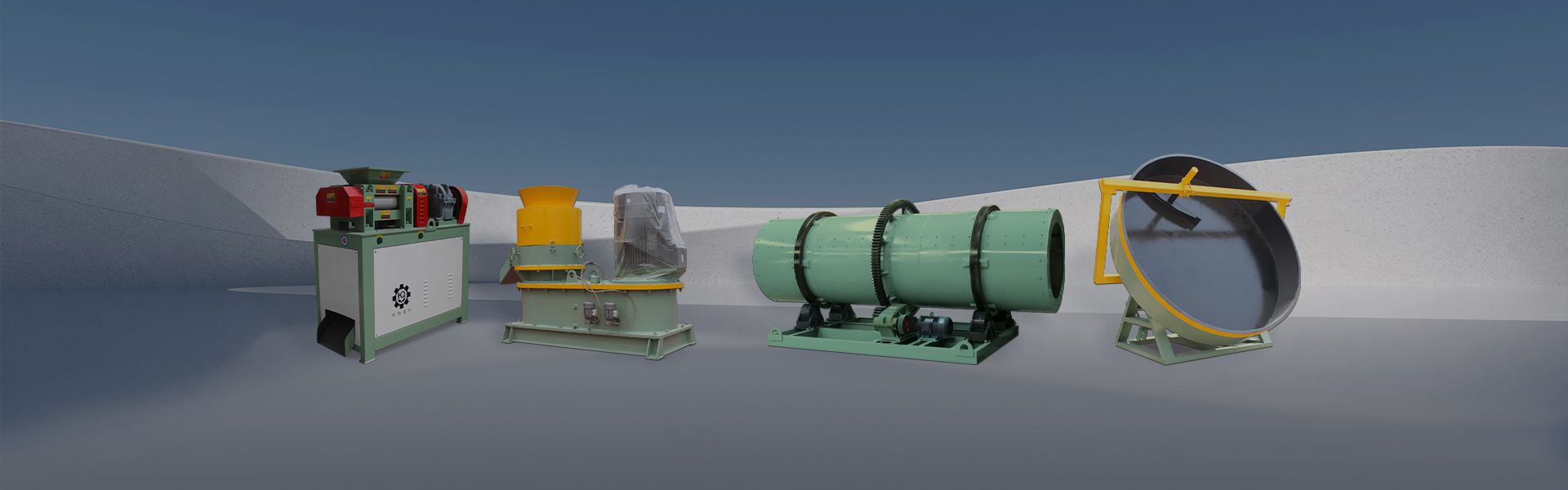
But the double shaft mixer never works alone. Its perfectly blended output flows continuously to the next station—whether a disc granulator or a rotary drum granulator. Thanks to this thorough premixing, the granulator can produce round, uniform, and strong pellets. These pellets then visit the drum fertilizer dryer, cooler, and screener; qualified ones may pass through a coater for a functional shell before finally being bagged by an automatic packer. The whole line works like a symphony, and the double shaft mixer is the timpanist—setting the rhythmic foundation of uniformity.
Compared to single-shaft designs, the double-shaft configuration offers higher efficiency and lower residue. Innovative rotor designs can achieve near-zero clearance between paddles and trough, minimizing material carryover and cross-batch contamination. Paddles are typically made of wear-resistant alloy steel or coated with tungsten carbide, ensuring long service life and low maintenance. Large models can handle over 50 tons per hour, matching the most demanding industrial requirements.
Crushing, mixing, granulating, drying, cooling, screening, coating, packaging—every link matters. And the double shaft mixer, with its perpetual dual-shaft dance, lays the foundation of uniformity for the entire process. Next time you see fertilizer pellets releasing nutrients in a field, imagine those two tireless “arms” inside the mixing trough—they are composing, with mechanical rhythm, the prelude to a bountiful harvest.