
Premium WordPress theme for construction companies, contractors, builders, and a variety of other construction-related businesses.
-
28238 Kelsie Lane Apt. 451,
Port Annabelport
-
Call Us: (210) 451-123
(Sat - Thursday)
-
Monday - Friday
(10am - 05 pm)
Double Shafts Mixer
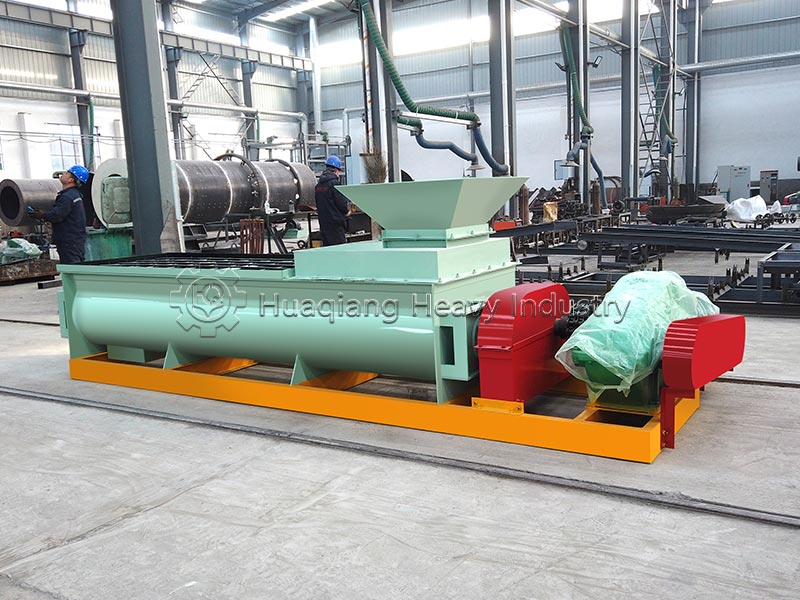
Equipment Introduction
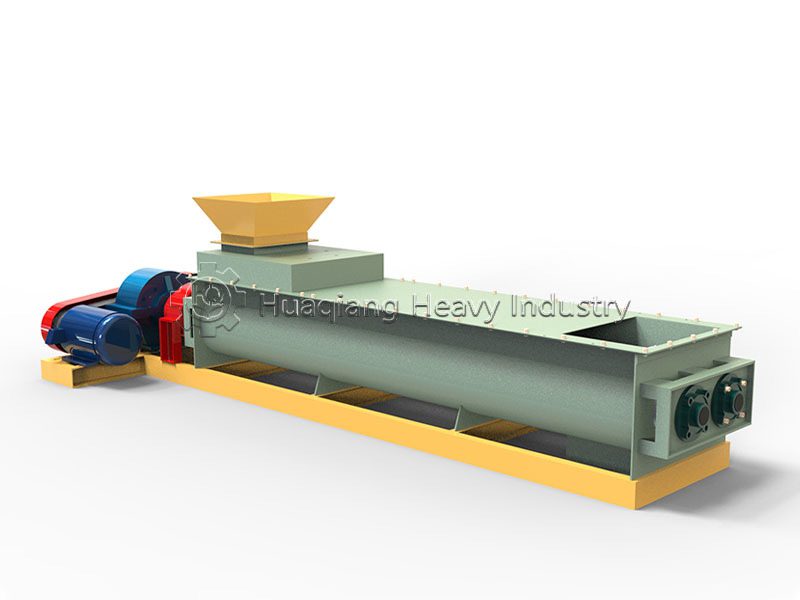
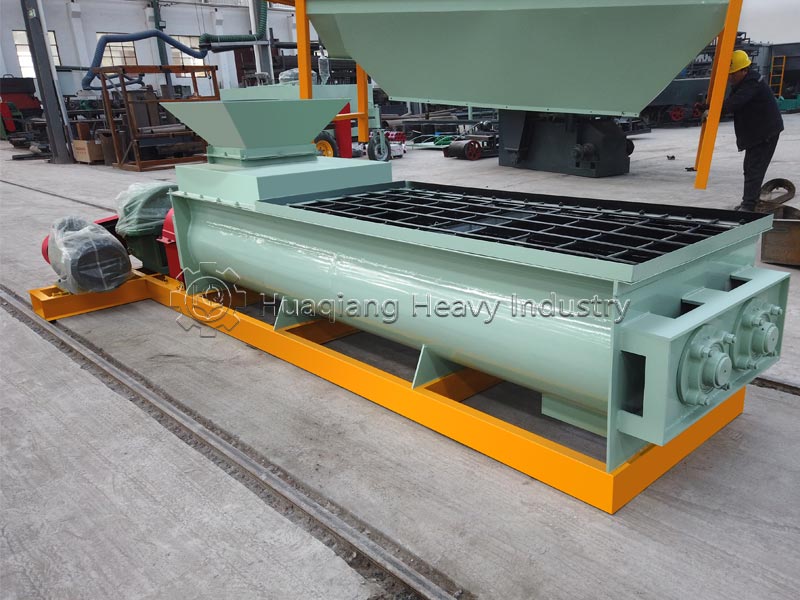
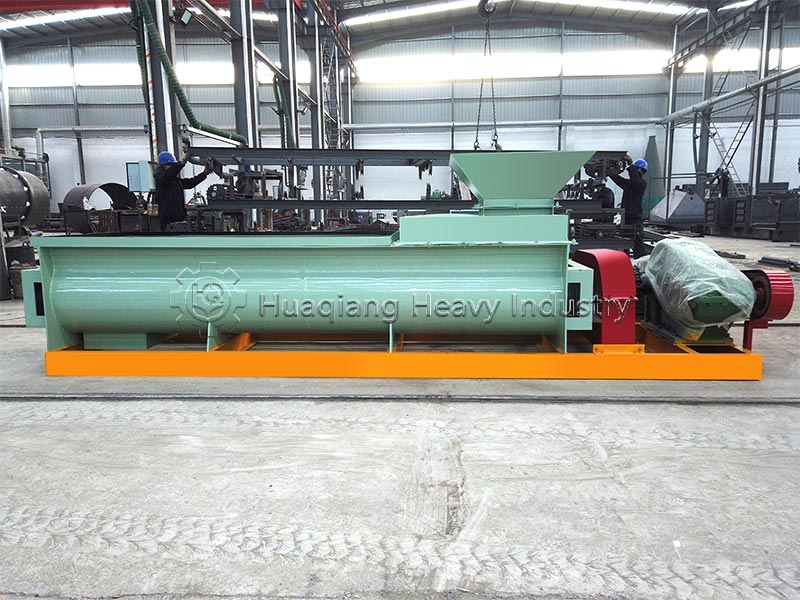
A double-shaft paddle mixer, also known as a double-shaft paddle mixer or double-shaft blade mixer, is a horizontal mixing device that uses two parallel, counter-rotating mixing shafts as its core, employing paddles to powerfully shear and convectively mix materials.
Double-shaft mixers are among the most widely used mixing equipment in industries such as organic fertilizer, compound fertilizer, chemicals, building materials, and feed. Their greatest advantages lie in their strong adaptability to high-moisture materials, high mixing efficiency, and large production capacity, effectively solving the pain points of traditional mixing equipment such as uneven mixing, inconsistent moisture content, severe dust generation, and material stratification. Unlike ordinary single-shaft or ribbon mixers, double-shaft mixers are characterized by high-moisture, non-clogging operation, fast mixing speed, and large batch production capacity, making them suitable for organic materials with high viscosity, high moisture content, and a tendency to clump, such as chicken manure, cow manure, and sheep manure.
In the fertilizer industry, double-shaft mixers are often referred to as “gravity-free mixers” or “gravity-free double-shaft paddle mixers”—when two opposing rotating shafts drive the paddles to rotate at high speed, the material forms a momentary weightless state in the overlapping area, as if it were in a weightless environment, achieving rapid and uniform mixing.
Equipment Structure Composition
(I) Drive Assembly
- Drive Motor: Three-phase asynchronous industrial motor, 30kW standard configuration for SG600 model;
- Reducer: Gear reducer, supporting synchronous transmission of dual shafts;
- Sprocket/Coupling: Ensures synchronous counter-rotation of the two shafts, requiring coaxiality and parallelism to meet standards;
- Base Frame: Integrated load-bearing base, secured with anchor bolts.
(II) Agitator Assembly
- Tank Shell: Q235 carbon steel (stainless steel optional for corrosive conditions), sealed tank with top inlet and bottom outlet;
- Dual Main Shaft Assembly (Core): Two parallel agitator shafts with staggered wear-resistant impeller end plates, spiral propulsion structure; bearing housing, seals, and gear transmission mechanism are included;
- Spray Humidification System: Water inlet pipe + multiple sets of atomizing nozzles, synchronous water addition and conditioning;
- Lubrication Components: Oil cups for each bearing, oil inlet for the reducer;
- Accessories such as inspection doors, sealing packing, and material retaining covers.
Matching Wear Parts: Impeller end plates, shaft end sealing packing, bearings, sprockets and chains, spray nozzles.
Working Principle of the Equipment
The core mechanism of the double-shaft paddle mixer is the combination of “convective mixing” and “weightlessness effect,” which can be further divided into the following processes:
- Power Transmission: The motor, after being reduced in speed by a reducer, drives the drive shaft through a coupling; the synchronous gear on the drive shaft drives the driven shaft, causing the two shafts to rotate relative to each other at the same speed (one shaft clockwise, the other counterclockwise).
- Three-Dimensional Material Motion: The paddles propel the material at a specific angle and linear velocity (typically 6–10 m/s), simultaneously generating three types of flow:
1) Axial Flow: The paddles push the material back and forth along the length of the cylinder, achieving end-to-end macroscopic exchange;
2) Radial Flow: The material is thrown upwards from the bottom by the paddles, circulating and tumbling across the cross-section;
3) Lateral Convection: The counter-rotating dual shafts create a highly turbulent zone in the central area, with the material weaving back and forth between the two shafts. 3. Zero-Gravity Mixing: When the material is propelled to its highest point by the propeller, the centrifugal force and gravity instantly cancel each other out, and the material enters a “weightless state.” At this time, particles of different densities and sizes freely cross, diffuse, and mix in the absence of gravity, fundamentally eliminating the tendency for segregation.
- Continuous Discharge: In continuous operation mode, after the material enters through the inlet, it moves towards the outlet while being stirred by the propeller blades. The residence time can be controlled by adjusting the rotation speed and feed rate, and it is finally discharged uniformly from the outlet.
Applicable Raw Materials (Materials Compatible with the Equipment)
- Fertilizer Industry (Main Operating Conditions of Huaqiang SG Model): High-moisture livestock and poultry manure (chicken manure, cow manure, pig manure), straw, mushroom residue, sludge, oilseed cake, humus, fermentation auxiliary materials, NPK fertilizer powder, biological fermentation agents, BB fertilizer raw materials, organic-inorganic compound fertilizer raw materials; materials with a moisture content of 30%~60% and high viscosity, semi-wet.
- Solid Waste and Environmental Protection Industry: Municipal sludge, kitchen waste, garbage composting auxiliary materials, dust removal fly ash, desulfurization ash, clay slag.
- Building Materials / Chemicals / Feed: Dry mortar, clay, feed premix, chemical powder granules, lithium battery powder, food powder, pigments and additives.
Material Compatibility Characteristics: Can mix coarse and fine mixed materials with significant differences in specific gravity and particle size, without easily separating into layers.
Applications of the Equipment
Double-shaft paddle mixers, with their high efficiency, speed, and adaptability, have penetrated into multiple industrial sectors:
| Industry | Typical Application Scenarios | Applicable Materials |
|---|---|---|
| Fertilizer Industry | Raw material pre‑mixing and humidification for organic fertilizer, compound fertilizer, BB fertilizer and bio‑organic fertilizer | Livestock manure, straw powder, fertilizer granules, returned materials, microbial agents |
| Feed Industry | Livestock compound feed, aquatic feed, premix, pet food | Corn flour, soybean meal, fish meal, minerals, vitamins |
| Food Industry | Condiments, milk powder, coffee powder, pre‑mixed powder | Dry powder, granules, micro‑additives |
| Chemical Industry | Pigments, catalysts, detergents, plastic masterbatch, dry‑mix mortar | Powders, granules, short fibers |
| Building Materials Industry | Dry‑mix mortar, putty powder, tile adhesive | Cement, sand, gypsum, additives |
| Pharmaceutical Industry | API, intermediates, premixes | Powders requiring high mixing uniformity |
Equipment Applications in Production Lines
- Core Position in Organic Fertilizer and Compound Fertilizer Production Lines
In a complete organic fertilizer production line, the double-shaft paddle mixer is typically located after the crushing process and before the granulation process, playing a crucial role in bridging these two stages.
Complete Processing Flow: Livestock and poultry manure and other raw materials → Crushing and screening → Mixing and batching in a double-shaft paddle mixer (humidification, conditioning, and inoculation) → Granulation → Drying → Screening → Packaging
- Specific Role in the Production Line
1) High-moisture material mixing: Well-rotted wet manure can be directly mixed without deep drying, greatly simplifying the production process.
2) Dry-wet blending: Dry, semi-wet, and high-moisture materials are mixed in proportion to adjust the material moisture content to the appropriate range for granulation.
3) Microbial agent application: Microbial agents or nutrient solutions are evenly sprayed through an atomizing spray system.
4) Nutrient homogenization: The main materials are fully integrated with trace elements and fermentation agents, solving problems of uneven mixing and fertility stratification.
5) Continuous production: 24-hour continuous and stable operation, seamlessly connecting the entire production line from crushing, granulation, drying, to packaging.
- Impact on Subsequent Processes
The material uniformly mixed by the double-shaft paddle mixer has a loose, fine, and uniform texture without hard lumps or clumps. Uniform material significantly improves the granulation rate and reduces the output of broken and waste materials. Meanwhile, the material’s nutrient distribution is even, resulting in stable fertilizer efficacy and preventing localized seedling burn or uneven fertilization after application.
- Automated Configuration: The equipment is equipped with a variable frequency drive (VFD) system, allowing for flexible adjustment of operating parameters based on material moisture content and production requirements. It can be connected to conveyors, batching machines, and granulators to form a fully automated production line, achieving continuous assembly line operation for crushing, mixing, and granulation.
Equipment Parameters
| Type | Model | Core Parameters | Power Range |
|---|---|---|---|
| Continuous Type (SG Series) | SG400 | 8‑20 t/h, 46 rpm | 11 kW |
| SG500 | 15‑30 t/h, 42 rpm | 22 kW | |
| SG600 | 20‑35 t/h, 36 rpm | 30 kW | |
| Batch Type (WZL Series) | WZL‑1 | 1.0 m³, 300‑500 kg/batch | 7.5‑11 kW |
| WZL‑2 | 2.0 m³, 600‑1000 kg/batch | 11‑15 kW | |
| WZL‑3 | 3.0 m³, 1000‑1500 kg/batch | 18.5‑22 kW | |
| WZL‑5 | 5.0 m³, 1800‑3000 kg/batch | 30‑37 kW |
Equipment Operation and Maintenance Methods
(I) Installation and Commissioning
- Foundation Installation: The equipment should be installed on a level concrete foundation and secured with anchor bolts.
- Installation Inspection: After installation, check for loose bolts in all parts and ensure the main unit’s door is secure.
- No-Load Test Run: The machine should be started under no-load conditions; starting with material is strictly prohibited. Check the rotation direction during no-load operation.
- Direction Confirmation: Start the main motor and check the rotation direction. If the direction is incorrect, stop immediately and adjust.
(II) Operating Procedures
- Pre-Start Inspection: Check that fasteners are secure, lubrication points have oil, and remove any debris that may obstruct operation. Check that the oil level in the bearing housing and reducer is adequate.
- Feeding Requirements: Large stones, iron blocks, etc., are strictly prohibited in the material to avoid damaging the mixing blades. No hard foreign objects larger than 5mm should enter the machine during operation.
- Operation Monitoring: Observe whether the motor runs smoothly and without abnormal noise. If any abnormal noises such as metallic clanging or friction are detected, stop the machine immediately for inspection and troubleshooting.
- Solid-Liquid Mixing: Run the machine first, then spray the liquid. After spraying, continue running the machine for 3-5 minutes to mix.
- Shutdown Procedure: Stop feeding material before stopping the machine. Stopping the machine while material is still present is strictly prohibited.
(III) Maintenance and Care Points
- Reducer Lubrication: The reducer must be filled with gear oil before production can begin. Replace the oil every 4 months thereafter. For initial use, change the lubricating oil after 300 hours of operation, and then every 2000-3000 hours thereafter.
- Bearing Lubrication: Replace the grease in the main shaft bearing housing every 3 months. Lubricate each bearing lubrication point once per shift.
- Bolt Tightening: Tighten the bolts every 24 hours to prevent loose bolts from causing changes in blade angle.
- Daily Cleaning: After long-term shutdown, thoroughly clean the material from the tank. Regularly clean any clumps of material from the bottom of the tank. 5. Regular Inspection: Regularly check the bending and deformation of the blade shaft, and replace it promptly if the blade tip is severely worn. Regularly check whether the atomizing nozzle is clogged.
Common Equipment Faults, Causes and Solutions
| Fault Phenomenon | Main Causes | Solutions |
|---|---|---|
| Poor mixing effect, unevenness out‑of‑specification | Materials stick to mixing shaft; mixing blades are heavily worn; blade bolts loose with changed blade angle; blade shaft bent and deformed | Regularly clean adhered materials on mixing shaft; replace heavily‑worn blades; fasten blade bolts periodically; replace bent‑deformed blade shaft timely |
| Severe equipment vibration with abnormal noise | Center distance & coaxiality error of two bearing housings; two mixing shafts severely unparallel; coupling coaxiality error; damaged or improperly‑installed bearings; worn gear tooth surface | Calibrate double bearing housings to keep twin shafts parallel; correct coupling coaxiality; straighten bent mixing shafts; replace damaged bearings; fasten bolts of bearing housing, reducer and motor base |
| Over‑heated bearing | Insufficient or failed lubrication oil; bearing damage; main shaft vibration | Refill or replace lubrication oil; inspect bearing and replace it if damaged |
| Material leakage from discharge gate | Poor sealing of discharge gate; aging sealing strip | Adjust limit switch position; replace aged sealing strip |
| Sudden shutdown or jamming | Large foreign objects fall into tank and jam blades; caked materials at tank bottom; overload caused by piled materials | Stop machine timely to remove foreign objects & caked materials; feed evenly, prohibit material leakage and overload operation |
| Atomizing nozzle blockage | Foreign matters enter water supply unit; nozzle without long‑term cleaning | Dredge and replace nozzle regularly; inspect foreign objects inside water supply pipeline |
| Reduced output capacity | Loose blade bolts leading to slow material propulsion; blades severely worn | Tighten blade bolts; replace heavily‑worn blades |
Target Customers for this Equipment:
- Organic Fertilizer and Compound Fertilizer Manufacturers:
The double-shaft paddle mixer is an indispensable core mixing equipment in organic fertilizer production lines. It is especially suitable for processing high-moisture, high-viscosity organic materials such as livestock and poultry manure. It can meet the needs of organic fertilizer and organic-inorganic compound fertilizer manufacturers with an annual output of 10,000 to 500,000 tons.
- Compound Fertilizer and Chemical Fertilizer Manufacturers:
For companies that need to precisely mix various powdered raw materials. Suitable for mixing nitrogen, phosphorus, and potassium powders, inorganic salt raw materials, and finely crushed powders from agglomerated return materials.
- Feed Processing Companies:
Suitable for large, medium, and small feed mills, premix plants, pet food factories, and aquatic feed factories.
- Chemical and Pharmaceutical Companies:
For companies that need to mix pesticides, dyes, pigments, detergents, rubber additives, and fine chemical products.
- Food and Additive Manufacturers:
For manufacturers of monosodium glutamate (MSG), milk powder, salt, food additives, etc.
Analysis of the advantages and disadvantages of the equipment
| Category | Item | Detailed Description |
|---|---|---|
| Advantages | High Mixing Efficiency | Single‑batch mixing completes within 40‑120 seconds, mixing uniformity CV ≤5% |
| Strong Adaptability to High‑moisture Materials | Composted manure with no deep‑drying can be mixed directly; no sticking, no caking, no blockage | |
| High Mixing Uniformity & No Dead Corner | Materials achieve full convection and shearing; stable and reliable mixing quality | |
| Zero Material Residue | No dead corner for material discharge, no material buildup, no cross‑contamination | |
| Wide Variable Range of Loading Capacity | Loading coefficient 0.1‑1.0, adaptable to different batch sizes | |
| Large Liquid Addition Capacity | Liquid addition up to 30% by proportion, meets uniform mixing of viscous slurry | |
| Fast Discharge & Low Residue | Large‑size full‑gate discharge door, fast discharging, minimal residue | |
| 24‑hour Continuous Operation | Fully meets continuous production requirements of industrial lines | |
| High Degree of Automation | Microcomputer control, formula storage and one‑key retrieval | |
| Multi‑function Integration | Combines weighing, mixing and humidifying functions, saves equipment investment | |
| Disadvantages | Sensitive to Hard Objects | Hard objects larger than 5mm entering the tank may damage blades, easily causing damage |
| High Overall Energy Consumption | Large models have total power of about 110kW, relatively high power consumption | |
| Relatively High Equipment Investment | Higher price than horizontal twin‑shaft mixer and ribbon mixer | |
| Large Maintenance Workload | Blades need regular inspection; vulnerable parts need frequent replacement | |
| Not Suitable for Low‑melting‑point & Viscous Caking Materials | Heat generated by high‑speed shearing easily causes material melting and caking | |
| Fibrous Materials Require Matching Accessories | Fibrous materials such as straw need additional fly‑cutter device |