
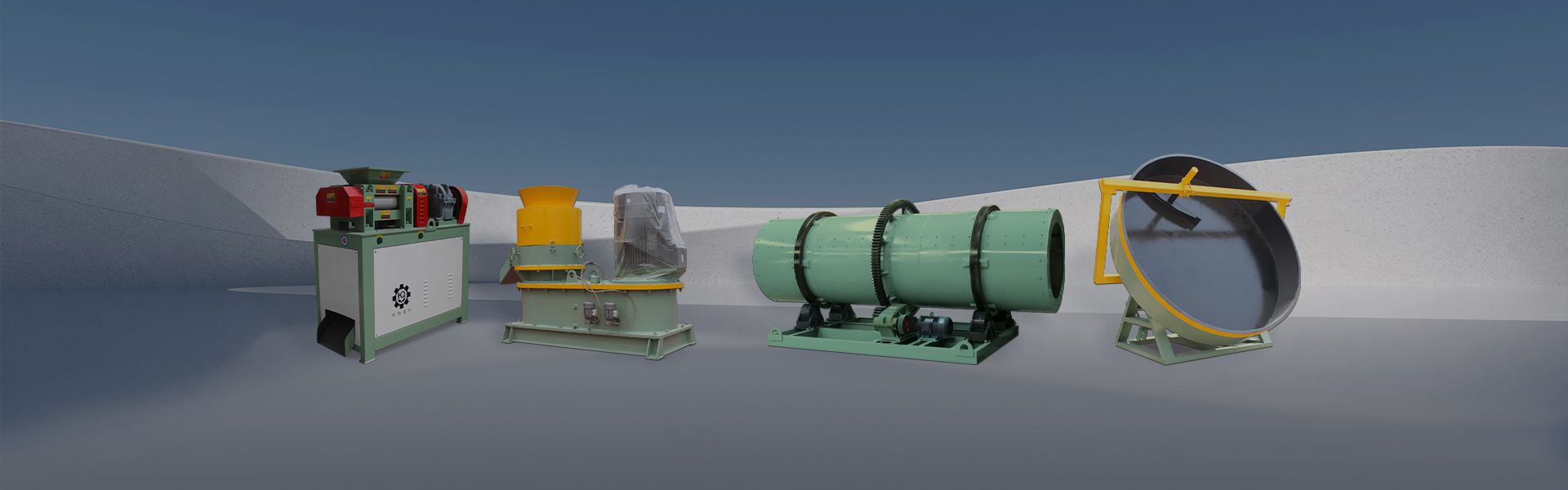
In organic fertilizer production, compost turners are the core equipment for aerobic fermentation. Turning depth and turning width are two fundamental technical parameters that determine equipment capacity and fermentation tank design. Understanding the meaning of these two parameters and their impact on output is the first step in rationally selecting the appropriate machine and scientifically planning the fermentation site.
Turning Width: Coverage Range in a Single Operation
Turning width refers to the width of material that the compost turner can cover in a single operation. Simply put, it’s how wide the machine can turn in one pass.
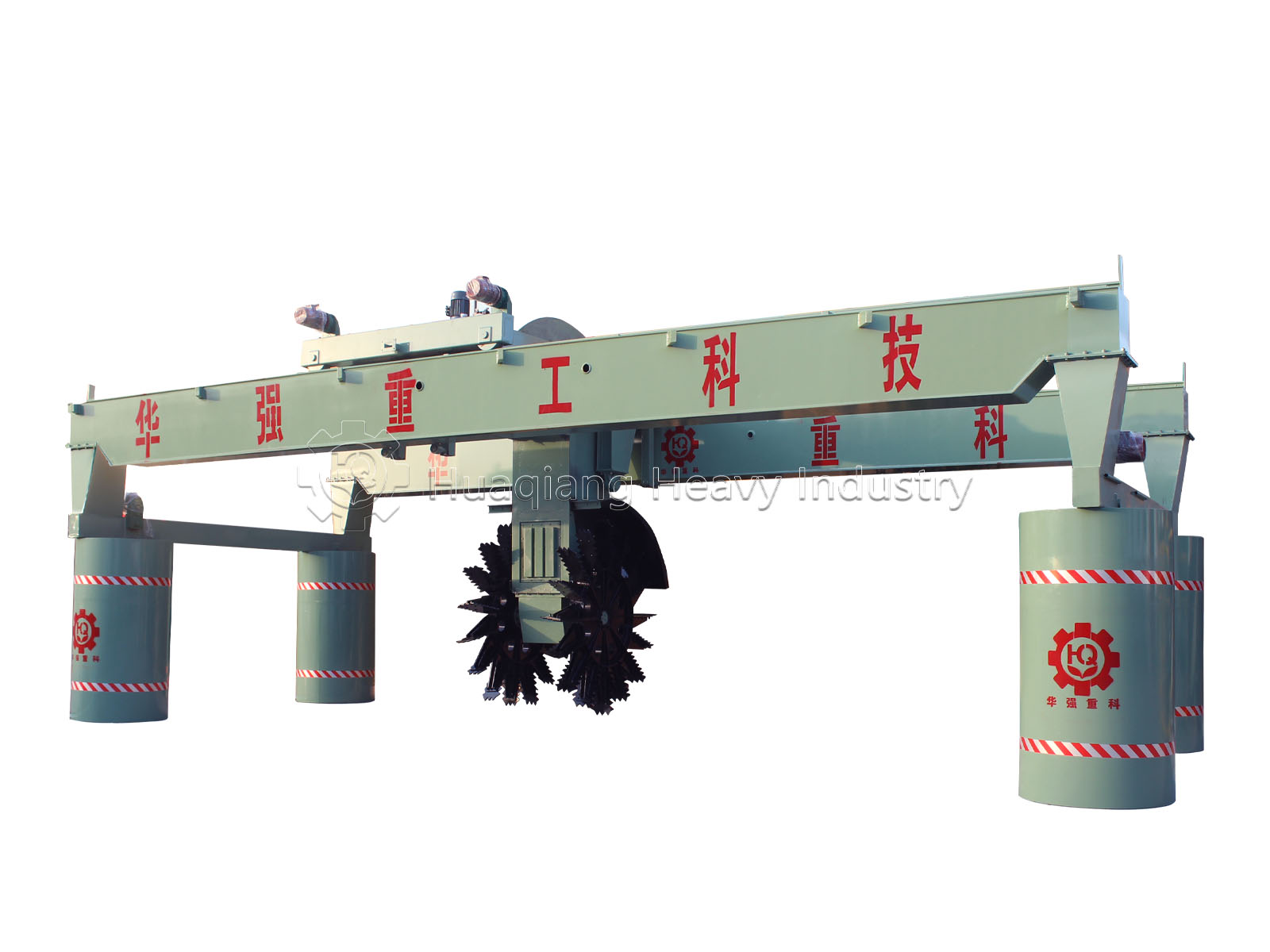
The turning width varies greatly among different models: small and medium-sized tracked compost turners typically have a width of 2-4 meters, while large machines can reach 6 meters or even wider; standard models of trough-type compost turners have a width between 1.8-6 meters; while disc-type compost turners can have a turning span of up to 30 meters.
The impact of turning width on output is very direct: the greater the width, the more material is covered in a single operation, and the greater the processing capacity per unit time. Furthermore, the turning width also determines the design width of the fermentation tank. The turning width of the trough-type compost turner must match the width of the fermentation tank, typically maintaining a gap of 5-10 cm to ensure full coverage while preventing equipment collisions.
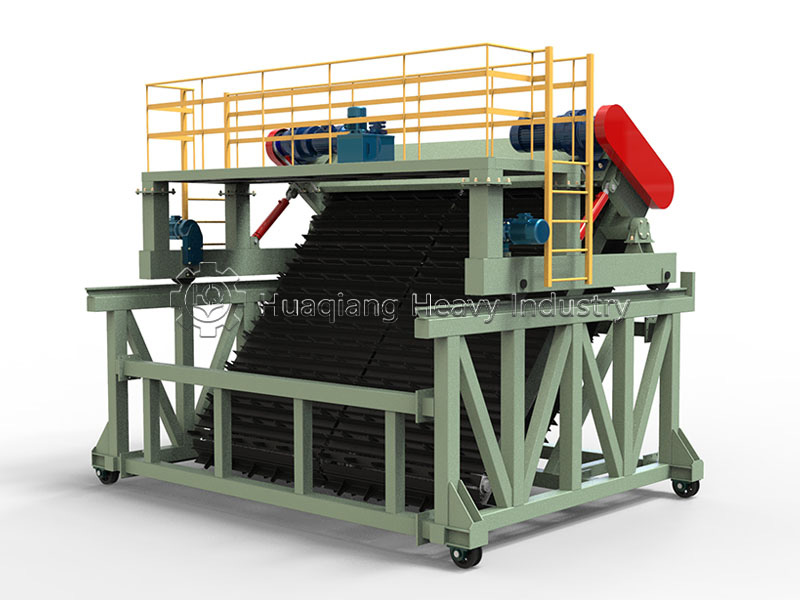
Turning Depth: The Vertical Range of Material Turning
The turning depth (also called turning height) refers to the maximum vertical height of material that the compost turner can turn in one operation. It determines how deep the equipment can turn.
Different models have significantly different depths: conventional trough-type compost turners have a depth of 0.8-1.5 meters; disc-type compost turners can reach 1.5-3 meters; and tracked compost turners are generally 0.8-1.8 meters.
The turning depth has a significant impact on both fermentation efficiency and production capacity. If the depth is too shallow, the bottom material cannot be fully turned, resulting in uneven fermentation between the upper and lower layers; if the depth is too deep, it may exceed the equipment’s load capacity, reducing work efficiency. In trough fermentation, the turning depth must match the depth of the fermentation trough—the material accumulation depth is generally 1-2 meters, and the turning machine must be able to reach this range to ensure sufficient turning of the deep material. When designing the fermentation trough, a 0.2-0.3 meter extra height space is usually reserved on top of the maximum turning depth to prevent material overflow.
III. Output Calculation Formula: Depth × Width × Speed The processing capacity of the turning machine can be calculated using a simplified formula: Processing Capacity (m³/h) = Travel Speed (m/min) × 60 × Turning Width (m) × Turning Depth (m) ÷ 2 The reason for dividing by 2 in the formula is that after the material is turned over during operation, it shifts to one side, and the actual effective turning volume is about half of the theoretical throughput volume.
Taking a common model as an example: a travel speed of 7.58 m/min, a turning width of 2.8 m, and a turning depth of 1.1 m, the hourly processing capacity is approximately 570-600 cubic meters. If the turning width is increased to 3.0m and the depth to 1.6m, the processing capacity can be increased to 1091 cubic meters per hour.
This formula clearly shows that turning width and depth are the core variables determining production capacity—increasing either will proportionally increase the processing capacity.
Frequently Asked Questions (FAQ)
Q: Is a wider turning width always better?
A: Not necessarily. While increasing width can increase the processing capacity per batch, it requires greater equipment power and a wider fermentation tank. The choice should be made based on a combination of site width and production capacity requirements. For trough-type equipment, the turning width should be 5-10cm narrower than the fermentation tank width.
Q: Can the turning depth exceed 2 meters?
A: The depth of conventional equipment is mostly between 0.8-1.8 meters. Disc-type turners can reach 3 meters, but require greater power and a deeper fermentation tank.
Q: How to select a turner based on production requirements?
A: First determine the target daily processing capacity, then use the formula to deduce the required turning width and depth. For small-scale production (5-20 tons per day), equipment with a turning depth of 0.8-1.2 meters is suitable; large-scale production requires a wider turning width and greater turning depth.
Q: Can these two parameters be adjusted?
A: Some models support adjustment. Tracked and wheeled compost turners can adjust the turning depth via hydraulic lifting; the turning width is usually fixed by the equipment model and is determined during selection.
In the entire organic fertilizer production process, the turning depth and width of the compost turner are not merely mechanical specifications—they are the primary drivers of throughput and fermentation efficiency. Whether you choose a large wheel compost turning machine for high‑speed, deep‑turning operations, a chain compost turning machine for trough‑type systems, or a versatile animal manure compost turner, the fundamental relationship—capacity (m³/h) = speed × width × depth / 2—remains the governing principle for site design and equipment selection. For facilities handling composting process for animal manure, especially when integrated with a chicken manure fertilizer machine or other preprocessing units, matching turning width and depth to the fermentation trough dimensions ensures uniform aeration, temperature control, and pathogen elimination. Proper selection of these parameters directly accelerates the fermentation composting turning technology, shortening the maturation cycle and improving product consistency. Remember that increasing width or depth proportionally boosts output, but must be balanced against power requirements, trough geometry, and material characteristics. By calculating the required capacity in advance and selecting a turner with the appropriate width‑depth combination, operators can achieve optimal aerobic fermentation, reduce operational costs, and consistently produce high‑quality organic fertilizer—turning livestock waste into a valuable soil resource with maximum efficiency.