
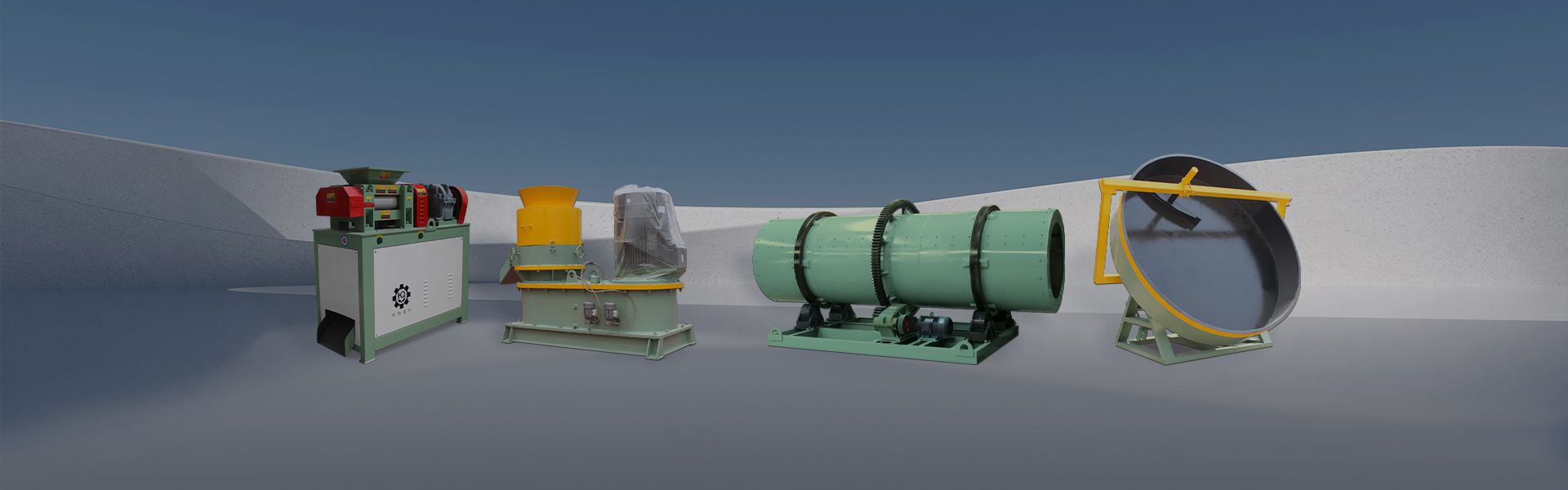
In the practical operation of drum granulators, the influence of inclination angle and rotational speed on granulation efficiency is not merely the simple summation of two isolated parameters; rather, it constitutes a synergistic system within the dynamic granulation process. Together, they regulate the material’s residence time and rolling intensity, thereby determining the entire trajectory of the granules from the formation of nuclei to their final discharge. A deep understanding of this synergistic mechanism is key to overcoming bottlenecks in granulation efficiency.
The inclination angle determines the axial movement speed of the material within the drum, essentially controlling the “time window” available for granule formation. When the inclination is shallow, the material moves slowly toward the discharge end, extending the residence time and allowing nuclei to continuously adsorb fine powder and grow; conversely, if the inclination is too steep, the material slides through rapidly, resulting in discharge before the nuclei have fully bonded. Orthogonal experimental studies have confirmed that the inclination angle is a critical factor in granule formation, with an optimal range typically between 2° and 3.5°. However, the inclination angle itself does not directly generate the kinetic energy required for granulation; it merely provides the spatial and temporal conditions necessary for the material to tumble within the drum.
It is the drum’s rotational motion that truly imparts the kinetic energy needed for granulation. Through the combined effects of centrifugal force and friction, the rotational speed drives the material to climb the drum wall before it cascades down under gravity, creating a continuous cycle of tossing and collision. Moderately increasing the rotational speed raises the frequency of rolling per unit of time and intensifies inter-particle collisions and compression forces, which promotes granule densification and sphericity. However, if the speed exceeds a critical threshold, excessive centrifugal force causes the material to adhere tightly to the drum wall, forming a “centrifugal layer” that inhibits effective tumbling and collision. Crucially, rotational speed also indirectly affects the material’s effective residence time: higher speeds accelerate axial movement, thereby shortening the time the material remains in the drum.
In industrial practice, drum granulators can achieve a pelletization rate exceeding 70%, with undersized recycled granules suitable for re-granulation—a testament to the effectiveness of properly matched operating parameters. Stable and optimal pelletization results can only be achieved by considering the inclination angle and rotational speed as a coupled system, rather than adjusting them in isolation.