
Premium WordPress theme for construction companies, contractors, builders, and a variety of other construction-related businesses.
-
28238 Kelsie Lane Apt. 451,
Port Annabelport
-
Call Us: (210) 451-123
(Sat - Thursday)
-
Monday - Friday
(10am - 05 pm)
Chain Compost Turning Machine

Equipment Introduction
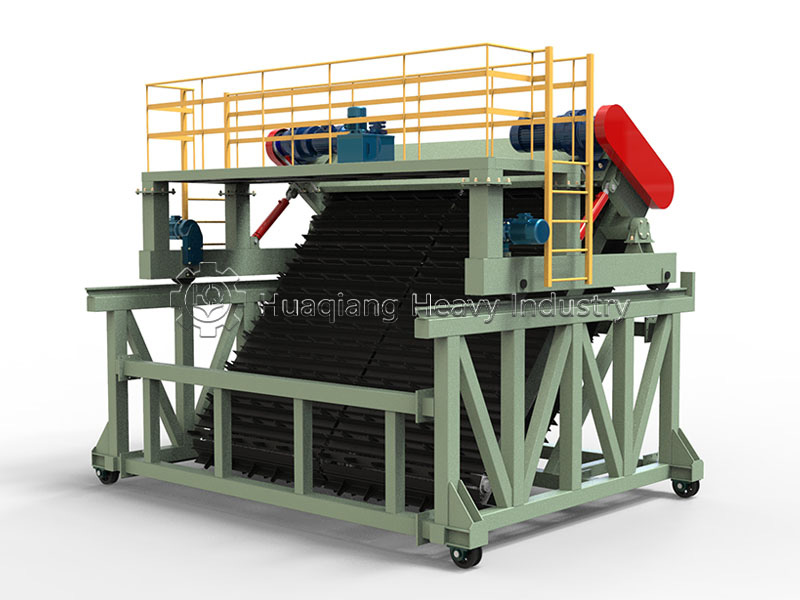
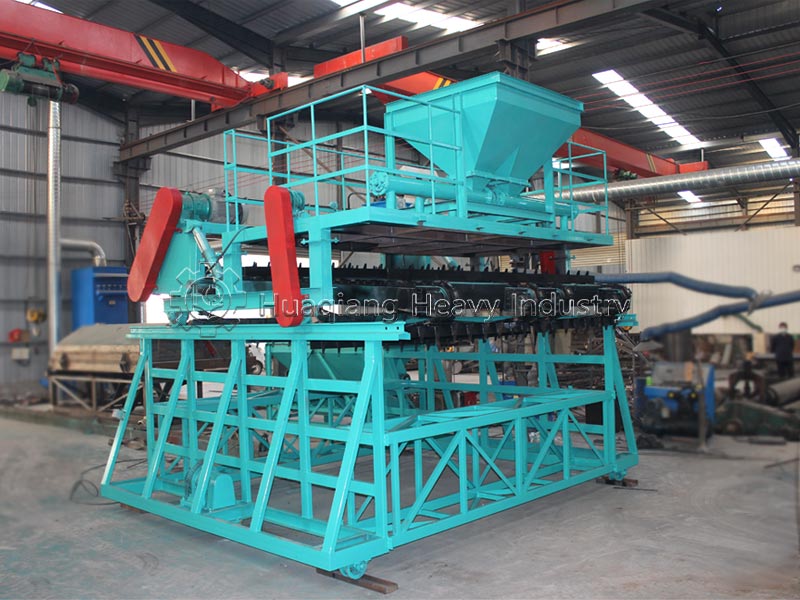
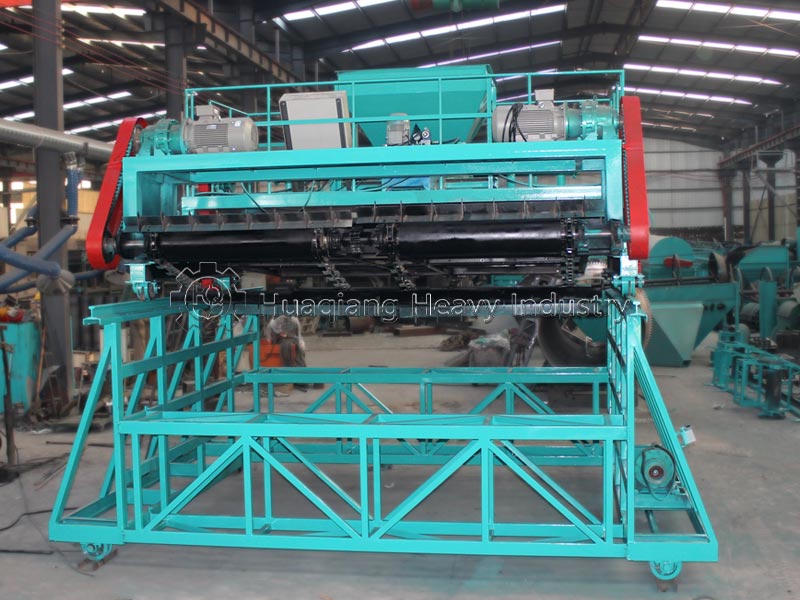
The Chain Plate Compost Turning Machine, also known as a chain plate turner or chain plate composting turner, is a core piece of equipment in organic fertilizer production and aerobic fermentation treatment of organic solid waste. It employs continuous aerobic fermentation technology in a tank (trough) manner, using a chain-driven, rolling-supported chain plate turning mechanism to throw, aerate, and mix the compost material in the fermentation tank.
The chain plate compost turner features a reasonable design, high efficiency, low energy consumption, high degree of automation, ease of use, and low cost. It can turn the compost to a depth of 1.5-2 meters, making it a highly efficient machine that is well-received by users. The machine uses a variable frequency speed control system, which adapts well to changes in workload and allows for flexible adjustment of the walking speed based on material resistance, giving the equipment greater adaptability and flexibility. Centralized control cabinet control allows for both manual and automatic control functions, and limit switches provide safety and limit functions. An optional transfer vehicle can be installed to enable the sharing of multiple tanks. If the equipment capacity allows, the production scale can be expanded simply by adding fermentation tanks, which greatly improves the value of the equipment.
Equipment Structure and Composition
The chain plate turning machine mainly consists of the following major systems:
| System Name | Main Components | Function Description |
|---|---|---|
| Turning Power Transmission Device | Main motor, reducer, sprocket, bearing housing, main shaft | Provide power for compost turning chain plates; the motor drives the main shaft through the reducer |
| Traveling Device | Travel motor, reducer, transmission shaft, traveling wheel, bearing | The whole machine moves longitudinally along the tracks on both sides of the fermentation trough |
| Hydraulic Lifting Device | Hydraulic pump station, solenoid valve block, hydraulic oil pipe, hydraulic cylinder column, shaft base | Control the lifting height of compost turning chain plates to adapt to different stacking depths |
| Compost Turning Unit | Support main beam frame, motor reducer, main shaft, driven shaft, sprocket, chain, compost turning chain plate | Core working component; continuous rotation of chain plates realizes material turning and mixing |
| Trough Transfer Cart (Transfer Vehicle) | Travel motor, transmission gear, transmission shaft, traveling wheel | Temporary transport tool for the compost turner to switch fermentation troughs, realizing one machine serving multiple troughs |
| Electric Control System | Control cabinet, soft starter, limit travel switch | Centralized control, supports manual or automatic operation mode |
Key Structural Features:
- The electric motor directly transmits power to the reducer, driving the main shaft, which in turn drives the chain.
- The turning chain plates, mounted on the chain, are driven by the main shaft to perform a cyclical motion.
- The chain plates transport the material from the bottom of the trough to a higher position and scatter it down, capable of moving the material backward by 3-4 meters.
- The chain plates have staggered manganese steel blades that can crush clumps of material.
- The turning chain plates are made of manganese steel, making them sturdy and durable, and providing a certain degree of crushing and mixing capabilities for materials.
- Equipped with a soft starter, resulting in low impact load during startup.
- Limit switches provide safety and limit functions.
Applications of the Equipment
Chain plate compost turner is widely used in the following fields:
- Livestock and poultry manure treatment: Harmless treatment and resource utilization of livestock and poultry manure such as pig manure, chicken manure, cow manure, and sheep manure.
- Agricultural waste treatment: Crop straw, rice husks, edible mushroom residue, sugarcane bagasse, lees, sawdust, etc.
- Sludge treatment: Sludge from urban sewage treatment plants, filter mud from sugar mills, and paper mill sludge.
- Municipal solid waste treatment: Composting of organic municipal solid waste and kitchen waste.
- Industrial organic waste: Food processing waste, pharmaceutical residues, brewing waste, distiller’s grains, medicinal residues, and biogas residue.
- Landscaping: Composting and fermentation of garden pruning waste and fallen leaves.
Applicable scenarios: Fermentation, composting, and moisture removal operations in organic fertilizer plants, compound fertilizer plants, sludge and waste treatment plants, horticultural farms, orchards, and button mushroom cultivation plants, etc. Suitable for aerobic fermentation and can be used in conjunction with solar fermentation chambers, fermentation tanks, and transfer vehicles. When used with a transfer cart, it can achieve the function of one machine serving multiple slots.
Raw Materials for the Equipment
The chain plate compost turner primarily processes various types of organic solid waste, including but not limited to:
- Livestock waste: chicken manure, pig manure, cow manure, sheep manure, and other livestock and poultry manure
- Municipal waste: urban sludge, sewage sludge
- Agricultural processing waste: sugar factory filter mud, residue cake
- Agricultural waste: straw, sawdust
- Industrial organic waste residue: distiller’s grains, medicinal residue, cassava residue, furfural residue, etc.
- Kitchen and garden waste: fruit peels, garden waste
The chain plate compost turner has extremely high material adaptability, especially suitable for processing large, high-viscosity organic waste with a moisture content of 50%-70%. Unlike ordinary compost turning equipment that is susceptible to moisture and stickiness, the chain plate compost turner, with its strong chain plate structure, can effectively handle high-moisture, high-viscosity materials.
Working Principle of the Equipment
The working principle of the chain plate turner is based on aerobic fermentation technology. The core mechanism is as follows:
1) Power Transmission Principle
The electric motor directly transmits power to the reducer, driving the main shaft. The main shaft drives the chain, and the turning chain plates mounted on the chain are driven by the main shaft to perform a cyclic motion.
2) Turning and Composting Operation Principle
- Chain Plate Cyclic Motion: The chain plates perform continuous cyclic motion driven by the chain.
- Material Grabbing and Lifting: The chain plates continuously grab material from the trough and obliquely convey it to the rear of the work frame.
- High-Level Scattering: After being conveyed to a high position, the material is scattered and falls, making full contact with the air.
- Material Rearward Movement: Each turning and composting operation can move the material back 3-4 meters.
- Crushing and Mixing: The manganese steel blades distributed in a staggered pattern on the chain plates crush lumpy material, achieving uniform mixing.
3) Aerobic Fermentation Principle
Through regular turning and composting, the pile temperature rapidly rises to 50-65℃. Under this high-temperature condition:
- Pathogens, insect eggs, and weed seeds are effectively killed.
- Microorganisms fully decompose organic matter.
- The fermentation cycle is shortened.
- The oxygen content of the pile increases, and moisture evaporates.
5. To avoid problems such as odor and seedling burn caused by anaerobic fermentation, this equipment (4) Deep fermentation advantages: This equipment does not require high-pressure aeration equipment. During the turning process, oxygen is supplied to the materials evenly and without dead zones, resulting in strong aeration penetration and uniform aerobic fermentation. Because the materials can fully contact oxygen in the air during the conveying and descent process, the fermentation effect is better. The uniform speed of the equipment movement is also more conducive to the mixing and fermentation of various materials in the tank.
Equipment Maintenance Methods
- Pre-shift Maintenance and Handover System
Adhere to the pre-shift maintenance and handover system; maintenance and troubleshooting from the previous shift should not be carried over to the next shift.
- Pre-shift Inspection
Check that all fasteners are secure and that the bearing clearances of transmission components are appropriate.
Add grease to the bearing housings and check the reducer oil level.
Check that electrical connections are secure.
- Post-shift Maintenance
Clean up any residue and leftover material from the machine and surrounding area.
Add lubricating oil to all lubrication points.
Disconnect the power switch.
- Weekly Maintenance Items
Check the reducer oil level and add sufficient gear oil.
Clear any accumulated material from the feed inlet and ensure the feed chute is unobstructed.
Check the contactors in the electrical control cabinet; replace any damaged ones immediately.
- Periodic Inspection Items
Check the operation of the motor and reducer; stop the machine immediately if there are any abnormal noises or overheating.
Check the wear of each bearing; replace any excessively worn bearings.
- Lubrication and Maintenance
After installation and power-on, add 3 kg of grease to the bearing housing.
After 72 hours of operation, replenish the grease to the bearing housing.
Due to the dusty working environment of the chain plate compost turner, select a grease with strong adhesion and anti-pollution properties (such as lithium-based grease) and regularly lubricate the moving parts such as the chain pins and rollers.
- Reducer Oil Change
The reducer of this compost turner uses hypoid gear oil, and the cycloidal pinwheel reducer uses No. 50 machine oil. The oil grade can be changed according to the specific environment. After the first 200 hours of continuous operation following the initial startup, change the oil in all reducers. After the second startup, change the oil every six months.
Common Equipment Problems and Solutions
| Fault Category | Fault Phenomenon | Possible Causes | Standard Solutions |
|---|---|---|---|
| Turning System Faults | Difficult compost turning | Material layer exceeds rated thickness; severe deformation of chain plates & shafts or winding foreign objects; foreign objects stuck on transmission gears or damaged gears | 1. Remove excess material layer 2. Repair chain plates or shafts, clear winding foreign objects 3. Clear foreign objects on gears or replace damaged transmission gears |
| Uneven compost turning | Improper chain plate rotation speed; mismatched traveling speed; worn chain plates | Adjust chain plate speed and traveling speed to match; replace worn chain plates | |
| Chain plates scrape ground | Too low ground clearance of chain plates; uneven ground surface | Lift up the compost turner in time; inspect and level the ground | |
| Materials wind around chain plates | Overlong raw materials; excessive weeds | Screen and cut long materials before turning; clean weeds on site | |
| Insufficient turning distance | Insufficient chain plate tension; worn cutting blades | Adjust chain plate tension; replace worn blades as a set | |
| Traveling System Faults | Unstable traveling | Foreign objects on traveling wheels or tracks; bent transmission shaft | Clear foreign objects on wheels/tracks; calibrate or replace transmission shaft |
| Reducer abnormal noise or overheating | Insufficient lubricating oil; worn bearings; trapped foreign objects | Add lubricating oil; inspect bearing wear, replace damaged bearings | |
| Track abrasion | Long-term continuous operation; uneven track installation | Grind and repair tracks regularly; re-level track base | |
| Electrical System Faults | Difficult or failed motor startup with buzzing noise | Excessively worn or damaged bearings; deformed & bent reduction shaft; too low or too high voltage | 1. Replace bearings 2. Calibrate or replace deformed reduction shaft 3. Restart after voltage returns to normal |
| Failure of electric control system | Damaged contactor; short circuit of circuit; faulty limit switch | Replace broken contactor; overhaul circuit; replace faulty limit switch | |
| Soft starter failure | Incorrect parameter settings; excessive load | Reset parameters; inspect and reduce equipment operating load | |
| Hydraulic System Faults | Unsmooth lifting & lowering of chain plates | Insufficient hydraulic oil; faulty solenoid valve; aging hydraulic cylinder seals | Supplement hydraulic oil; repair solenoid valve; replace cylinder sealing parts |
| Loud noise of hydraulic pump station | Blocked oil suction filter; worn oil pump; air mixed in oil circuit | Clean oil suction filter; overhaul or replace oil pump; exhaust air from pipeline | |
| Slow lifting & lowering speed | Deteriorated hydraulic oil; internal leakage inside oil cylinder | Replace deteriorated hydraulic oil; overhaul internal sealing structure of oil cylinder | |
| Automatic descending after lifting up | Worn piston sealing ring of oil cylinder | Replace piston sealing ring of oil cylinder | |
| Comprehensive Preventive Maintenance Strategy | High long-term failure rate, frequent damage of wearing parts | No monitoring of vulnerable parts; sundries piled on operation site; poor raw material pretreatment; no fault record files | 1. Key component monitoring: Take chain plates, chains, bearings and other vulnerable parts as key monitoring objects, establish replacement records 2. Site & environment management: Keep operation site clean, remove stones, metal hard debris; optimize raw material pretreatment and control moisture content 3. Intelligent technical upgrade: Install sensors to monitor temperature, vibration and other parameters in real time for early fault warning 4. Build fault archive: Record time, root cause and handling method of each fault, analyze source of common recurring problems |
Equipment Application in the Production Line
- Position in the Organic Fertilizer Production Line
The chain plate turner is the core equipment in the fermentation section of the organic fertilizer production line. It undertakes the core process of material composting and fermentation, directly determining the fermentation quality, production efficiency, and finished product quality of the organic fertilizer. It plays a crucial role in the entire production line, acting as a bridge between upstream and downstream processes. The equipment adopts a deep-layer fermentation process using a ground-level tank, receiving materials from the upstream batching and feeding process, completing the turning, oxygenation, mixing, and composting operations, providing qualified composted raw materials for downstream deep processing.
The complete organic fertilizer production process embedded with the equipment is as follows: Raw material pretreatment → Batching and mixing → Fermentation tank feeding → Chain plate turner turning and fermentation → Discharge → Crushing → Screening → Granulation → Drying → Cooling → Secondary screening → Finished product packaging. In the entire process, turning and fermentation is the core link in the harmless and resource-based treatment of raw materials, and a key process to ensure that organic fertilizer meets production standards.
- Production Line Supporting Equipment and Functions The chain plate compost turner needs to be used in conjunction with a complete set of organic fertilizer production equipment. Each supporting device has a clearly defined function, working together to automate the entire organic fertilizer production process from raw material processing to finished product packaging. Specific supporting equipment and functions are as follows:
Loader/Loader Loader: Primarily used for transferring and stacking raw materials, and feeding materials into fermentation tanks, continuously supplying materials to the fermentation section to ensure the continuous and stable operation of the production line.
Ingredient Mixing System: Precisely proportions main ingredients and various auxiliary materials according to organic fertilizer production process standards, adjusting core parameters such as carbon-nitrogen ratio and moisture content to provide excellent basic conditions for efficient fermentation.
Transfer Cart/Tanker Cart: Used in conjunction with the chain plate compost turner, enabling a single turner to operate across multiple fermentation tanks, completing the turning and composting of materials in multiple tanks, achieving a multi-tank production mode.
Crusher: Used for fine crushing of the fermented and composted materials. The chain plate compost turner has a built-in material crushing function, effectively breaking up lumpy materials, simplifying subsequent crushing processes, and reducing the crusher’s workload.
Screening machine: Screens and sieves the fermented and pulverized materials, effectively removing large pieces of incompletely fermented material and impurities, ensuring uniform particle size to meet the production requirements of subsequent granulation processes.
Pelletizer: Processes the screened, well-rotted powdered organic fertilizer into regular granular fertilizer, improving the ease of application, fertility stability, and product appearance of the organic fertilizer.
Fermentation Process of the Equipment
1) Aerobic Fermentation Process
- Raw Material Pretreatment: Mix livestock and poultry manure with straw powder and other auxiliary materials in a certain proportion, adjust the moisture content to 50-65%, and the C/N ratio to about 25:1.
- Inoculation with Microorganisms: Add special organic fertilizer fermentation inoculants.
- Composting and Feeding: Feed the mixture into the fermentation tank using a loader, ensuring the pile height does not exceed the turning depth (1.5-2 meters).
- Turning and Fermentation: Use a chain plate turner to turn the pile regularly, generally every 2-3 days.
- Temperature Monitoring: Raise the pile temperature to 50-65℃ and maintain it, with the high-temperature period lasting 5-7 days.
- Relocation and Pushing: Each time the pile is turned, push the material backward 3-4 meters, gradually moving the material from the feeding end to the discharging end.
- Post-Ripe Aging and Aging: After the temperature drops below 40℃, the aging stage begins.
- Discharge: Fully decomposed material reaches the end of the fermentation tank and is discharged by a loader to proceed to the next process.
2) Key Control Parameters for Fermentation
| Parameter | Control Range | Adjustment Method |
|---|---|---|
| C/N Ratio | About 25:1 | Adjust by adding straw, rice husk and other carbon-rich materials |
| Moisture Content | 50%–65% | Adjust by adding dry materials or spraying water |
| Ventilation Oxygen Content | 8%–18% | Controlled by compost turning frequency |
| Fermentation Temperature | 50–65℃ | Adjust heat dissipation by turning or heat preservation |
| pH Value | 6–9 | Adjust by adding lime or acidic raw materials |
| Compost Turning Frequency | Once every 2–3 days | Adjust according to temperature and material condition |
| Turning Depth | 1.5–2 m | Adjust the height of chain plates through hydraulic system |
3) Fermentation Cycle
- High-Temperature Fermentation Period: 7–10 days (temperature 50–65℃)
- Transfer Fermentation Period: Material is gradually moved from the feed end to the discharge end.
- Post-Ripe Aging Period: 7–10 days
- Total Fermentation Cycle: Usually 15–25 days, depending on the tank length and turning frequency.
4) Advantages of Chain Plate Turner Fermentation
Chain plate turners provide excellent composting results, maintaining a uniform mixture of main and auxiliary materials, and preventing material stratification. During turning, the material remains on the pallets for a long time, is scattered at a high level, and has a large contact area with air, facilitating moisture reduction. This equipment does not require high-pressure aeration equipment; it provides oxygen to the material evenly and without dead zones during the turning process, ensuring strong aeration penetration into the material layer and uniform aerobic fermentation.
Summary of Equipment Advantages and Features
1) Advantages Compared to Other Types of Compost Turners
| Comparison Item | Chain Plate Compost Turner | Trough Compost Turner (Drum Type) | Wheel Disc Compost Turner |
|---|---|---|---|
| Turning Depth | 1.5–2 m | 0.6–1.5 m | 1.5–3 m |
| Turning Mechanism | Reciprocating chain plate, high-position throwing | Rotary cutting by drum | Rotary conveying by wheel disc |
| Material Mixing Uniformity | High (hard to stratify) | Medium | Medium |
| Energy Consumption | Low (small turning resistance) | Medium | Medium |
| Crushing Capacity | Strong (manganese steel cutters) | Medium | Strong |
| Deep Trough Operation | Suitable | General | Suitable |
| Automation Level | High | High | High |
| Manufacturing Cost | Low-cost | Low-cost | Medium |
2) Core Competitive Advantages
1. Large Turning Depth: Up to 1.5–2 meters, suitable for deep trench operations
2. Low Back-Throwing Resistance: Adopts a chain drive and rolling support chain plate mechanism, saving energy
3. Uniform Material Mixing: Main and auxiliary materials are kept in a uniform mixing state, and the material is not prone to stratification
4. High-Level Spreading: The material stays on the pallet for a long time, and the high-level spreading ensures sufficient contact with air, making it easy to reduce moisture
5. Strong Crushing Capacity: The manganese steel blades distributed in a staggered manner on the chain plate can crush agglomerated materials
6. No High-Pressure Aeration Required: Oxygen is uniformly supplied to the material without dead corners during the turning process
7. Variable Frequency Speed Regulation: The walking system adopts variable frequency speed regulation, which has good adaptability to different materials
8. Hydraulic Control: The lifting and lowering of the turning and turning working parts are controlled by a hydraulic system, which allows for flexible operation, safety and speed
9. Remote Control Operation: Forward, turning, lifting and reversing operations can be remotely controlled from a distance, improving the operating environment
10. 11. Multi-trough operation: Equipped with a trough-shifting cart, one turning machine can operate in multiple troughs, saving investment.
12. Rational structure: Rational design, reliable performance, beautiful appearance, and convenient operation and maintenance.
13. Low cost: Easy to use, low cost, and widely applicable.
As a core piece of equipment in the fermentation section of medium-to-large-scale organic fertilizer production lines, the chain plate compost turner has become one of the preferred fermentation equipment for organic fertilizer plants, compound fertilizer plants, sludge and waste treatment plants, and button mushroom cultivation plants due to its technological advantages such as deep-trough operation, low resistance during back-throwing, uniform material mixing, sufficient oxygen supply from high-level spreading, and strong crushing capacity. Its ground-trough aerobic fermentation technology can convert organic raw materials such as livestock and poultry manure and agricultural waste into high-quality organic fertilizer within 15-25 days, achieving the dual goals of resource utilization and environmental protection.
The chain plate compost turner adopts a chain-driven and rolling support chain plate mechanism, resulting in low resistance during back-throwing, energy saving, and suitability for deep-trough operation. During back-throwing, the material stays on the pallet for a long time, is spread at a high level, and has sufficient contact with air, making it easy to reduce moisture. The chain plate has staggered manganese steel blades that can crush clumps of material. This equipment does not require high-pressure aeration equipment; it provides oxygen to the material evenly and without dead zones during the turning process, ensuring strong aeration penetration into the material layer and uniform aerobic fermentation.
During the selection and use of this machine, users should choose the appropriate model based on the actual fermentation tank size, raw material quantity, site conditions, and budget. They must strictly adhere to operating procedures and maintenance requirements to ensure safe, efficient, and long-term stable operation of the equipment. This machine features a reasonable design, high efficiency, low energy consumption, high degree of automation, ease of use, low cost, and wide application, making it a highly efficient model that is well-received by users.
Whether you need a fermentation compost turning machine or plan an entire fertilizer production line—from fermentation turning and crushing to granulation, drying, cooling, screening, and packaging—we can provide you with a one-stop solution.