
In the compound fertilizer industry, the debate over the relative merits of wet versus dry granulation has never ceased. However, a closer look at the equipment reveals that this debate is essentially a false dichotomy; neither process is inherently “superior” to the other. Instead, the choice depends on which method is best suited to specific raw materials, production capacity, and market positioning. The deciding factor is not the name of the process itself, but the technical characteristics and operational mechanics of the equipment.
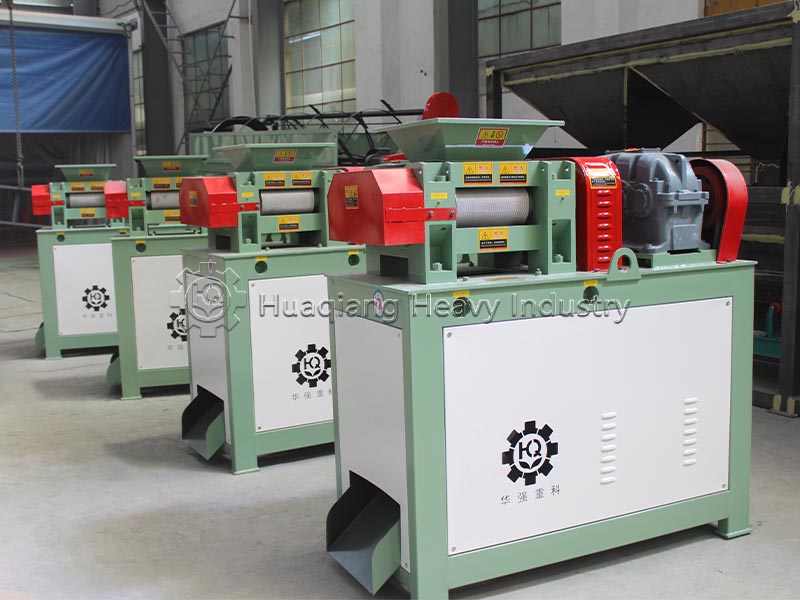
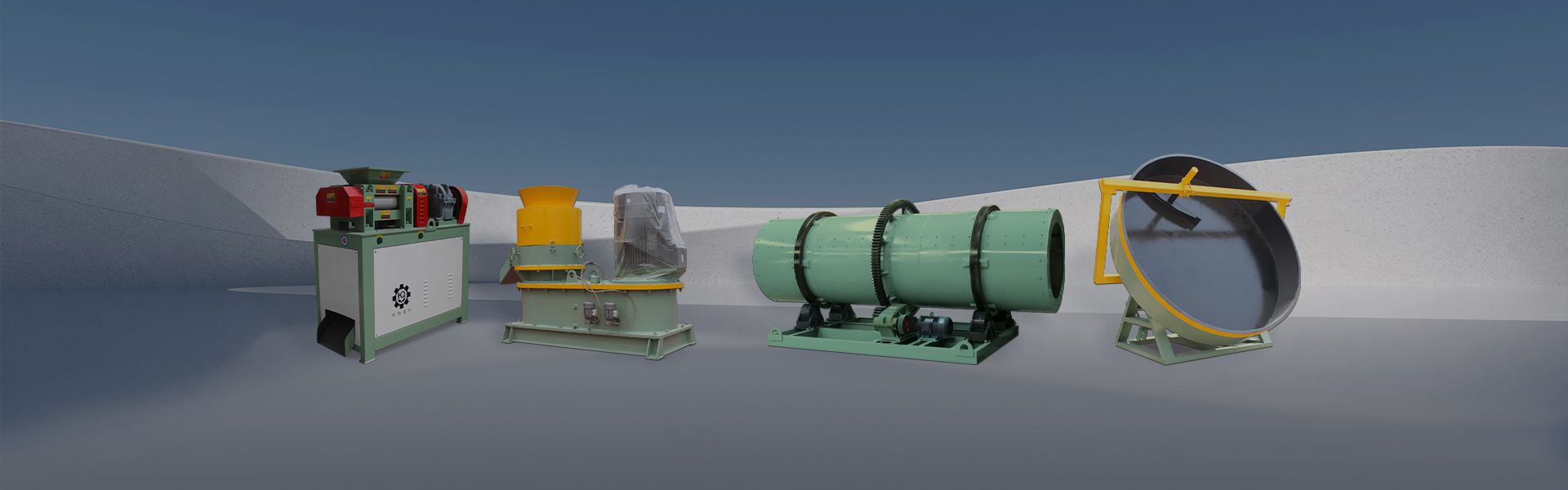
Regarding granulation principles and core equipment, wet granulation is represented by disc granulators and rotary drum granulators, both of which rely on a “water-based forming” approach. Disc granulators utilize a disc tilted at an angle of 35° to 55° rotating at a constant speed; the combined effects of centrifugal force, friction, and gravity cause materials with a moisture content of 25% to 40% to roll into spherical granules. Rotary drum granulators, meanwhile, introduce steam to heat and adjust moisture levels, allowing materials to react fully and agglomerate into spheres within the drum. These methods achieve a forming rate of 70% to 85%. Dry granulation centers on the double-roller extrusion granulator; materials in the form of dry powder (with 8% to 15% moisture content) are fed directly between two counter-rotating rollers. Under high pressure—ranging from 20 to 30 MPa—the material is compressed into sheets, which are subsequently crushed and screened to produce granules. This method achieves a forming rate exceeding 90%. The fundamental difference lies in the mechanism: wet granulation equipment relies on moisture and binders to facilitate rolling agglomeration, whereas dry granulation equipment relies on high-pressure mechanical force to achieve extrusion forming.
Which is better: wet granulation or dry granulation? The answer depends on your raw materials, production capacity, and product positioning. If your raw materials have high moisture content and high viscosity, or if your goal is to produce mid-to-high-end granules with a smooth, rounded appearance, then wet granulation equipment—such as disc or drum granulators—is the inevitable choice. Conversely, if you are working with dry compound fertilizer mineral powders, or if you prioritize low energy consumption, large-scale production, and high granule strength, then dry granulation equipment—specifically double-roller extrusion systems—undoubtedly offers better cost-effectiveness. Each type of equipment has its own strengths; the key is making the right choice to unlock its full value. Truly savvy investors do not waste energy on abstract debates about “wet vs. dry” methods; instead, they focus on the specific characteristics of their raw materials and their market positioning, letting the equipment’s performance speak for itself.