
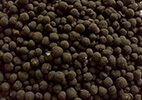
Disc Granulator

Equipment Introduction

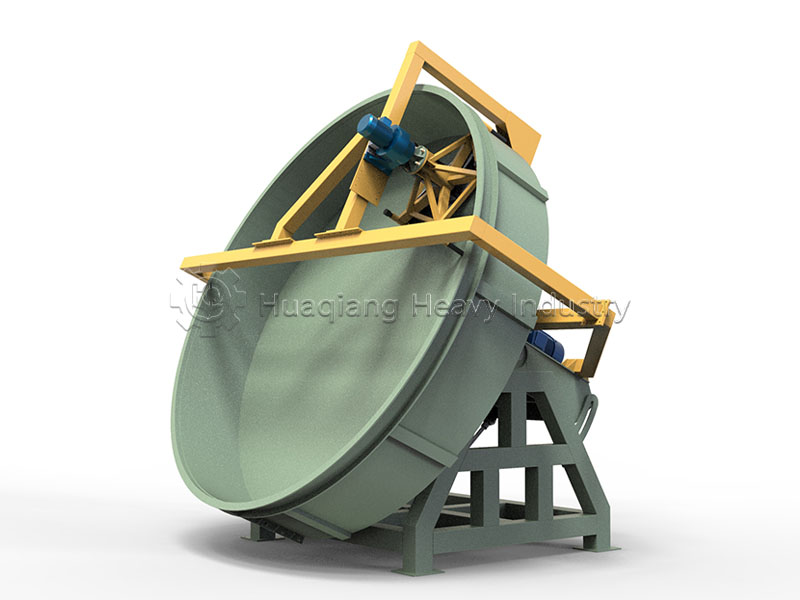
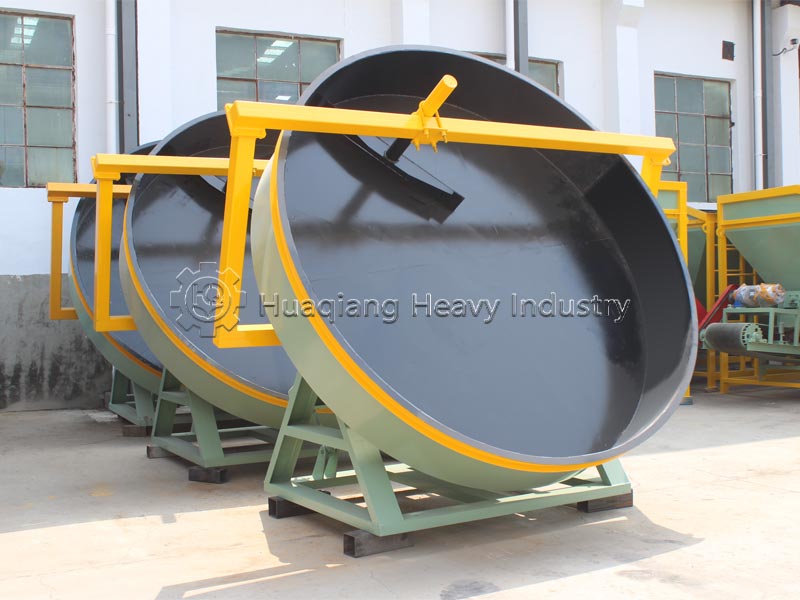
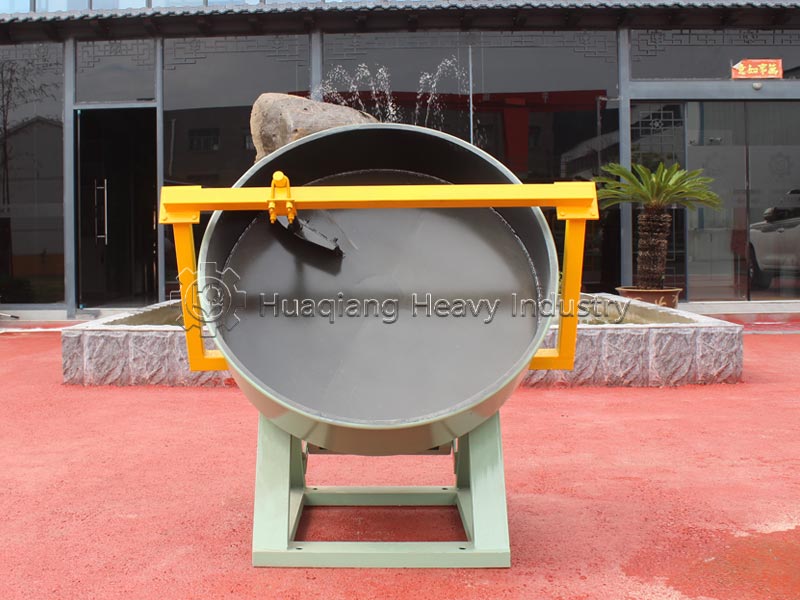
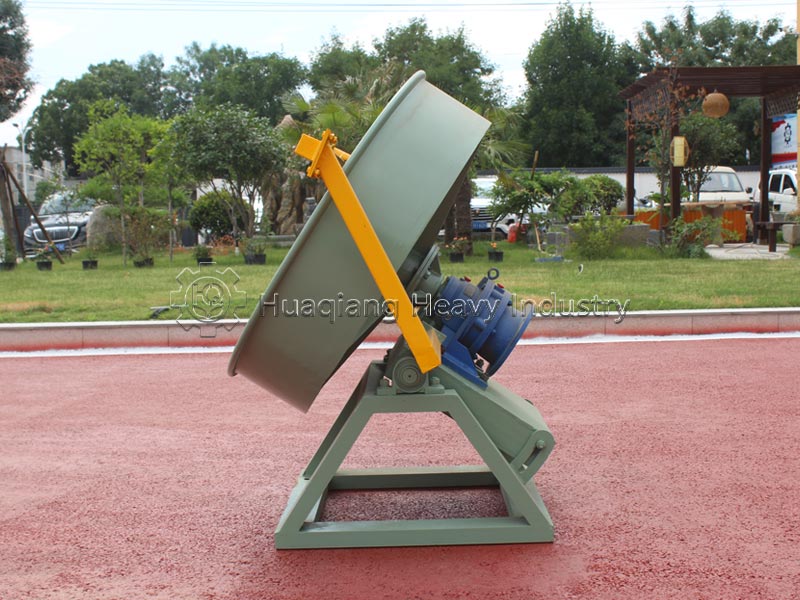
The Disc Pelletizer/Pan Granulator is a wet physical granulation device that uses a rotating disc as its working chamber. It leverages the synergistic effects of centrifugal force, gravity, and liquid surface tension to form spherical particles from powdered or fine-grained materials under moist conditions through a rolling agglomeration mechanism.

The powdered material forms a dynamic tumbling bed under the combined force field (centrifugal force and gravity) generated by the rotating disc. Atomized liquid binder wets the particle surface, forming liquid bridges under surface tension. The process involves four stages: nucleation, layering, compaction, and rounding, ultimately forming dense spherical particles. The equipment utilizes the centrifugal force gradient caused by particle size differences to achieve self-classification. Qualified particles automatically overflow and are discharged, while unqualified particles remain in the disc to continue growing. This equipment features simple structure, flexible operation, low investment, high pelletizing rate, and low return ratio, and is widely used in the powder spheroidization processing of industries such as fertilizers, organic fertilizers, chemicals, and building materials.

Equipment Working Principle

Materials enter a rotating disc via a conveyor. Under the combined action of centrifugal force, friction, and gravity, the material undergoes a complex motion of circumferential tumbling and radial rolling within the disc. A spray system sprays a binder (usually water or a diluent) onto the material. The powder, moistened by the moisture, forms nuclei and continuously absorbs surrounding powder, gradually growing in a “snowball” fashion. Due to the disc’s tilt and rotation, particles of different sizes are graded within the disc: larger particles float to the surface and overflow from the disc edge due to centrifugal force, while smaller particles remain at the bottom and continue to grow, thus achieving continuous production.

Granulation Process of the Equipment

Disc granulators are typically a core component of a complete production line. The standard process flow is as follows:

Process StepEquipment UsedPurposeKey Indicators
1. Raw Material PretreatmentCrusher / Hammer MillCrush bulk raw materials to below 2 mmDischarge fineness: 80 – 120 mesh
2. Batching & ProportioningAutomatic Batching SystemWeigh formula components in proportional ratioPrecision: ±0.2%
3. MixingHorizontal Ribbon MixerAchieve homogeneous blending of powder materialsMixing uniformity CV < 5%
4. GranulationDisc GranulatorForm spherical solid granulesParticle size: 2 – 5 mm, uniformity 90 – 95%
5. DryingRotary Drum DryerReduce material moisture content to below 2%Inlet temperature: 120 – 180°C
6. CoolingRotary Drum CoolerCool granules down to near ambient temperatureDischarge temperature < 40°C
7. Sieving & GradingDrum Sieve / Vibrating ScreenSeparate qualified finished granules, oversized lumps and fine powderFinished product yield: 85 – 95%
8. Coating (Optional)Coating MachineApply anti-caking or slow-release coating layerCoating ratio: 1 – 5%
9. PackagingAutomatic Packaging MachineFilling, sealing and palletizing finished bagsBag specification: 25 kg or 50 kg per bag
1.Compound fertilizer (NPK compound fertilizer) production line
 
The Role of Equipment in the Production Line
1.Disc Granulator Process Application Details

Disc Granulator Process Application Details

ItemSpecific Content
RolePrimary Granulator
Process PositionAfter batching & mixing, before drying process
Raw Material FormHomogeneous mixture of multiple single-component fertilizer powders (Urea, MAP, DAP, KCl, etc.)
Binder AgentWater, dilute phosphoric acid, dilute sulfuric acid or special granulation additives
Key Control ParametersPrecise moisture control (10–15%) to prevent urea hydrolysis; temperature control (<60°C)
Typical ConfigurationSingle Φ3.0–4.5 m disc granulator, output capacity 5–15 t/h
Return Material SystemReturn material ratio 15–25%; undersize fine powder and crushed oversized particles are sent back to the granulation disc
Process Features: Compound fertilizer formulations are complex, with significant differences in physical and chemical properties (e.g., urea is easily soluble, while ammonium phosphate is hygroscopic), requiring highly adaptable granulators. Disc granulators, by adjusting the tilt angle and rotation speed, can flexibly meet the granulation needs of different formulations. Compared to drum granulators, the investment is 30-50% lower, making them more suitable for small and medium-sized compound fertilizer plants.

2.Organic fertilizer production line

Disc Granulator Application for Organic Fertilizer Production

ItemSpecific Content
RolePrimary granulation equipment or finishing shaping equipment
Process PositionAfter fermentation & ripening, crushing and sieving procedures
Raw Material FormFermented livestock manure, straw powder, biogas residue, etc., with moisture content of 30-40%
Pretreatment RequirementDry raw materials first to moisture content <20%, or adjust moisture by adding dry auxiliary materials (peat moss, zeolite powder)
Binder AgentWater, molasses, humic acid solution
Key Control ParametersMoisture adjustment range (15-30%), fiber content control (<15%)
Typical ConfigurationΦ2.0-3.5 m disc granulator, production capacity 2-8 t/h

Process characteristics: The organic materials have high fiber content and high viscosity, easily causing adhesion to the drying tray, requiring improved scraper configuration. The raw material moisture content fluctuates greatly, necessitating online moisture detection and automatic spray adjustment. The particle strength is relatively low, requiring strict control of the subsequent drying temperature (<80°C) to prevent organic matter carbonization.

If you still have any questions about fertilizer production equipment and processes, or would like to learn more about customized solutions, please feel free to contact us. Whether it’s equipment selection and pricing, installation, commissioning and operation training, or after-sales maintenance and process upgrades, we can provide you with professional and timely answers and support to help your project be implemented efficiently.