
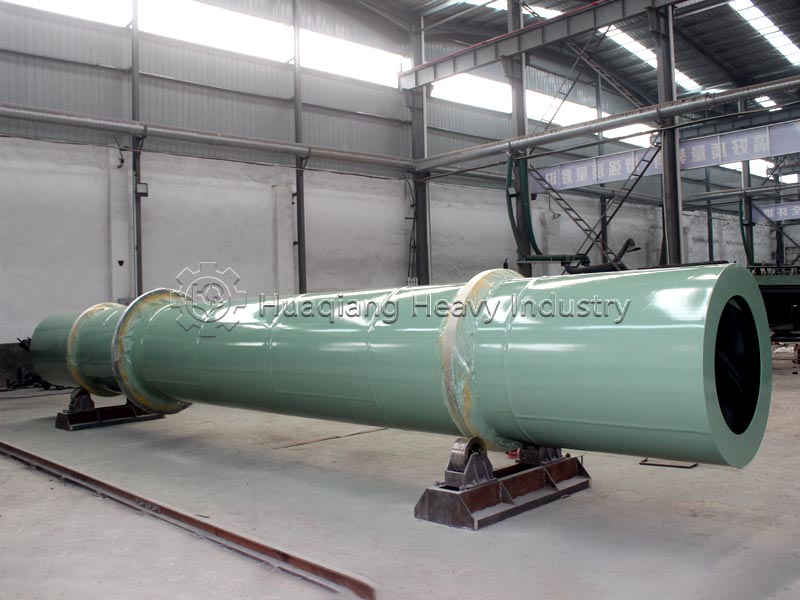
Organic fertilizer granules are highly susceptible to cracking, chipping, and even pulverization during the drying and cooling processes due to mechanical collisions and thermal stress. The key to protecting granule integrity lies in rationally setting the drum rotation speed, in conjunction with the air temperature curve and the internal lifting plate structure. This article provides an operable anti-breakage solution based on three physical parameters.
Contact Time Control: Rotation SpeedDetermines Tumbling Intensity
Drum dryers and coolers tumble the material through rotation, but excessively high rotation speeds exacerbate impacts between granules and between granules and the drum wall.
Suitable Rotation Speed Range: For drums with a diameter of 1.8-2.5m, the rotation speed should be controlled at 4-8 rpm (linear velocity 0.4-0.8 m/s). Since the strength of organic fertilizer granules is generally lower than that of compound fertilizers, the lower-middle range is recommended: 5-6 rpm for the dryer and 6-7 rpm for the cooler.
Relationship between Rotation Speed and Contact Time: For every 1 rpm decrease in rotation speed, the residence time of the material in the drum increases by approximately 15%-20%. Reducing the rotation speed appropriately allows the particles to “slide” rather than “throw,” reducing breakage from falls.
Adjustment method: Use a variable frequency motor drive. After starting, gradually increase the speed from low to high, observing the powder content of the discharged particles. If the increase in fine powder exceeds 3%, the rotation speed should be reduced by 1-2 rpm. Simultaneously, control the cylinder filling rate at 12%-15% to avoid excessive material accumulation causing crushing.
Air Temperature Curve: Thermal Stress Control Organic fertilizer particles rapidly dehydrate and shrink at high temperatures, while internal moisture evaporates, creating tension that easily leads to cracking.
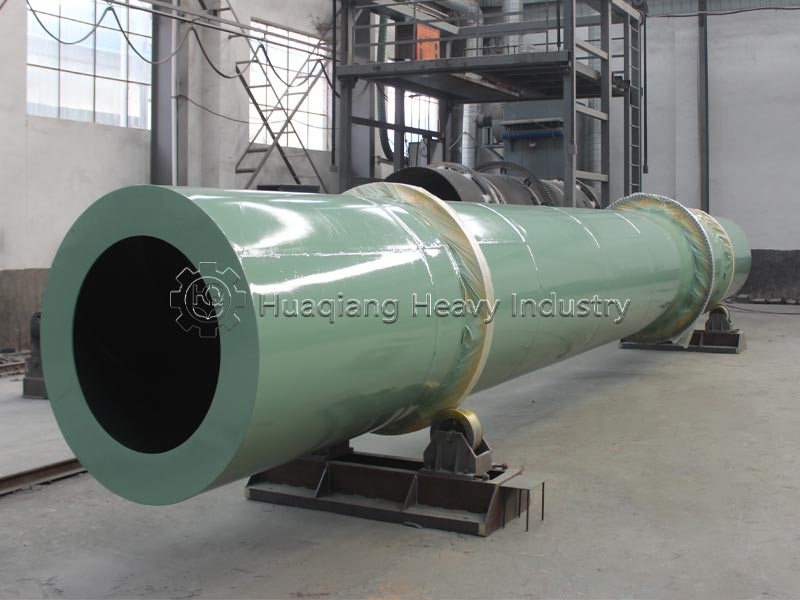
Dryer Air Temperature: Use a “front, high, medium, low” gradient curve. The inlet hot air temperature is 120-150℃ (30℃ lower than compound fertilizer), decreasing to 90-110℃ in the middle of the cylinder, and controlled at 60-70℃ at the discharge end. The inlet air temperature must not exceed 180℃, otherwise the particle surface will harden instantly and the internal parts will burst.
Cooler Air Temperature: The cooling section should use segmented counter-current flow of ambient temperature air. The first section (feed end) uses 25-30℃ air temperature, and the second section (discharge end) uses 15-20℃ cold air. Avoid rapid cooling; the temperature gradient should be controlled within ≤30℃/min.
Temperature measurement point arrangement: Install thermocouples at the drum inlet, middle, and outlet, and adjust the hot air furnace air supply or cold air blower speed accordingly. Actual measurements show that following the above air-temperature curve, the particle breakage rate can be reduced from 8% to below 3%.
Internal lifting plate design: Gentle lifting. The lifting plate structure directly affects the material lifting height and scattering method.
Recommended lifting plate type: Use L-shaped or bent low-pressure lifting plates, controlling the lifting height to 1/4-1/3 of the drum diameter. Avoid using straight plates or high-lift lifting plates (lifting to the top and then dropping).
Lifting plate arrangement: Install spiral guide plates (60° inclination) within 2 meters of the feed end to allow wet particles to move quickly into the drum, reducing accumulation and wear. The middle and rear sections employ segmented, disconnected lifting plates, each 0.5-0.8 meters long with a 10cm gap between sections, allowing particles to roll naturally rather than be forcibly scattered.
Wear resistance and cushioning: The edges of the lifting plates are covered with polyurethane or rubber strips to reduce hard impact with the particles. Additionally, nylon liners or rubber hoppers can be added to the inner wall of the cylinder, which, in actual tests, can further reduce the breakage rate by 1.5%.
Comprehensive Optimization Case Study: An organic fertilizer plant was processing cow manure particles (initial strength 8N). The original dryer speed was 9 rpm, the inlet air temperature was 180℃, and the output powder rate reached 12%. Adjustment plan: The speed was reduced to 5.5 rpm; the inlet air temperature was adjusted to 135℃, 105℃ in the middle section, and 65℃ at the outlet; the lifting plates were changed from straight plates to L-shaped plates with rubber edges. After the modification, the powder rate decreased to 3.2%, the particle strength remained above 7.5N, and the output did not decrease significantly.

The drying and cooling stage is the final critical step in the fertilizer manufacturing process, where the integrity of organic fertilizer granules is most vulnerable. This stage directly follows upstream fermentation composting turning technology and the composting process for animal manure, where well‑decomposed materials have been transformed into stable, humus‑rich feedstocks. After fermentation, the material typically enters an organic fertilizer disc granulation production line or other granulation process in fertilizer industry to form wet granules. However, without careful control of drum speed, air temperature, and lifting plate design in the subsequent fertilizer drying and cooling machine, even the best‑formed granules can crack, chip, or powder due to mechanical impact and thermal stress. By applying the “low speed, medium temperature, gentle lifter” principle — 4‑8 rpm, gradient air temperature 120‑150°C, and L‑shaped buffer lifters — the breakage rate can be reduced from 8‑12% to below 3%, while maintaining granule strength ≥7.5N. This optimization not only preserves product appearance and nutrient uniformity but also enhances flowability, reduces dust, and improves customer satisfaction. Ultimately, integrating these drying/cooling adjustments with the entire production chain — from fermentation and composting to granulation and final packaging — ensures that every granule survives the process intact, delivering high‑quality organic fertilizer that meets market standards with minimal loss.
Summary: The core of preventing breakage in the drying and cooling process of organic fertilizer lies in “slow speed, medium air temperature, and gentle lifting plates”. By controlling the drum speed at 4-8 rpm, using a gradient air temperature of 120-150℃, and selecting low-pressure buffer lifters, the particle integrity rate can be increased to over 95%. We specialize in the research and development and manufacturing of complete sets of organic fertilizer drying and cooling equipment, providing integrated solutions for low-speed variable frequency drives, intelligent gradient air temperature control, and low-pressure buffer lifters—increasing your particle integrity rate from 90% to over 95%, reducing breakage losses, and improving the marketability of the finished product.