
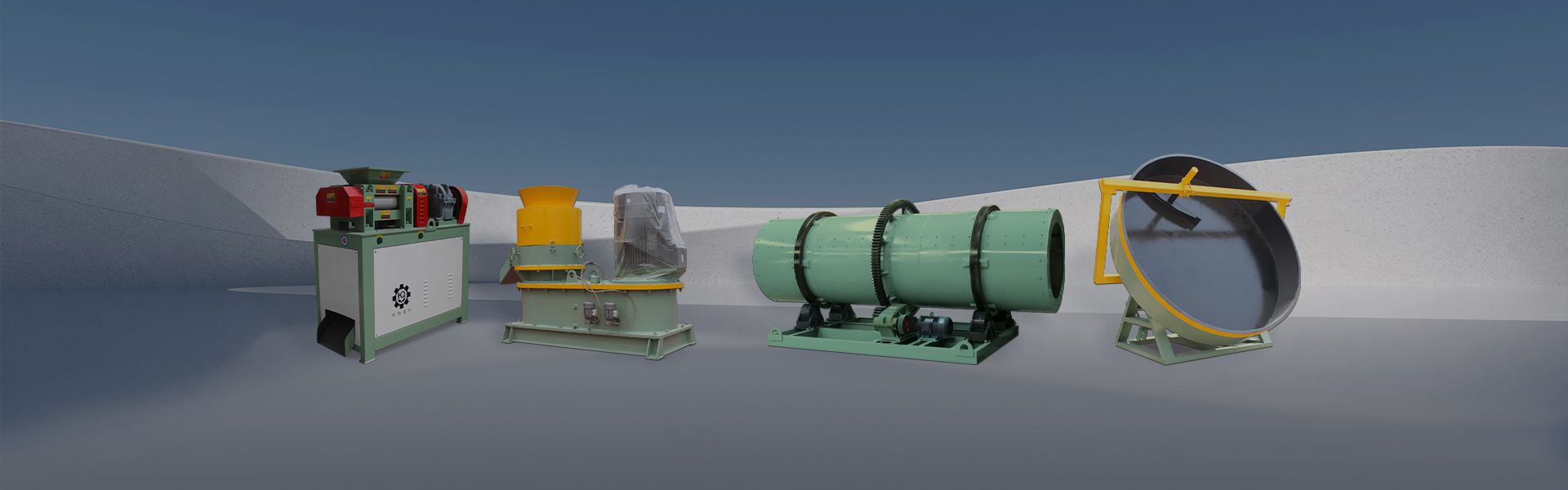
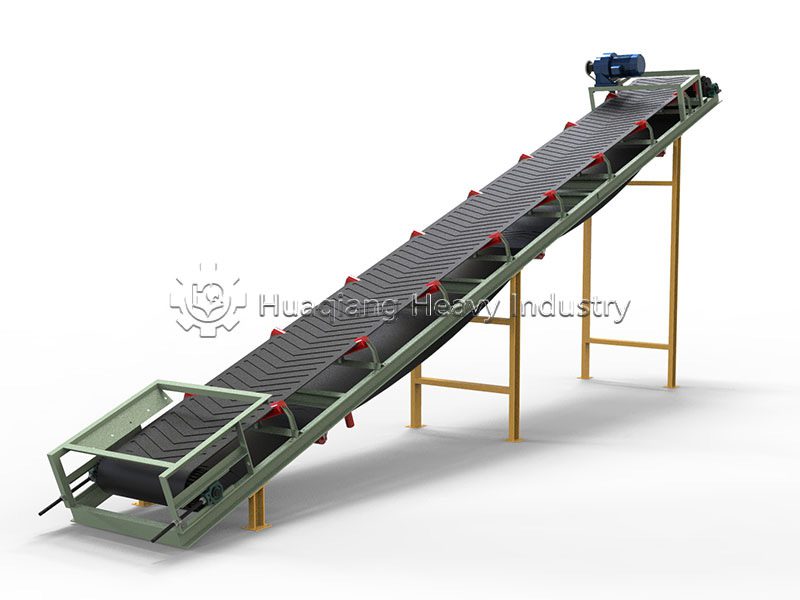
Belt fertilizer conveyor can be used for horizontal or inclined transport and are widely used in various modern industrial enterprises, such as metallurgy, coal, chemical, building materials, light industry, and grain processing. Belt conveyor have advantages such as large conveying capacity, simple structure, convenient maintenance, low cost, and strong versatility. They can be easily programmed for control and automated operation. They utilize the continuous or intermittent movement of the conveyor belt to transport powdery or granular materials, operating at high speed, smoothly, and with low noise, and can transport materials uphill and downhill.
Smooth and uniform conveying operation and controllable material feeding are the core advantages of belt fertilizer conveyor, adaptable to all processing steps. Fertilizer production processes are complex, and when used in conjunction with crushing, turning, granulation, screening, and packaging equipment, materials need to be fed at a uniform speed. The belt fertilizer conveyor provides smooth, uninterrupted operation without bumps or jams. Its adjustable speed ensures quantitative and uniform feeding, preventing material swarming and interruptions. This guarantees balanced feeding at each stage, consistent material quality, and efficient, orderly operation of the entire fertilizer production line.
The material breakage rate is extremely low, effectively reducing material waste. Whether it’s fragile granular fertilizer or soft, decomposed raw materials, screw and bucket conveyor, with their strong squeezing and scraping properties, easily crush materials, generating large amounts of waste powder. The belt conveyor uses a flexible, flat belt, allowing for flat material transport without squeezing or scraping. This maximizes the preservation of fertilizer granule integrity during transport, effectively reducing material loss, lowering rework costs, and improving the pass rate of various finished fertilizer products.
It saves time and labor through automated operation, significantly reducing labor costs in the factory. Previously, fertilizer raw material transport and finished product output relied entirely on manual cart handling, resulting in high labor costs, low efficiency, excessive dust, and a poor working environment. Belt conveyor can be customized in terms of inclination angle and length. They can climb slopes and transport goods over long distances. The entire process is automated, and a single person can operate the equipment, saving a lot of manual labor for handling and reducing labor costs in the factory area. At the same time, the enclosed conveyor can reduce dust diffusion and optimize the factory area working environment.