
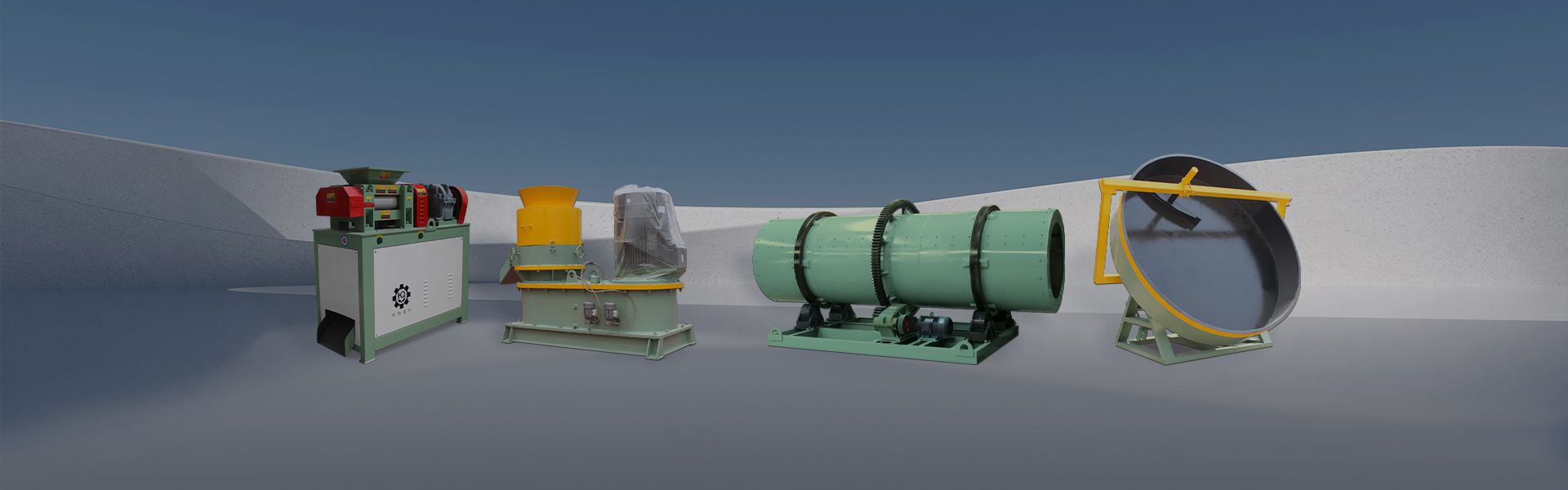
In organic fertilizer production, high-moisture materials (35%-45% moisture content) have always been a major challenge in granulation. Traditional extrusion or disc granulation requires moisture content below 30%, otherwise the granules are loose, easily stick to the walls, and drying energy consumption increases dramatically. In recent years, new organic fertilizer granulators based on centrifugal wet granulation (such as stirring tooth granulators and wet drum granulators) have successfully solved this problem. This article analyzes this from three aspects: the principle of centrifugal force, the advantages of wet granulation, and particle density.
Centrifugal Force Principle: Instant Formation Under High-Speed Throwing
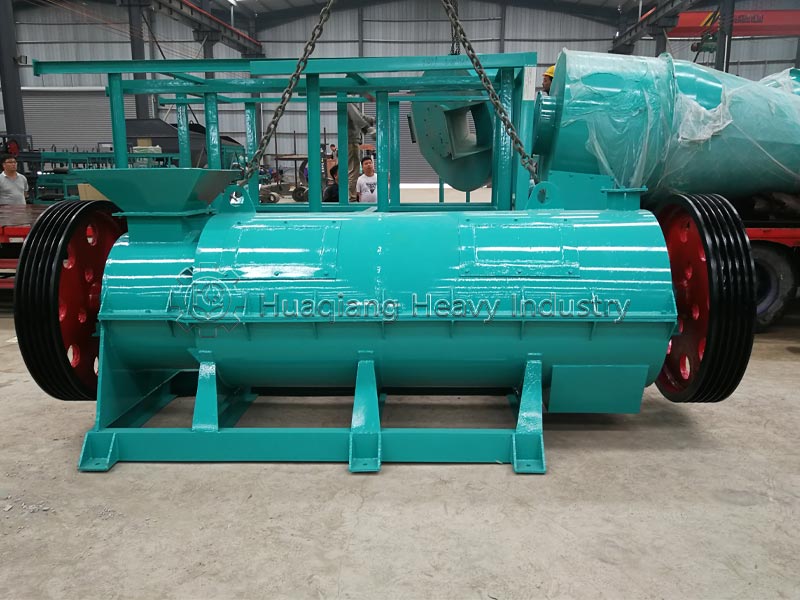
The core structure of the new wet granulator is a high-speed rotating rotor (speed can reach 300-600 rpm), on which wear-resistant stirring teeth or blades are installed. When organic materials with a moisture content of 35%-45% fall into the machine cavity through the feed inlet, the enormous centrifugal force generated by the rotor throws the material against the cylinder wall. Simultaneously, the material is subjected to high-speed shearing, tumbling, and compression in the annular gap between the stirring teeth and the cylinder wall.
Unlike traditional disc granulation, which relies on material rolling and agglomeration, centrifugal granulation is a forced forming process. The material completes the transformation from powder to granules within 0.5-2 seconds: moisture is evenly squeezed onto the granule surface under centrifugal force to form a liquid film, while solid particles interlock under high pressure. This principle allows materials with a moisture content 5-10 percentage points higher than conventional methods to successfully granulate.
Advantages of Wet Forming: No Drying Pre-treatment Required
The biggest breakthrough of the new granulator is that it allows raw materials to enter the granulation process directly in a high-moisture state after fermentation, eliminating the need for a secondary drying step before granulation.
High Raw Material Tolerance: It can process semi-wet organic materials with a moisture content of 35%-50%, including well-rotted chicken manure, cow manure, kitchen waste, and biogas residue. Traditional equipment suffers from severe clogging at this moisture level, while the self-cleaning effect generated by centrifugal force prevents material from adhering to the drum wall.
Eliminates the pre-drying step: Conventional processes require drying the material to below 25% before granulation, resulting in high energy consumption and dust generation. After the new wet granulation process, the particle moisture content remains between 30% and 40%, requiring only one drying cycle to reach the finished product standard, reducing overall energy consumption by approximately 30%.
Addition of liquid inoculants: During the wet molding process, microbial inoculants or binder solutions can be sprayed simultaneously at the feed inlet, achieving integrated “granulation + inoculation” and avoiding microbial loss caused by subsequent spraying.
III. Particle density: Porous but not loose. The biggest concern with high-moisture granulation is insufficient particle strength. The new granulator solves this problem through a three-stage densification mechanism: Centrifugal compaction: Under high-speed rotation, the material is subjected to centrifugal force dozens of times its own weight, resulting in denser granules; Axial extrusion: The spiral arrangement of the agitator teeth propels the material from the feed end to the discharge end, subjecting it to continuous axial pressure; Surface polishing: The granules are polished by friction near the discharge port, forming a smooth outer shell to prevent moisture absorption and pulverization.
Actual test data shows that when the new wet granulator processes well-rotted chicken manure with a moisture content of 40%, the resulting 2-5mm organic fertilizer granules have a compressive strength of 8-12N. Although slightly lower than the 15N or more of dry extrusion, this fully meets the requirements for transporting and spreading commercial organic fertilizer. More importantly, the granules maintain appropriate porosity, which facilitates rapid decomposition and fertilization after application to the soil.
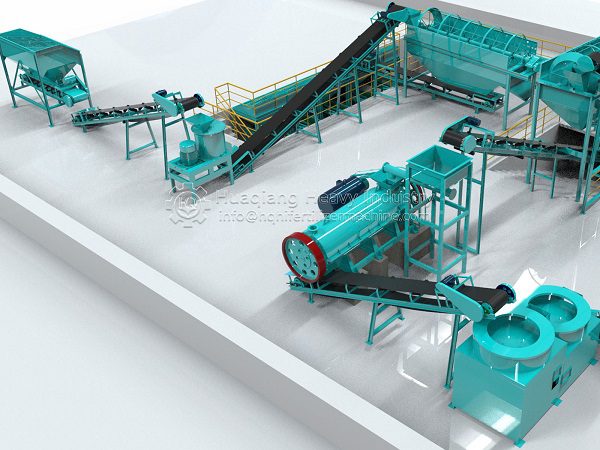
Applicable Scenarios and Maintenance Recommendations The new wet granulation machine is particularly suitable for the following scenarios: Direct granulation after fermentation, without the need for drying or pre-drying areas; Production of bio-organic fertilizer, requiring the addition of liquid functional bacteria during granulation; Processing high-fiber, high-viscosity raw materials (such as cow dung, medicinal herb residue, and distiller’s grains).
Maintenance considerations: Monthly inspection of the agitator teeth and liner wear, maintaining a gap of 5-8mm; Cleaning the spray nozzles every shift; Adding high-temperature grease to the bearings every 500 hours. Under proper use, the equipment lifespan can reach 5-8 years.
The breakthrough of the new type organic fertilizer granulator (centrifugal wet granulation) is not an isolated innovation — it perfectly complements the upstream processing chain. Reliable organic fertilizer production starts with advanced fermentation composting turning technology, where equipment such as the large wheel compost turning machine and windrow composting machine ensures thorough aeration, temperature control, and pathogen elimination for high‑moisture raw materials like poultry manure. For dedicated manure handling, a robust chicken manure fertilizer machine series (including dewatering and mixing units) prepares the semi‑wet material, followed by precise fertilizer formula processing to balance carbon‑to‑nitrogen ratios and add functional microbes or binders. This pretreated, still‑moist (35%–45%) feedstock then enters the high‑speed centrifugal granulator, which eliminates pre‑drying, reduces energy consumption by ~30%, and produces porous yet sturdy granules (8–12N compressive strength). By integrating these technologies — from windrow or large‑wheel turning to formula adjustment and finally wet granulation — organic fertilizer plants can achieve a streamlined, low‑carbon process: less drying, less dust, and better microbial survival. The result is a new generation of commercial organic fertilizer that combines the handling convenience of dry granules with the biological activity of minimally processed wet materials, offering both agronomic performance and operational economy.
Summary: The new organic fertilizer granulator utilizes high-speed centrifugal force and the wet forming principle, completely changing the traditional perception that “high moisture content cannot be granulated.” It retains the flowability of wet materials while producing dense, usable granules, providing a new option for energy saving, consumption reduction, and process simplification in organic fertilizer plants. We focus on the research and development and manufacturing of new wet organic fertilizer granulation equipment. Our centrifugal stirring tooth granulator can directly process materials with a moisture content of 35%-50%, eliminating the need for pre-drying. We provide full support from equipment customization to process debugging, enabling your production line to save energy and reduce consumption in one step.