
Premium WordPress theme for construction companies, contractors, builders, and a variety of other construction-related businesses.
-
28238 Kelsie Lane Apt. 451,
Port Annabelport
-
Call Us: (210) 451-123
(Sat - Thursday)
-
Monday - Friday
(10am - 05 pm)
New Type Organic Fertilizer Granulator

Equipment Introduction
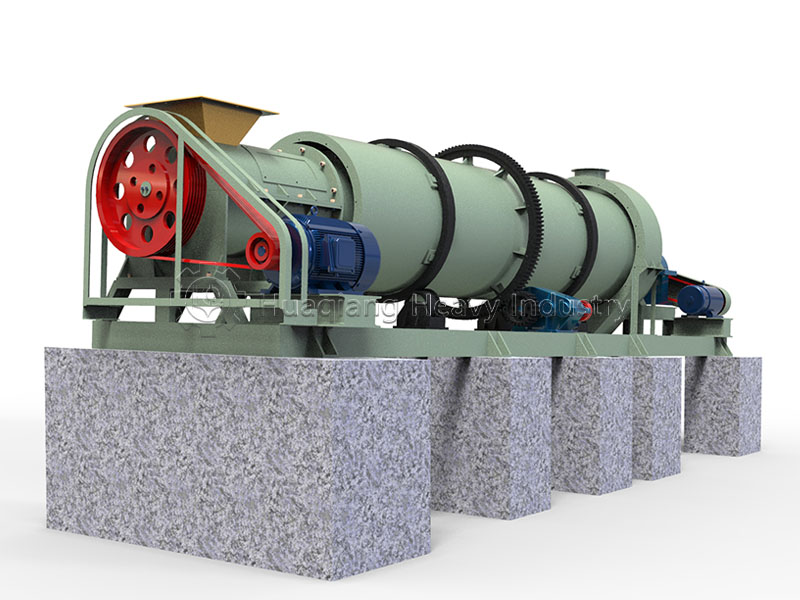
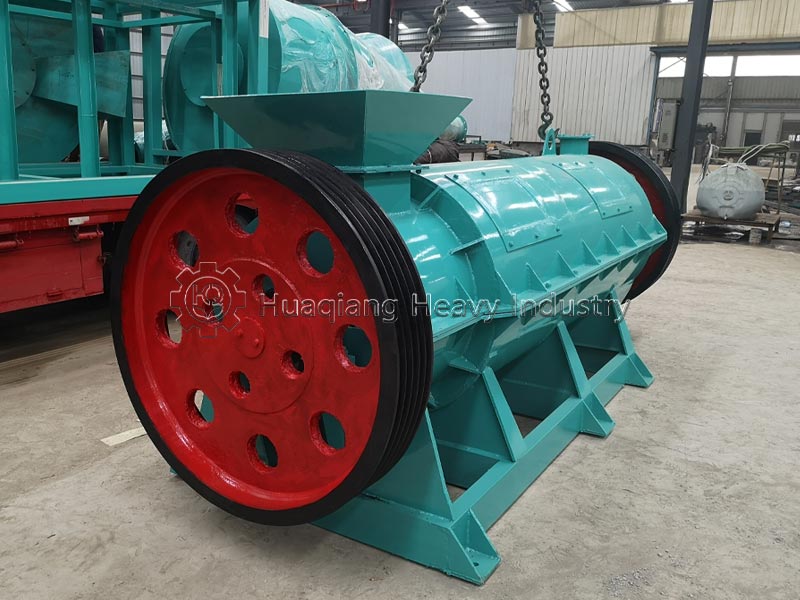
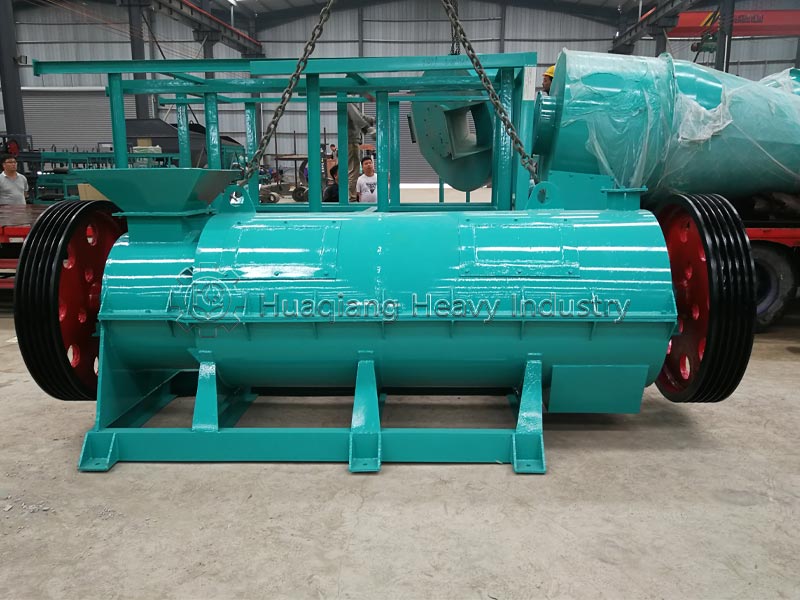
The new type of organic fertilizer granulator, also known as a stirring tooth granulator, wet internal rotating stirring tooth granulator, or pusher granulator, is a patented product jointly developed by the Agricultural Machinery Research Institute and equipment manufacturing enterprises. It changes the traditional disc or drum granulation process, adopting wet continuous pusher granulation technology. Through the high-speed rotating mechanical stirring force and aerodynamics, the material achieves continuous mixing, granulation, pelletizing, and densification within the machine. It is the main granulation equipment in organic fertilizer, bio-organic fertilizer, and organic-inorganic compound fertilizer production lines, balancing “wet material pelletizing” and “perfectly round pellets.”
Core Advantages:
1. High Pelletizing Rate: Up to 90%-97% or higher, low pulverization rate, and minimal material loss.
2. Strong Adaptability to Coarse Fibers: Excellent granulation effect for coarse fiber materials (straw, distiller’s grains, mushroom residue, medicinal residue, etc.) that are difficult to granulate with conventional equipment.
3. No Binder Required: Utilizes the interlocking growth characteristics of organic microparticles, typically eliminating the need for chemical binders.
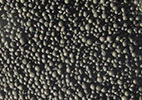
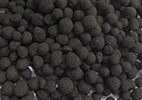
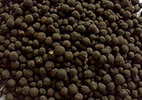
4. High Pellet Quality: Finished pellets have a sphericity ≥0.7, smooth surface, and high uniformity.
5. Energy Efficient: Gentle granulation process, lower energy consumption than traditional granulation methods.
6. Compact Structure: Small footprint, easy installation, and stable operation.
Raw Materials for the Equipment
The new type of organic fertilizer granulator has a wide range of adaptability to raw materials, with its core advantage being its tolerance for relatively high material moisture content:
1. Raw Material Moisture Content Requirements
The machine has a wide adaptability range for material moisture content, typically between 20% and 50%. Specifically, fermented organic raw materials with a moisture content of around 30%-40% can be directly granulated. This characteristic allows the material to be directly fed into the granulator for granulation without drying after exiting the fermentation tank.
2. Raw Material Types
Livestock and Poultry Manure: Chicken manure, pig manure, cow manure, sheep manure, etc., fully decomposed and fermented.
Agricultural Straw: Corn stalks, rice straw, wheat straw, cotton stalks, etc., crushed.
Industrial Organic Waste: Distillery lees, mushroom residue, medicinal residue, furfural residue, etc.
Urban Organic Waste: Sewage sludge, kitchen waste residue, etc.
Natural Organic Materials: Peat moss, humus, lignite, etc.
3. Raw Material Pretreatment Requirements
Fermentation and decomposition treatment is required first.
Ensure no hard impurities such as metal or stones are present before feeding.
If the moisture content exceeds 45%-50%, simple dehydration or the addition of auxiliary materials such as rice husk powder or straw powder is recommended.
The fineness of the crushed raw materials should be controlled below 2mm to ensure granulation effect.
Equipment Structure
The new organic fertilizer granulator mainly consists of three parts:
1. Body: The main load-bearing structure, welded from high-quality steel, is robust and durable. The material completes the entire process from feeding to granulation and discharge within the machine. The internal design includes a well-designed granulation chamber, providing space for high-speed mixing and forming of the material.
2. Granulation Rotor (Core Working Component): The rotor is equipped with stirring teeth (also known as agitating teeth or granulating teeth), which are the core components for achieving the granulation function. When the rotor rotates at high speed, the stirring teeth generate strong mechanical stirring and shearing forces on the material, enabling continuous mixing, granulation, balling, and densification processes within the machine. The stirring teeth are typically made of high-strength wear-resistant alloy, with replaceable alloy cutter heads at the ends to extend their service life.
3. Transmission System: This includes the electric motor, reducer, drive shaft, and pulleys. The electric motor provides power, which is reduced and increased in torque by the reducer to drive the granulation rotor to rotate at high speed. The transmission system and the main body are mostly fixed on the same frame, resulting in a reasonable structure, stable operation, and very convenient installation.
Some models are also equipped with a spraying device to evenly spray water or binder solution onto the material during granulation to regulate its moisture content.

Working Principle of the Equipment
The working principle is based on wet pusher granulation technology. The granulation process can be summarized in the following stages:
1.Feeding: The raw material to be processed enters the machine body evenly through the feed inlet at one end.
2.Stirring and Driving: The rotor rotates continuously, pushing and circulating the material inside the machine casing, crushing and mixing the raw material.
3.Wet Forming: Through the mechanical movement of the granulation rotor, the material is bound into granules under sufficient humidity conditions.
4.Discharge: The final granules are discharged from the other end of the equipment, completing the granulation process.
The entire process utilizes the advantages of wet processing to ensure forming effect and particle density while avoiding the formation of powder. This design is particularly suitable for materials with high coarse fiber content or high moisture content.
Equipment Application Scope
1. Fertilizer Industry (Core Application Area)
Organic Fertilizer: Livestock and poultry manure (chicken manure, pig manure, cow manure, sheep manure), straw, biogas residue, mushroom residue, etc.
Bio-organic Fertilizer: Organic fertilizer with added functional microbial agents (mild granulation to protect microbial activity)
Organic-Inorganic Compound Fertilizer: Granulation of organic fertilizer and NPK inorganic fertilizer
Humic Acid Fertilizer: Granulation of humic acid and urban sludge, etc.
Microbial Fertilizer: Granulation of microbial agent carriers
2. Other Industrial Sector
Chemical Industry: Granulation of viscous chemical raw materials such as dyes, pigments, and catalysts
Feed Industry: Granulation of mixed feeds such as corn flour, soybean flour, and grass meal
Environmental Protection Industry: Resource-based granulation of municipal sludge, kitchen waste, and industrial organic waste
Applicable Material Characteristics
The new organic fertilizer granulator is especially suitable for:
Lightweight fine powder materials (the finer the powder particles, the higher the sphericity and the better the pellet quality)
High-fiber materials (materials that are difficult to granulate with conventional equipment, such as straw, distiller’s grains, mushroom residue, and medicinal residue)
High-moisture materials (materials with a moisture content of 35%-45% can be granulated directly)
Limitations: Materials with a nitrogen content exceeding 8% are prone to sticking to the wall and require careful handling.
Granulation Process of the Equipment
The core of this equipment adopts a new type of wet continuous pusher granulation process, which differs from dry granulation. It eliminates the need for drying powder, is suitable for high-humidity fermentation materials, and features a simpler process and lower cost. The complete granulation process flow is as follows: Raw material screening → Fermentation and maturation → Moisture adjustment → Uniform feeding → Wet extrusion granulation → Finished pellet discharge → Subsequent drying/cooling/packaging. Raw materials such as straw, manure, and waste residue are crushed and screened to remove large impurities, and the carbon-nitrogen ratio is adjusted to ensure uniform material size.
Advantages: The aerobic fermentation process results in no odor and zero pollution, meets environmental impact assessment standards, and produces organic fertilizer granules with stable fertility, no risk of root burn, and higher market acceptance.
Equipment Operation Procedures
Pre-start Preparation
Inspect Equipment: Confirm all bolts are tight, agitator teeth are not loose, and the casing is well sealed.
Check Lubrication: Add gear oil to the reducer to the oil level line; ensure sufficient grease in the bearing housings.
Check Electrical System: Confirm the motor rotation direction is correct (reverse rotation is strictly prohibited).
Adjustment and Installation: Ensure the feed end is 3-5cm higher than the discharge end.
Start-up Operation Steps
Step 1: Start the motor under no-load and run for 2-3 minutes, checking for any abnormal noise or vibration.
Step 2: Confirm the rotation direction is correct (if reverse rotation is detected, stop the machine immediately and adjust).
Step 3: Start the water spray/spraying system (adjust moisture content if necessary).
Step 4: Feed material slowly and evenly, starting with a material with a lower moisture content for a trial run.
Step 5: Observe the pelleting process and gradually adjust the feed speed and moisture content.
Step 6: After stable pelleting, proceed with continuous production.
Key Adjustments During Operation:
– Particles too large: Reduce raw material moisture or increase spindle speed.
– Particles too small/containing powder: Increase raw material moisture or decrease speed.
– Low pelleting rate: Check raw material fineness and moisture content to ensure they are within the optimal range.
– Severe wall adhesion: Appropriately reduce moisture or stop the machine for cleaning.
– Shutdown Procedure:
– Stop feeding first, and stop the machine only after most of the material has been discharged.
– If necessary, restart the machine after stopping for 2-3 minutes to expel all remaining material.
– Never start the machine with material on it to avoid equipment damage.
– Emergency Handling:
– Material jamming or excessive power load: Immediately reduce feeding and stop the machine for inspection.
– Cleaning adhered material: Open the machine casing for cleaning, or add water to the casing for rinsing.
Equipment Maintenance Methods
1. Lubrication and Maintenance
Gear Reducer: Gear oil must be added before production begins. Replace the gear oil every four months thereafter.
Main Bearing Housing: Replace the grease every three months.
2. Daily Inspection
Check all fastening bolts for looseness each shift.
Check the wear of the agitator teeth and the condition of the alloy cutter head.
Pay attention to the normal operation of all parts of the machine.
Check the transmission system for abnormal noise and vibration.
3. Cleaning and Maintenance
Regularly clean the material adhering to the inner wall of the machine.
If a decrease in granulation efficiency, rough particle surface, or increased equipment operating noise is found, clean immediately.
Always stop the machine and disconnect the power during cleaning, and take safety precautions.
Avoid striking the inner wall with hard tools to prevent damage to the equipment.
4. Management of Wear Parts
The alloy cutter head of the agitator granulation system is a major wear part. Regularly check its wear and replace it promptly.
Keep commonly used spare parts (aggregator teeth, bearings, belts, etc.).
Record maintenance time, content, and replaced parts.
Application of the Equipment in the Production Line
The new type of organic fertilizer granulator is typically used as the core granulation equipment in the production line, located after the fermentation, crushing, and mixing processes, and before the drying, cooling, and screening processes.
1. Typical Flowchart of Organic Fertilizer Production Line
Raw Material Fermentation (Compost Turner) → Semi-Wet Material Crusher → Horizontal Mixer → New Organic Fertilizer Granulator → Dryer → Cooler → Drum Screen → Automatic Packaging Machine
2. List of Supporting Equipment
Fermentation Equipment: Trench Compost Turner, Tracked Compost Turner, etc.
Crushing Equipment: Semi-Wet Material Crusher, Vertical/Horizontal Crusher
Mixing Equipment: Horizontal Mixer, Twin-Shaft Mixer
Granulation Equipment: New Organic Fertilizer Granulator (Core)
Drying Equipment: Rotary Dryer
Cooling Equipment: Rotary Cooler
Screening Equipment: Drum Screen, Vibrating Screen
Packaging Equipment: Automatic Quantitative Packaging Machine
3. Process Features
Adopts a new wet continuous pusher granulation process.
Fermented materials can be directly granulated without drying or crushing.
Continuous production from fermentation to packaging is possible.
Equipment can be used as a single machine or combined in multiple units to form a mechanized continuous production line with an annual output of 10,000-100,000 tons.
4. Advantages compared to traditional processes: Traditional organic fertilizer granulation requires drying and crushing of materials before granulation, which is energy-intensive and time-consuming. The new organic fertilizer granulator allows materials with a moisture content of up to 20%-50%, and fermented wet materials can be directly fed into the machine for granulation, eliminating the energy-intensive drying pretreatment step in traditional processes, thus saving a significant amount of energy and time costs.
Common Equipment Problems and Solutions
1. Low Pelletizing Rate and Excessive Powder
Causes: Low raw material moisture content, incomplete fermentation, uneven feeding; Solutions: Appropriately increase the moisture content of the material, re-ferment substandard materials, adjust the feeding equipment to ensure uniform feeding.
2. Large Finished Particles and Agglomeration
Causes: High raw material moisture content, high machine temperature, excessive impurities in the material; Solutions: Reduce material moisture content, clean the material adhering to the machine body, and remove large impurities by screening.
3. Material Jamming, Excessive Load, and Inability to Operate
Causes: Feeding too fast, excessive material accumulation inside the machine, material containing hard impurities, severely worn cutter heads; Solutions: Immediately stop feeding, shut down the machine and disconnect the power, open the machine casing to clean the internal accumulation of material and impurities, replace worn cutter heads, adjust the feeding speed, and restart under no-load. 4. Excessive equipment vibration and abnormal noise
Causes: Failed frame damping, loose bolts, misalignment between motor and main drive pulley, insufficient bearing lubrication; Solutions: Replace damping material, tighten all bolts, calibrate the coaxiality of the transmission pulleys, and replenish bearing grease as needed.
5. Transmission slippage and insufficient power
Causes: Loose V-belt, insufficient gearbox lubrication, motor malfunction; Solutions: Tighten or replace the V-belt, replenish or replace gear oil, and inspect the motor wiring and equipment.
Equipment Parameters
| Model | Capacity (t/h) | Output Granules Size (mm) | Motor Power (Kw) | Outside Dimension (mm) |
|---|---|---|---|---|
| YSL-60 | 1-2 | 1-5 | 37 | 3700*1800*1050 |
| YSL-80 | 2-4 | 1-5 | 45 | 3700*2100*1300 |
| YSL-100 | 3-5 | 1-5 | 55 | 3750*2500*1500 |
| YSL-120 | 4-7 | 1-5 | 75 | 4900*2950*1900 |
| YSL-150 | 5-8 | 1-5 | 90 | 5000*3300*2150 |
Comparison of the new organic fertilizer granulator with other granulation equipment
| Comparison Item | New Type Organic Fertilizer Granulator | Disc Granulator | Double Roller Press Granulator | Rotary Drum Granulator |
|---|---|---|---|---|
| Pellet Forming Principle | High-speed stirring + aerodynamic agglomeration | Rolling agglomeration | Mechanical extrusion | Rolling + spraying agglomeration |
| Applicable Moisture Content | 35%-45% | 25%-35% | 5%-15% | 20%-30% |
| Fiber Adaptability | Excellent (Core Advantage) | Poor | Poor | Medium |
| Pellet Shape | Spherical, sphericity ≥0.7 | Round ball | Oblate / Strip shape | Irregular ball |
| Pellet Strength | High | Medium | High | Medium |
| Pelletizing Rate | 90%-97% | 85%-95% | Nearly 100% | 80%-90% |
| Binder Required | Usually not required | Sometimes required | Not required | Sometimes required |
| Investment Cost | Medium | Low | Medium | Medium-High |
| Energy Consumption | Medium | Low | Medium | Medium |
| Maintenance Difficulty | Medium | Simple | Medium | Medium |
| Best Application | High-fiber organic materials | Conventional organic / inorganic fertilizer | Dry powder low-moisture materials | Compound fertilizer raw materials |
The new type of organic fertilizer granulator (stirring tooth granulator) has become the preferred granulation equipment for organic fertilizer, bio-organic fertilizer, and organic-inorganic compound fertilizer production lines due to its core advantages such as superior adaptability to coarse fibrous materials, high pelleting rate, no binder required, and direct wet granulation. It specifically solves the industry pain point of traditional disc granulators and drum granulators being unable to handle high-fiber materials such as straw, mushroom residue, and medicinal residue. Whether you are building a new organic fertilizer production line and need a complete equipment solution, upgrading an existing production line and need equipment selection advice, or encountering difficulties in granulating coarse fibrous materials and need technical support—we are always ready to provide you with professional and sincere service.