
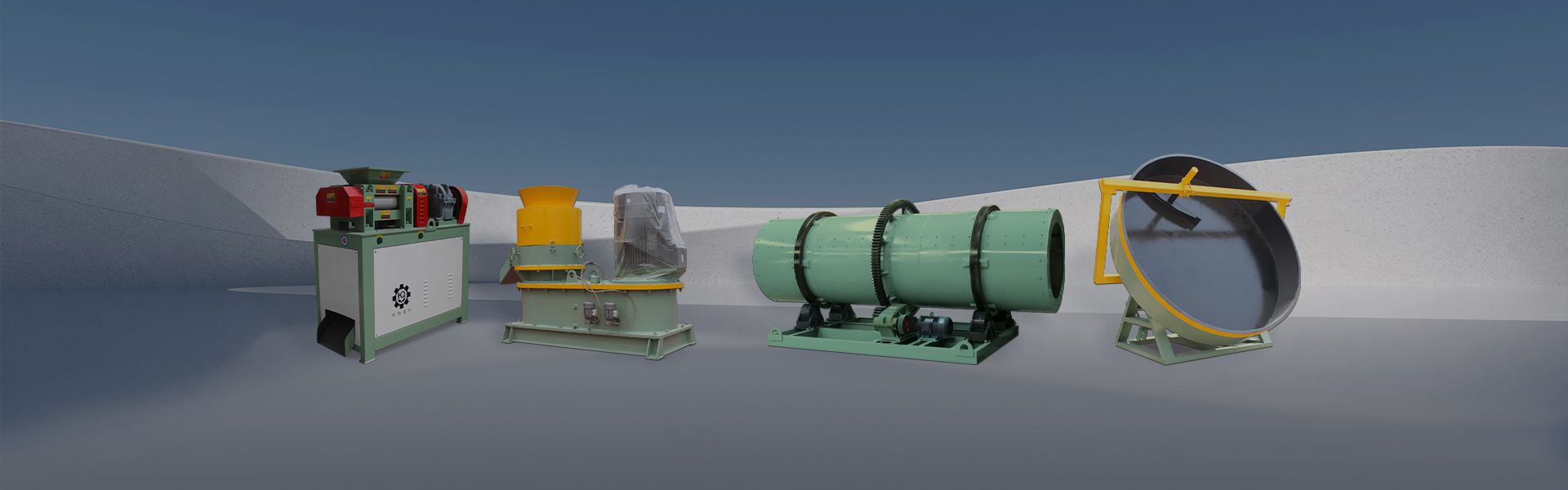
Why waste water, fuel, and floor space on drying when pressure alone can turn dusty raw materials into rock-solid granules? That is the logic behind the double roller press granulator—a machine that does not heat, does not wet, and does not complicate. It simply squeezes. And when it works as part of a well-matched production line, it transforms fertilizer manufacturing into a lean, energy-sipping operation.
The story starts upstream, where precision matters. An automatic batching system weighs out each ingredient—nitrogen, phosphorus, potassium, fillers, or organics—according to the recipe. A fraction off here will ripple all the way to the final pellet. Next, a horizontal mixer takes over, churning the blend until every grain of powder is evenly distributed. Without that uniformity, the granules that come later will split, crumble, or vary in nutrient content.
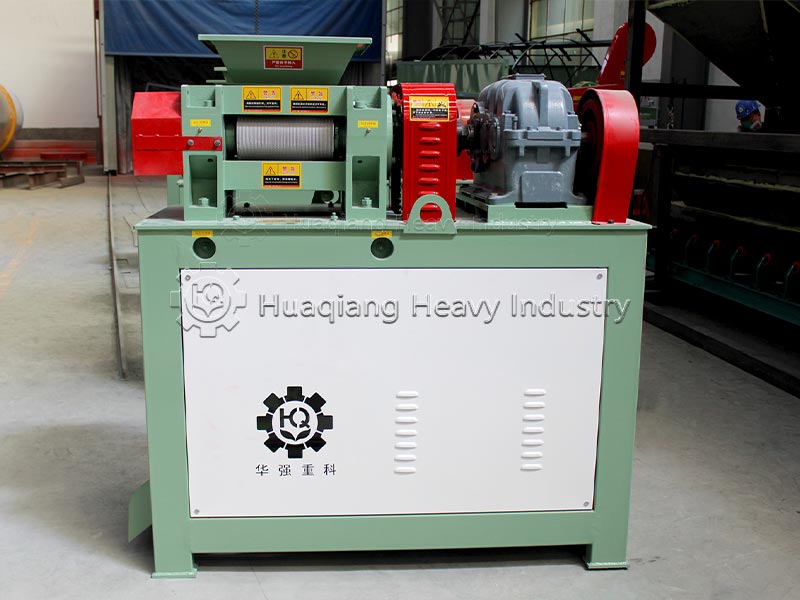
Once mixed, the material travels upward via a bucket elevator and settles into a buffer silo just above the roller press. This silo acts as a steady feeder, ensuring the press never runs hungry. Then comes the main act. Two rollers rotate toward each other—one fixed, the other pushed by a hydraulic system that can deliver over thirty kilonewtons per centimeter of linear force. Powder is forced into the gap and compacted instantly into dense, rigid sheets or strips. The density often doubles or triples; loose dust becomes a solid that can be handled, stored, and crushed.
But those sheets are not the finished product. They fall into a crusher fitted with rotating blades that break them into smaller, irregular fragments. A rotary screener machine then classifies the material into three streams: perfect-sized granules move ahead; oversized pieces circle back to the crusher; and fine dust returns via a screw conveyor to the roller press, where it mingles with fresh feed and gets another chance. Nothing leaves the loop until it meets specifications. This closed circulation means zero waste and consistent output.
One of the most striking benefits of this approach is what it leaves out. No dryer. No cooler. No binder. No water. Because the granules are formed purely by mechanical compression, the energy footprint shrinks dramatically compared to wet granulation lines.
Yet flexibility is built in. By swapping the roller shells or choosing different surface patterns, the press can produce granules in various shapes: oblate, pillow-shaped, rod-like, or even textured. For those who want a polished finish or controlled-release function, a coating drum can be added after screening to apply a thin layer of oil, wax, or functional powder. The line can also include a dedusting system to capture fine particles and keep the working environment clean.
From high-concentration compound fertilizers to organic blends and specialty soil conditioners, the double roller press granulation line handles a wide range of materials with reliability and low operating cost. It proves that sometimes the most elegant solution is also the simplest: take powder, apply pressure, and let the granules speak for themselves.