
Premium WordPress theme for construction companies, contractors, builders, and a variety of other construction-related businesses.
-
28238 Kelsie Lane Apt. 451,
Port Annabelport
-
Call Us: (210) 451-123
(Sat - Thursday)
-
Monday - Friday
(10am - 05 pm)
Double Roller Press Granulator

Equipment Introduction
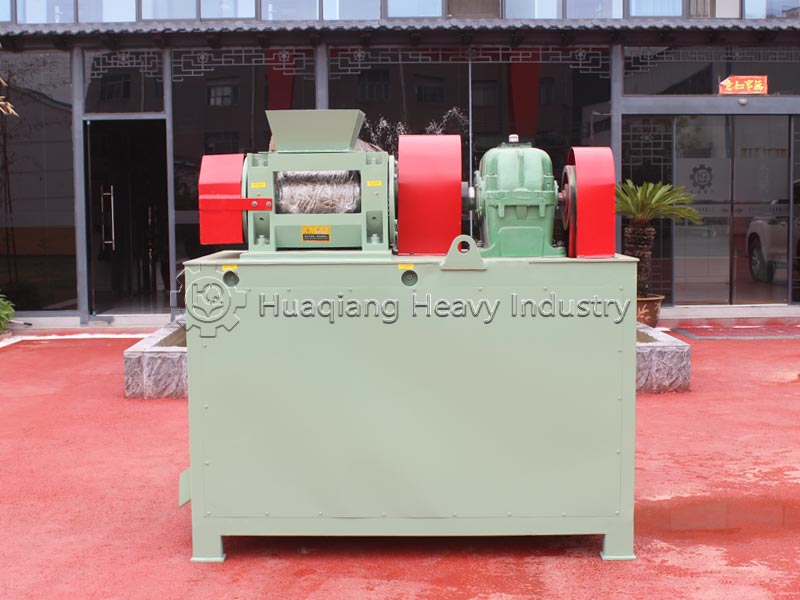
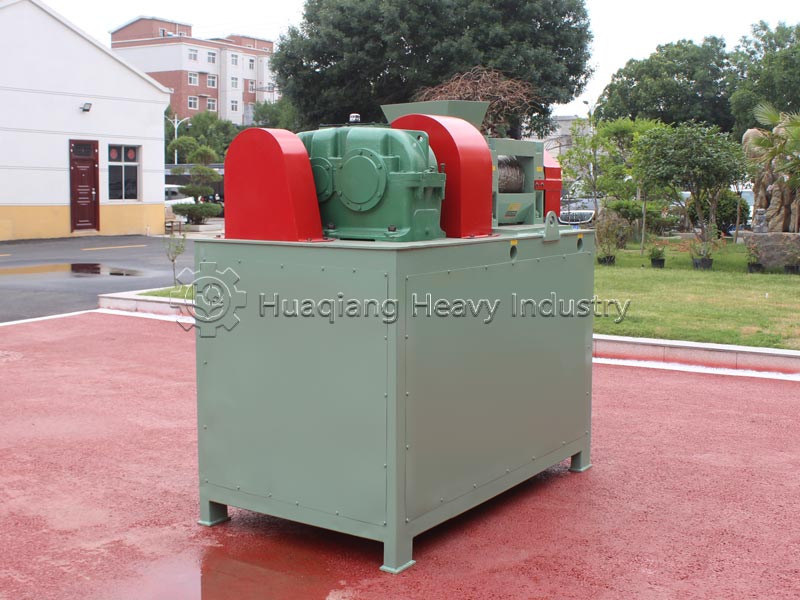
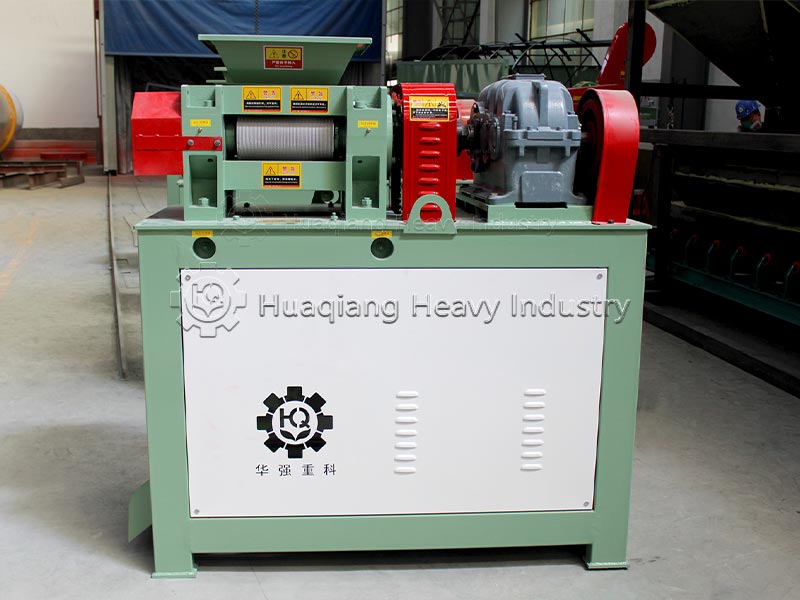
The double-roller press granulator works by using a pair of parallel rollers to compress powdery or fine-grained materials into granules of a specific shape and size through extrusion.
This equipment employs a dry extrusion granulation process, directly compressing dry powder materials into granules at room temperature. It primarily uses physical extrusion force to shorten the distance between material molecules and create binding forces, thus transforming loose powdery materials into granules with a certain strength and shape. The binding force between particles originates from intermolecular forces such as van der Waals forces, adsorption forces, crystal bridges, and embedded connections. This completely solves the pain points of traditional wet granulation processes, such as cumbersome processes, high energy consumption, and severe nutrient loss. Furthermore, this equipment features advanced technology, a reasonable design, a compact structure, and low energy consumption. It can be used as a standalone unit or combined with multiple units to form a mechanized continuous production line.
Double-roller press granulator, as an advanced dry granulation process, has been widely used in the fields of fertilizer, chemical, pharmaceutical and environmental protection due to its significant advantages such as high energy utilization, no need for drying process and low investment cost.
Equipment Structure Composition
The double-roller press granulator mainly consists of four systems:
- Frame Section: All working parts of the machine are mounted and fixed on the frame, typically welded from medium carbon steel plates and channel steel, ensuring the structural strength and operational stability of the entire machine.
- Feeding System: This includes the hopper, screw feeder (forced feeder), and regulating device. The hopper stores powdery materials and can be equipped with a stirring device to prevent arching; the screw feeder is responsible for uniformly and continuously conveying the material to the extrusion zone between the two rollers; the regulating device controls the feed rate. Some high-end models use a conical screw forced feeder to ensure that the powder continuously and uniformly enters the gap between the rollers.
- Extrusion System (Die Head Working Section): This is the core component of the equipment, consisting of two parallel and relatively rotating rollers (pressure rollers). The rollers are made of high-strength alloy steel, and the roller surface has grooves (die holes) of a specific shape to enhance biting and determine the shape of the final granules. The gap between the two rollers is adjustable (typically 0.3-1.5mm). The pressurizing device (hydraulic or spring) provides the high pressure required for extrusion and has overload protection. Specific bearings and bearing brackets are located on both sides of the drive and driven shafts, mounted on the frame.
- Transmission System This system consists of a motor, pulleys, V-belts, a reducer, couplings, gears, etc. The motor drives the pulleys, which transmits the power to the drive shaft via the reducer. The drive shaft works synchronously with the driven shaft via a set of split gears. In the DZJ-Ⅰ type extruder, the two rollers work in opposite directions via a set of split gears; in the DZJ-Ⅱ type extruder, the two rollers are directly driven by two output shafts on a dedicated reducer.
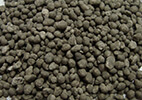
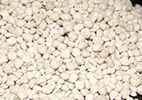
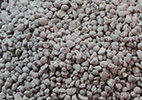
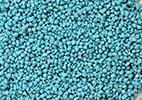
Working Principle of Double Roller Press Granulator
The double roller press granulator is a fully dry-type high-pressure physical forming equipment that operates at room temperature without adding water, liquid binder, or drying treatment.
The core forming mechanism relies on high-pressure plastic deformation and molecular rearrangement. After professional pretreatment, the powdery raw materials are uniformly and forcibly fed into the gap between two synchronously counter-rotating pressure rollers. As the rollers rotate, materials are bitten into the high-pressure compression zone and subjected to gradient increasing extrusion force ranging from 50 MPa to 150 MPa.
During compression, internal air is completely discharged, powder particles undergo elastic compression and plastic yielding, and molecular spacing is sharply reduced. The dense granule bonding force is formed through van der Waals force, molecular adsorption, crystal bridging, and mechanical embedding, turning loose powder into compact and high-density sheet or pillow-shaped blanks.
After passing through the roller gap, the pressure is instantly released, and the formed material demolds naturally by elastic recovery and self-weight. The blank material enters the crushing and shaping system to be cut into uniform standard particles. Finally, qualified particles are screened out while unqualified powder and oversized particles are recycled for secondary granulation.
The entire process is pure physical cold forming without chemical changes or nutrient loss, ensuring stable quality and high granule strength.
Complete Professional Dry Extrusion Granulation Process
The full production process adopts a closed-loop continuous automatic system, including six standardized procedures:
Raw Material Pretreatment
Raw materials are crushed, screened, proportioned and mixed to achieve uniform fineness and reasonable moisture content (1.5%–3%). Impurities and agglomerations are removed to ensure stable feeding and consistent forming quality.
Forced Feeding & Quantitative Conveying
Equipped with a screw forced feeder, materials are delivered steadily and quantitatively into the roller compression zone to avoid uneven feeding, overflow and empty pressing, ensuring consistent filling density.
High-pressure Roller Compression Forming (Core Process)
Dual rollers run synchronously and reversely. Materials pass through the biting zone, compression zone and high-pressure forming zone step by step. Powders are compacted into dense solid blanks under ultra-high pressure to achieve molecular-level tight combination.
Elastic Demolding & Particle Shaping
Formed sheets fall off automatically after pressure release. The special crushing device breaks continuous sheets into regular particle prototypes with uniform size and few scraps.
Vibration Screening & Closed-loop Recycling
Finished standard particles are screened and output. Fine powder and oversize particles are completely returned to the front-end batching system for re-granulation, achieving nearly 100% material utilization.
Finished Product Conveying & Packaging
Final granules feature high hardness, regular shape, strong compression resistance and low pulverization rate. No drying or cooling process is required, greatly reducing production floor area and energy consumption.
Core Process Advantages
- Room temperature dry granulation requires no binder and no drying system.
- Physical molding preserves original material nutrients and chemical properties.
- Closed-loop circulation achieves zero waste and high efficiency.
- Formed granules feature high strength, uniform size and excellent stability for storage and transportation.
- Simplified production line structure, lower investment and lower energy consumption.
Equipment Parameters
| Parameter | DZJ-I 1.0 | DZJ-I 2.0 | DZJ-I 3.0 | DZJ-I 4.0 |
|---|---|---|---|---|
| Model | DZJ-I 1.0 | DZJ-I 2.0 | DZJ-I 3.0 | DZJ-I 4.0 |
| Output Capacity (t/h) | 1 – 1.5 | 1.5 – 2.5 | 2 – 3 | 3 – 4 |
| Motor Power (kW) | 11 | 18.5 | 22 | 45 |
| Roller Size (Diameter × Length, mm) | ø150 × 220 | ø150 × 300 | ø186 × 300 | ø300 × 300 |
| Feed Particle Size (mm) | ≤ 0.5 | ≤ 0.5 | ≤ 0.5 | ≤ 0.5 |
| Discharged Granule Size (mm) | ø2.5 – ø10 | ø2.5 – ø10 | ø2.5 – ø10 | ø2.5 – ø10 |
| Gear Reducer Model | ZLY-160 | ZLY-160 | ZLY-180 | ZLY-224 |
| Roller Speed (r/min) | 60 | 60 | 60 | 60 |
Equipment Operation and Maintenance Guidelines
Correct Operating Procedures
Start-up Sequence: Screening Machine → Crusher → Granulator Main Unit → Feeding Device.
Operation Monitoring: Closely monitor the ammeter; overcurrent operation is strictly prohibited. Observe whether the discharged particles are uniform.
Shutdown Sequence: Stop feeding → Wait for material to be discharged → Stop the main unit → Stop the downstream equipment.
Maintenance Methods
Lubrication Management: Lubricate the bearings every 8-12 hours; change the gear oil in the reducer regularly.
Gap Adjustment: After running for a period of time, check whether the gap between the two rollers is consistent to prevent uneven load wear.
Foreign Object Removal: Install a strong magnetic iron removal device at the feed inlet to prevent iron blocks from damaging the roller surface.
Equipment Common Problems and Solutions
| Common Problems | Possible Causes | Solutions |
|---|---|---|
| Ball socket circumferential misalignment | Adjustment sleeve bolt loosening; Loose fit between roller skin and shaft | Tighten the bolts after alignment; Replace the roller skin or shaft |
| Failure to form balls or cake shape | Insufficient feed; Excessive gap; The gap between the two rollers is small at both ends and large in the middle | Ensure sufficient feed; Adjust the gap between the rollers; Grind off the parts on both sides to reduce the gap |
| Insufficient particle strength | Improper material moisture; Excessive gap between the rollers; Roller surface wear | Control the material moisture within a reasonable range (usually 5%-10%); Reduce the gap between the rollers; Repair or replace the roller surface |
| Excessive equipment vibration | Unbalanced rollers; Bearing damage; Loose fasteners | Re-calibrate the roller balance; Replace damaged bearings; Tighten loose bolts |
| Equipment overload | Excessive feed rate; Too small gap between the rollers; Transmission system failure | Adjust the feed rate; Increase the gap between the rollers; Check and repair the transmission system |
| Abnormal noise | Bearing damage; Gear wear; Roller collision | Replace damaged bearings or gears; Adjust the gap between the rollers to avoid collision |
| Material sticking to rollers | Excessive material viscosity or high humidity | Control the material moisture content; Clean the roller surface; Check the water circulation cooling system |
Double-roll press granulators, as highly efficient solid granulation equipment, are widely used in various industries. To meet different needs, the die structure, automatic control system, and screening and shaping processes can be further optimized. It is recommended to select and configure the appropriate model based on the specific properties of the raw materials and production capacity requirements, and to strengthen daily maintenance and management to promote energy conservation and consumption reduction.
For specific model selection advice or equipment integration solutions with production lines, please feel free to consult us or discuss practical case studies.