
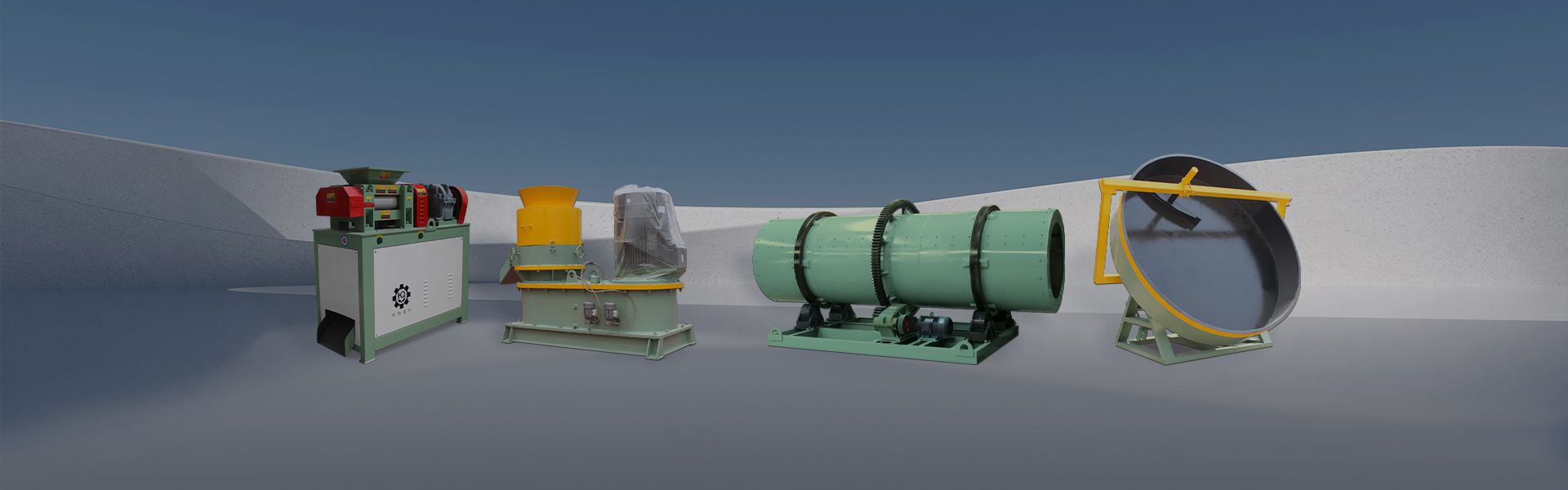
Imagine a production line where dust doesn’t exist, water isn’t needed, and energy bills are half of what they used to be. That’s not a dream. That’s the roller press granulator production line.
The Heart of the Line: Double Roller Press Granulator
At the center of everything sits the double roller press granulator. Two massive steel rollers rotate toward each other, pulling powder into their gap and squeezing it with hundreds of tons of force. In a split second, loose dust becomes solid sheet. Then the sheet breaks and screens into uniform granules. No water. No heat. Just pressure doing what pressure does best.
This machine handles everything from ammonium sulfate to potassium chloride, from compound fertilizers to organic blends. And because it runs at ambient temperature, heat-sensitive ingredients like probiotics or humic acids survive intact.
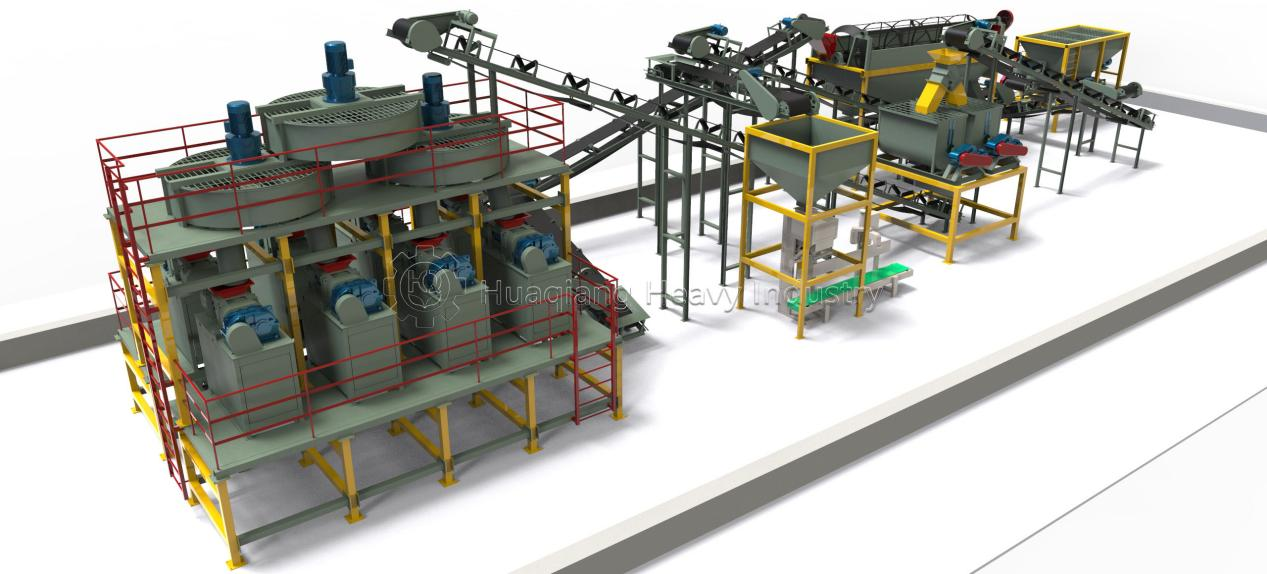
The Complete Line: What Goes Around It
A roller press never works alone. The full production line includes:
Feed System
Raw materials start in storage bins or hoppers. A loader tips ingredients into the intake, or a batching system weighs precise proportions automatically. From there, a conveyor carries material to the next step.
Crusher and Screener
Before pressing, materials need consistent particle size. A chain crusher or half-wet material crusher breaks down lumps, while a drum screener removes oversize particles. Proper preparation means better granulation and less recycle.
Mixer (Optional)
For multi-ingredient formulas, a horizontal or paddle mixer blends components thoroughly before they reach the rollers. This ensures every granule carries the same nutrient ratio.
The Roller Press Granulator
Here’s where the magic happens. Powder feeds evenly between the counter-rotating rollers. Hydraulic pressure forces the rollers together, compacting material into flake. The flake drops to a crusher below, breaking into smaller pieces before entering the screening loop.
Screening System
A rotary or vibration screener machine separates granules into three streams:
Perfect-sized granules (your finished product)
Oversize particles (sent to a chain crusher for reprocessing)
Fines (returned directly to the roller press)
Recycle Conveyors
Nothing wastes in this line. Conveyors carry oversize and fines back to their respective starting points. The loop continues until every particle becomes a perfect granule.
Cooler and Coater (Optional)
If the process generates heat, a rotary cooler brings granules down to safe storage temperature. For anti-caking or slow-release requirements, a coating drum applies a thin liquid layer before packaging.
Packaging
Finished granules flow to automatic bagging machines, filling bags from twenty-five kilos to one ton, or load directly into bulk trucks.
Why This Line Works
Zero Dust – The entire system runs enclosed. What goes in as powder stays contained until it emerges as granules.
Low Energy – Without drying, power consumption drops by fifty percent or more compared to wet granulation.
No Water – Perfect for areas with water restrictions. No discharge permits needed.
Simple Operation – One operator can manage the whole line from a central control panel.
Real Results
In a recent phosphate fertilizer plant, installing a roller press line increased production by forty percent while cutting energy costs in half. The operator reported: “We used to fight dust every day. Now we barely sweep the floor.”
The Bottom Line
From raw powder to finished granules, the roller press granulator production line transforms your operation. Less dust, lower costs, higher quality. And every component works together like a well-rehearsed team.