
In an era of large-scale livestock farming and increasingly stringent environmental regulations, the resource-oriented processing of chicken manure has evolved far beyond simple piling and decomposition; it is now a process of microbial engineering requiring precise control. Within this process, crawler-type windrow turners are redefining the efficiency and standards of aerobic fermentation, thanks to their outstanding performance in the two critical areas of temperature control and odor elimination.
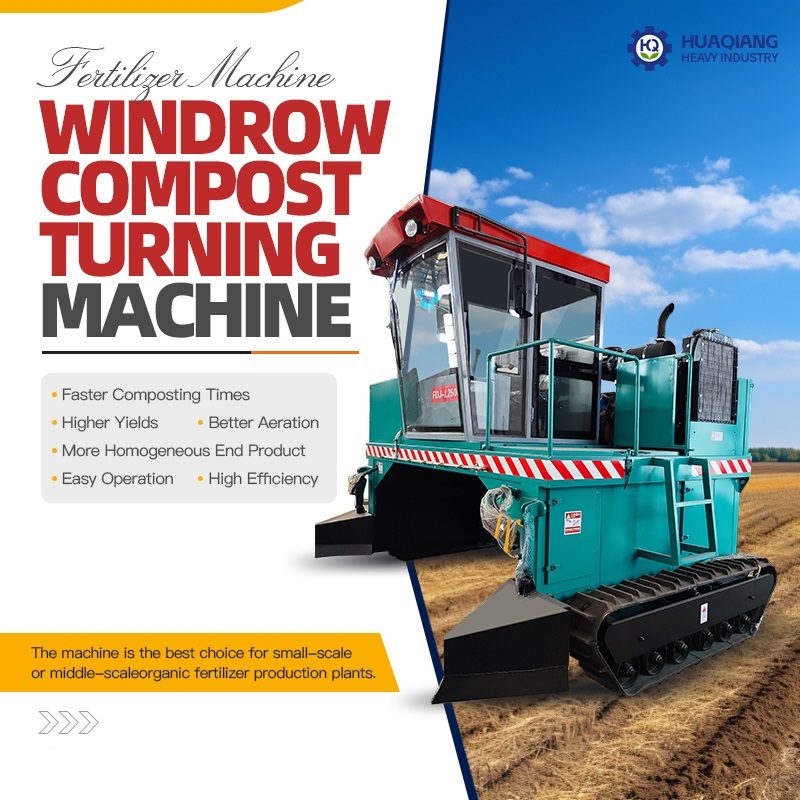
Traditional static composting often suffers from insufficient oxygen supply, leading to the formation of anaerobic pockets; this results in slow temperature rises and the generation of foul-smelling gases such as hydrogen sulfide and ammonia. The introduction of crawler-type windrow turners fundamentally alters this dynamic. By straddling the windrow, the machine uses a high-speed rotating blade shaft to forcibly turn, pulverize, and displace the material. This physical action breaks up clumps and significantly improves the porosity of the pile, allowing oxygen to permeate evenly into every corner. As the turner moves cooler material from the bottom to the surface and shifts hotter surface material to the interior, frequent air exchange dissipates excess moisture and accumulated heat, preventing localized overheating that could otherwise destroy beneficial microbial communities. Simultaneously, the increased specific surface area resulting from pulverization creates optimal conditions for microbial decomposition and heat generation. This dynamic cycle—involving oxygen-promoting turning, heat generation and temperature rise, ventilation and cooling, and subsequent re-turning—enables the pile temperature to rapidly surpass the hygienic high-temperature threshold of 55–70°C within 24 to 48 hours and remain stable within that range. It is precisely within this controlled temperature window that pathogens, parasite eggs, and weed seeds in the chicken manure are thoroughly eliminated, while the fermentation process is drastically shortened to just 7–10 days.
From ground-based windrow piling to large-scale in-vessel (trench) production, crawler-type windrow turners—with their agile track-based mobility and powerful turning capabilities—offer efficient, eco-friendly solutions for chicken manure processing across various scales. By harnessing mechanical power to unlock microbial potential, these machines transform what was once a troublesome waste product into high-quality organic fertilizer, all within an environment of controlled temperatures and clean air. This represents not only a technological advancement but also a modern interpretation of the age-old concept of turning waste into treasure.