
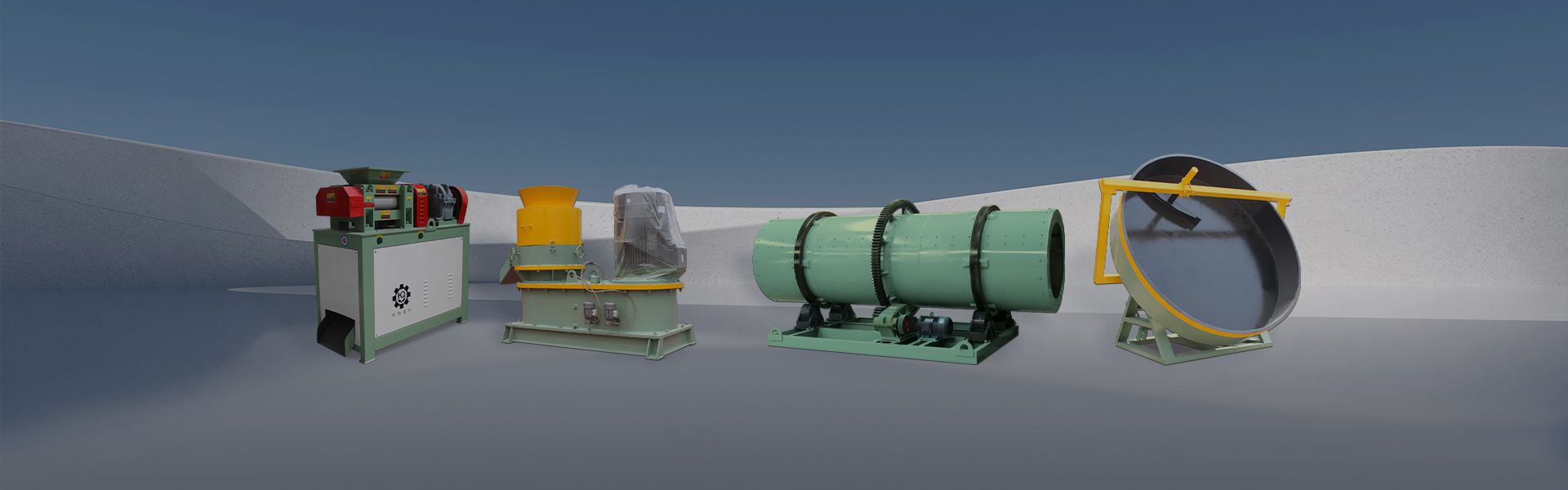
In the process control system of a drum fertilizer dryer, hot air temperature is a pivotal variable that influences the entire operation; it serves not only as the driving force for moisture evaporation but also as the “invisible conductor” determining the quality of the finished fertilizer. A deep understanding of the intrinsic link between hot air temperature and material quality is of great practical significance for achieving high-quality production through efficient drying.
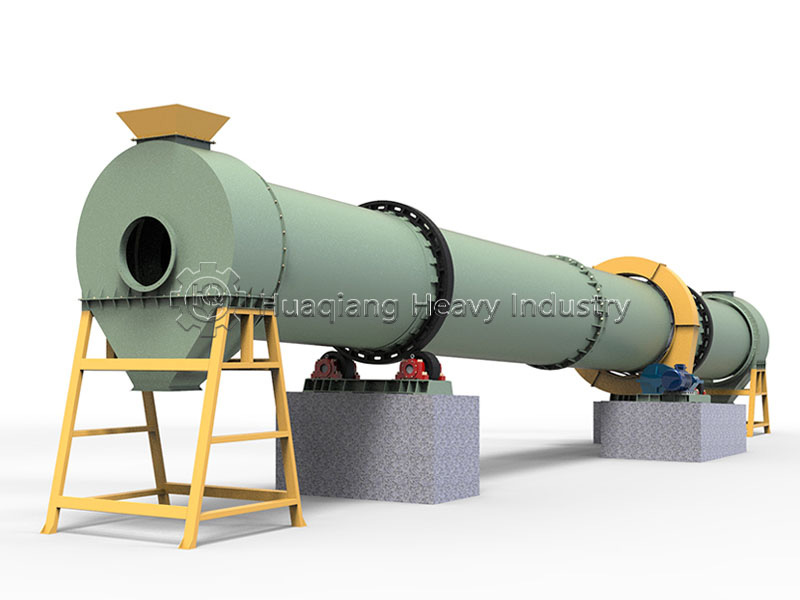
The relationship between hot-air temperature and fertilizer quality in drum fertilizer dryers is not a simple linear one; instead, it exhibits an unbalanced, bidirectional constraint.When the hot air temperature is too low, the most immediate consequence is insufficient drying drive—the rate of moisture evaporation drops significantly, forcing the material to remain in the drum for a longer period. This not only reduces production capacity and increases energy consumption but, more critically, creates a low-temperature, high-humidity environment conducive to microbial activity; this can easily lead to localized mold growth and spoilage, directly compromising the fertilizer’s storage stability. Furthermore, inadequate heat transfer makes it difficult to eliminate internal moisture gradients within the material, resulting in significant fluctuations in discharge moisture content and making it impossible to guarantee product quality consistency.
A complex and delicate dynamic balance exists between hot air temperature and material quality in drum fertilizer dryers. Excessively low temperatures lead to low efficiency and unstable quality, while excessively high temperatures cause nutrient loss and product degradation. Only by scientifically setting the hot air temperature and appropriately selecting the airflow pattern—whether co-current or counter-current—based on material characteristics, initial moisture content, and process objectives, can one achieve the optimal synergy between drying efficiency and product quality. This represents the essence of the process technology and a crucial step in transitioning fertilizer drying from crude operations to precision processing.