
Ansser: Although bio-organic fertilizer and ordinary organic fertilizer both belong to the category of organic fertilizer, they differ fundamentally in their implementation standards, core indicators, and functional positioning. The difference lies in the core principle that “ordinary organic fertilizer emphasizes organic matter, while bio-organic fertilizer emphasizes live bacteria.” The specific differences are as follows:
- Different Implementation Standards and Regulatory Levels: Ordinary organic fertilizer follows the recommended agricultural industry standard “Organic Fertilizer” (NY/T 525-2021). Bio-organic fertilizer follows the mandatory agricultural industry standard “Bio-organic Fertilizer” (NY 884-2012). This difference in standard nature means that bio-organic fertilizer is subject to stricter regulatory constraints regarding product quality, safety, and effectiveness.
- Differences in Core Indicators: The Fundamental Difference in Live Bacteria Count: The most crucial indicator for bio-organic fertilizer is the effective live bacteria count. The national standard NY 884-2012 clearly stipulates that the effective live bacteria count (CFU) of bio-organic fertilizer must be ≥ 0.20 billion/gram. Ordinary organic fertilizers, because their production process does not specifically require the addition of functional microorganisms, do not have any standards regarding the effective viable bacteria count. This is the most fundamental and intuitive difference between the two—without viable bacteria, it cannot be called a bio-organic fertilizer.
- Organic matter and nutrient indicators also differ. Bio-organic fertilizer (NY 884-2012) requires organic matter (dry basis) ≥40.0%, moisture ≤30.0%, and pH 5.5~8.5. Ordinary organic fertilizer (NY/T 525-2021) requires organic matter (dry basis) ≥30%, total nutrients (N+P₂O₅+K₂O) ≥4.0%, and moisture ≤30%. The organic matter threshold for ordinary organic fertilizer has been lowered from 45% in the old version of NY 525-2012 to 30% to broaden the range of raw material selection and accelerate the resource utilization of organic waste. Bio-organic fertilizer, however, maintains a higher organic matter requirement of 40% to ensure that functional bacteria have sufficient carrier material.
- Functional Positioning: The Dual Difference Between Soil Improvement and Live Bacteria The core function of ordinary organic fertilizer is to provide organic matter and improve soil structure—by increasing soil humus content, it enhances the soil’s water and fertilizer retention capacity and aggregate structure. Bio-organic fertilizer, on the other hand, adds the metabolic activity of functional microorganisms—specific functional bacterial groups (such as nitrogen-fixing bacteria, phosphorus-solubilizing bacteria, potassium-solubilizing bacteria, and antagonistic bacteria), after being applied to the soil, can continuously improve the rhizosphere microecological environment, activate fixed mineral nutrients, and inhibit soil-borne diseases through their life activities. Ordinary organic fertilizer “nourishes the soil,” while bio-organic fertilizer “nourishes the soil + live bacteria.”
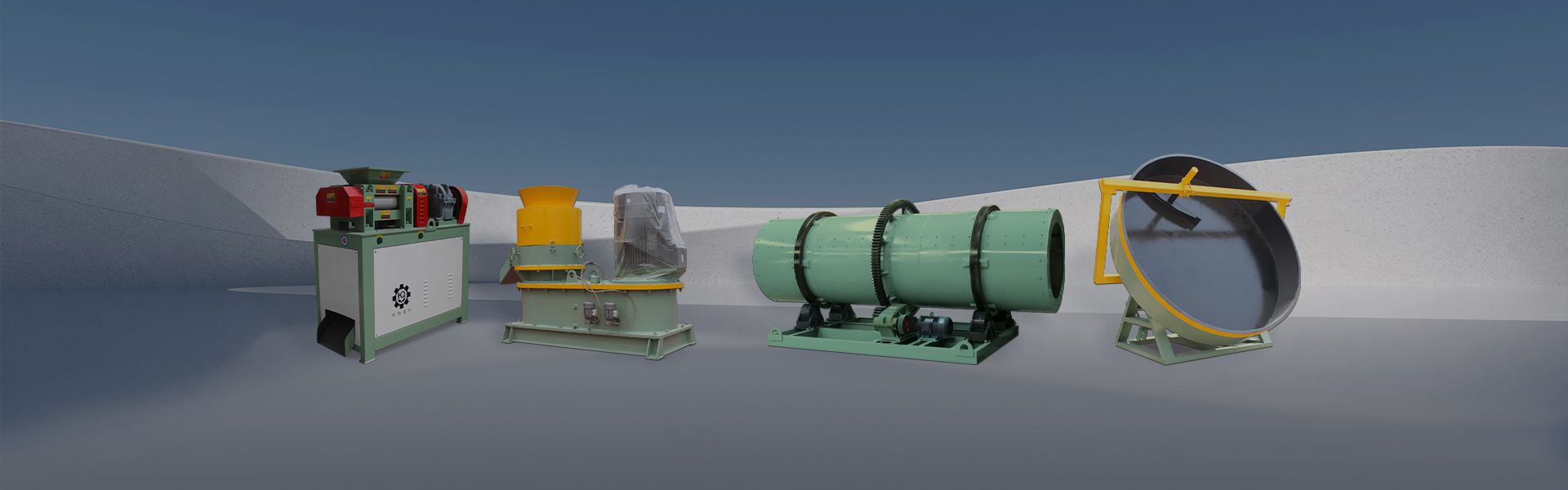
Bio-organic fertilizer and ordinary organic fertilizer are not substitutes, but rather complementary—ordinary organic fertilizer addresses the fundamental problem of insufficient soil organic matter, while bio-organic fertilizer adds the functional synergistic effect of microorganisms. If you plan to set up a bio-organic fertilizer production line or upgrade your products, our technical team can provide you with a complete solution from microbial agent addition processes to low-temperature granulation equipment.
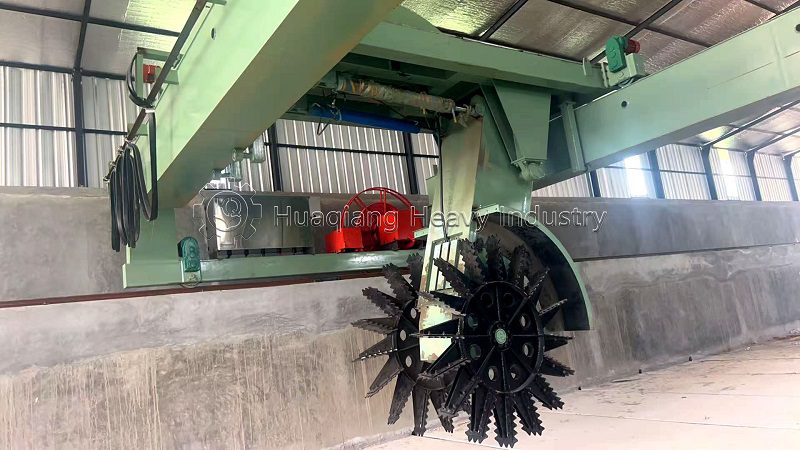
Understanding the standard gap — live bacteria count vs. organic matter — is only the first step; the real value emerges when production technology bridges that gap. Modern bio-organic fertilizer production technology and compound fertilizer production technology are no longer separate tracks — they converge through precise fertilizer formula processing that balances microbial carriers with chemical nutrients. The entire organic fertilizer production process starts with robust fermentation composting turning technology, where equipment like the large wheel compost turning machine, trough-type compost turner, and windrow composting machine ensure thorough aeration and temperature control — essential for preserving functional microbes during the thermophilic phase. After maturation, granulation shapes the final product: a disc granulation production line offers gentle, low-temperature processing ideal for live bacteria, while a rotary drum granulator suits high‑throughput compound fertilizer production. The choice of granulation method directly affects bacterial survival, organic matter integrity, and nutrient release patterns. Ultimately, moving from ordinary to bio‑organic fertilizer is not a simple label change — it demands a well‑orchestrated production ecosystem, from composting to granulation, where each equipment link supports the biological efficacy. With the right process integration, manufacturers can deliver products that not only meet NY 884‑2012 but also offer tangible soil‑health benefits — turning standards into superior field performance.
If you have any questions about fertilizer production equipment and processes or would like to learn more about customized solutions, please contact us immediately. Whether it’s equipment selection and pricing, installation, commissioning and operation training, or later maintenance and process upgrades, we can provide you with professional and timely answers and support to help your project be implemented efficiently.