
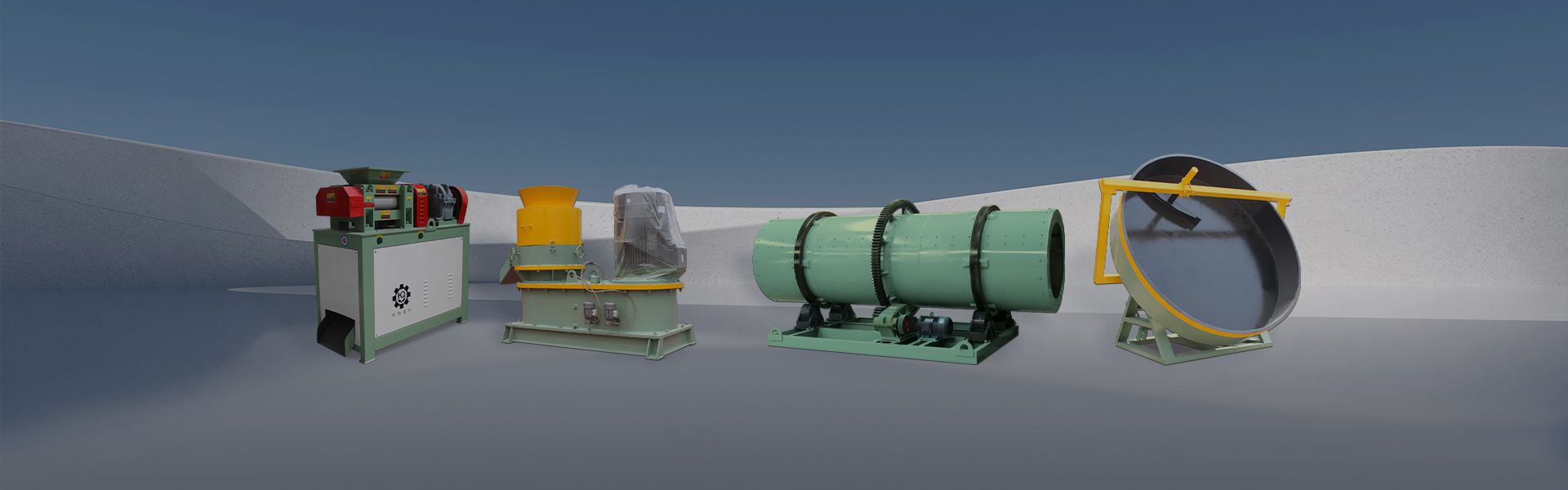
The first time you walk into an installation shop for organic fertilizer or feed pellet mills, your eyes are likely drawn to a chunky “iron can” – that’s the ring die pellet machine. Its steel ring die is packed with thousands of tiny holes, like a giant honeycomb. Don’t let its bulky looks fool you; this guy is the powerhouse of the entire production line. Today, let’s see how it’s installed and how it gets along with the equipment upstream and downstream.
On the installation site, the heaviest star is the ring die itself. Several workers use special lifting tools to carefully lower it into the housing. An old hand leans in, repeatedly measuring the gap between the die and the rollers with a feeler gauge. “This gap,” he says in a low but weighty voice, “should be no thicker than a business card. Too tight, it jams; too loose, nothing comes out.” Beside him, a young apprentice holds an explosion proof flashlight, its beam exactly hitting the silver white die surface, illuminating rows of precision teeth.

The working principle of a ring die pellet machine is brutally simple: it squeezes. Powdered material is fed inside the rotating ring die, where two or three rollers press down like iron wheels, forcing the material through the die holes to form little cylindrical pellets, which are then cut to uniform length by a fixed knife. The friction generates heat that can push the material temperature above 80°C, softening lignin into a natural binder. That’s why the pellets come out hard, smooth, and completely free of chemical additives.
But a pellet machine alone won’t get the job done. Upstream, you need an ultrafine grinder – ordinary crushers don’t produce powder fine enough. At least 90% of the powder must pass through an 80 mesh screen, otherwise the pellet surface feels like sandpaper. Next to the grinder sits a horizontal mixer, which sprays in just the right amount of water or steam to achieve that “holds together when squeezed, crumbles when poked” consistency. Downstream of the pellet machine comes a counterflow cooler. Freshly squeezed pellets are hot and soft – they must be rapidly cooled to room temperature, or they’ll cake and mold inside the bag. The cooler’s outlet connects to a vibration screener machine, which removes fines and broken bits. Only the perfect little cylinders are allowed to climb an elevator into the automatic packaging scale.
The final step is a test run. The ring die starts turning – first a low hum, then the discharge chute begins popping out pellets like festive firecrackers. Workers crowd around, grab a few, squeeze them, and snap one open to check the cross section – uniform, dense, no cracks. The old hand nods and taps the housing lightly with a wrench: “We’re good. From now on, the crops in these fields will live on the golden beans this can squeezes out.”
So don’t be fooled by the hole ridden iron can. It turns fluffy powder into solid hope. Without it, the best formula is just a pile of dust. Next time you see those uniform, plump fertilizer pellets in a field, remember – they were squeezed, one by one, out of the tiny holes of this “iron can.”