
Premium WordPress theme for construction companies, contractors, builders, and a variety of other construction-related businesses.
-
28238 Kelsie Lane Apt. 451,
Port Annabelport
-
Call Us: (210) 451-123
(Sat - Thursday)
-
Monday - Friday
(10am - 05 pm)
Horizontal Mixer
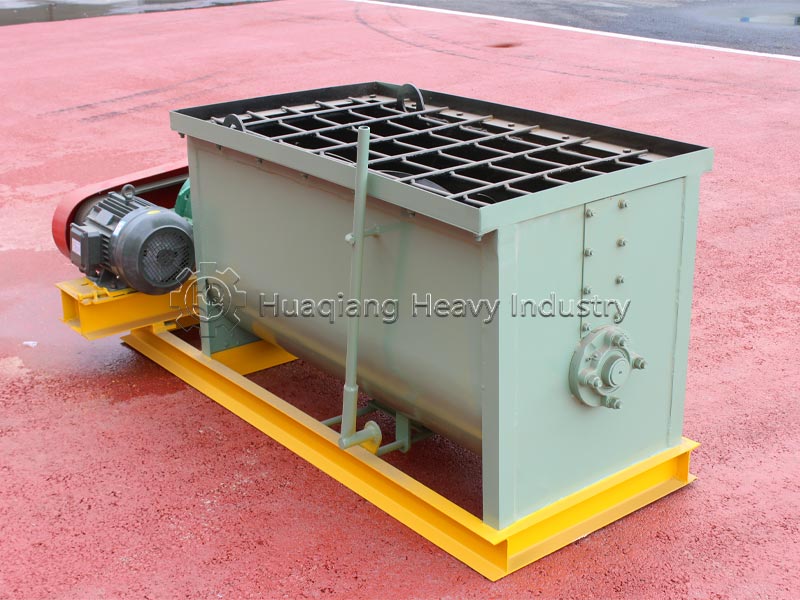
Equipment Introduction
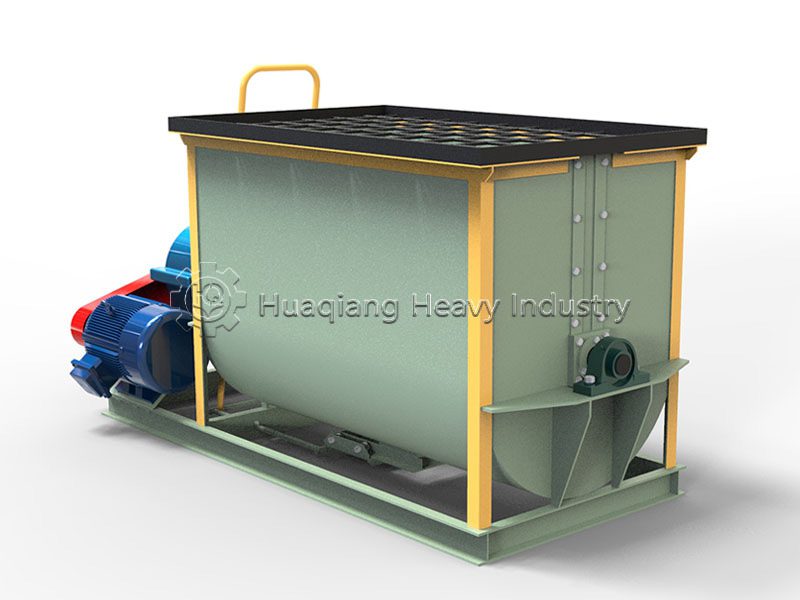
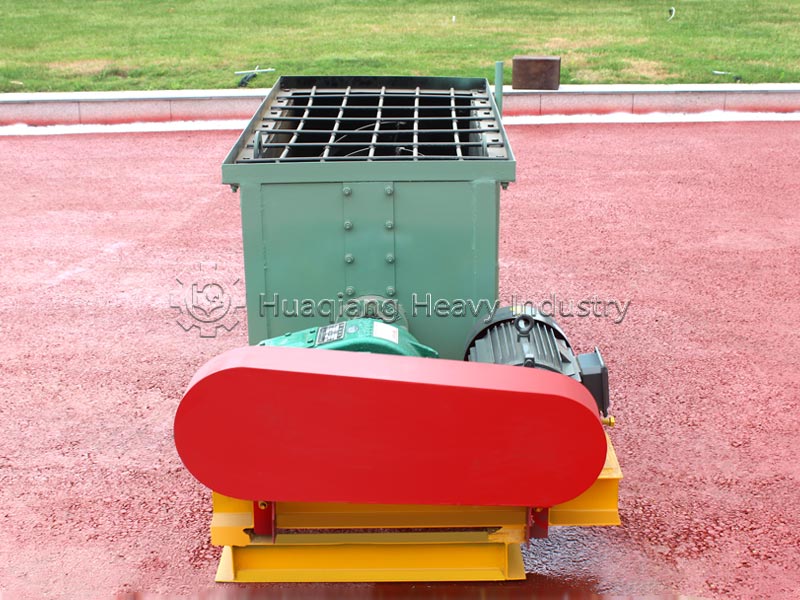
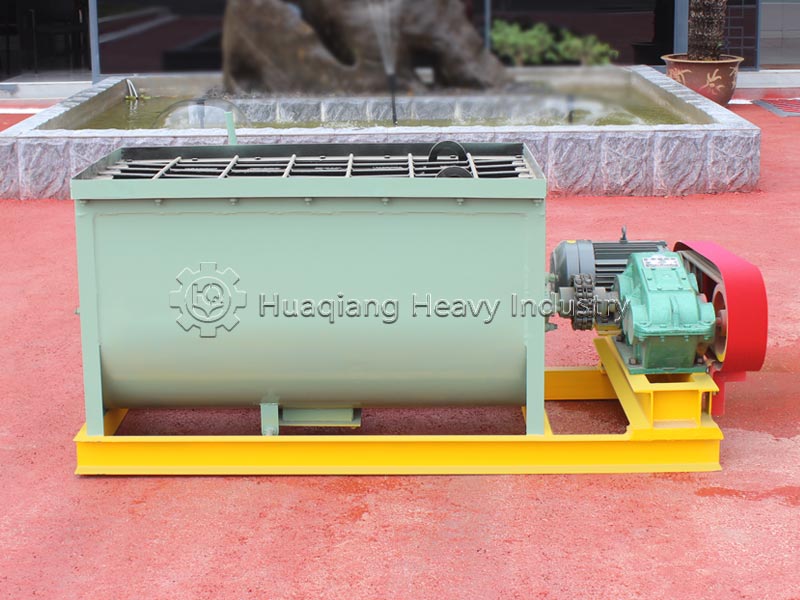
Horizontal ribbon mixers, also known as horizontal ribbon mixers, are core mixing equipment used in the fertilizer, feed, chemical, and food industries for the fine homogenization of multi-component materials. Their core structure consists of a U-shaped cylinder and built-in double-layered counter-rotating spiral blades (ribbons).
This equipment, characterized by its fast mixing speed, high uniformity, and low residue, serves as a crucial link between the crushing and granulation processes in organic fertilizer, compound fertilizer, feed, and chemical powder production lines. Compared to vertical mixers, horizontal ribbon mixers offer faster mixing speeds, no dead zones, and less residue, making them particularly suitable for processing formulations with large specific gravity differences or requiring the addition of trace amounts of microbial agents.
Horizontal ribbon mixers boast high mixing efficiency, a large loading coefficient, a compact structure, and clean discharge. They can also be equipped with jackets for heating or cooling. This equipment embodies the “three highs, two lows, and one low” characteristic—high efficiency, high uniformity, high loading coefficient, low energy consumption, low pollution, and low breakage.
Equipment Structure
The entire machine can be divided into three main parts:
- Frame: Constructed from high-quality carbon steel plates and channel steel, it meets strict product certification and process requirements, bearing the weight of all working parts. Due to its reasonable design and stable, vibration-free operation, the foundation requirements are relatively simple; pre-drilled foundation holes are sufficient.
- Transmission Connection: The motor drives the reducer via pulleys and V-belts. The reducer’s output shaft is connected to the main shaft via a nylon pin (or sprocket) coupling, transmitting torque and facilitating assembly and maintenance. The transmission is smooth, and it has strong overload protection.
- Mixing and Stirring Working Part (Core): Composed of the main shaft and special spiral stirring blades (screw ribbons) welded to it. The blades rotate synchronously, evenly turning the material within the mixing chamber for thorough mixing. A discharge port is provided at the bottom of the mixing chamber, allowing the material to flow out naturally after mixing. Core components of the general-purpose model (industry-standard structure):
1) U-shaped cylinder: L/D ratio 2.5–3.5, inner wall polishing precision Ra≤1.6μm, no dead corners;
2) Double-layer reverse spiral ribbon: the outer spiral ribbon pushes the material from both ends to the center, and the inner spiral ribbon pushes the material from the center to both ends, forming three-dimensional convection;
3) Discharge mechanism: standard pneumatic large opening door or butterfly valve, fast unloading, low residue (residue rate ≤0.5%);
4) Sealing system: packing seal or mechanical seal to prevent dust leakage.
Working Principle of the Equipment
The horizontal ribbon mixer operates based on the principles of forced shearing and convection.
Core Motion Mechanism: The inner and outer ribbons rotate in opposite directions:
Inner Ribbon: Drives the material near the axis to rotate around the axis, pushing it axially from the inside out.
Outer Ribbon: Drives the material near the cylinder wall to rotate around the axis, pushing it axially from the outside in.
Three-Dimensional Composite Motion: Driven by the opposing rotating ribbons, the material moves not only axially (along the length of the cylinder) but also radially, undergoing shearing, diffusion, and mixing processes. Some material is pulled along the axis and radially by the ribbons, forming a convection cycle.
Mixing Effect: The material forms a strong convection cycle and shear mixing within the cylinder, achieving rapid and uniform mixing. Mixing a batch of material can typically be completed within 2–8 minutes.
Solid-Liquid Mixing Operation: When performing solid-liquid mixing, the machine should be started first, then the liquid should be sprayed. After spraying, continue running the machine for 3–5 minutes to mix.
Applications of the Equipment:
- Fertilizer Industry: Mixing of organic, inorganic, and bio-fertilizers.
- Building Materials: Dry mortar, putty powder, cement additives.
- Food and Pharmaceutical Industry: Milk powder, spices, traditional Chinese medicine powders (usually requires all-stainless steel construction).
- Chemicals and Plastics: Pigments, resins, masterbatches, fine chemical products.
Applicable Raw Materials (Materials Compatible with Equipment)
- Solid-Solid Mixtures: Various dry powders, granules, brittle crystals, and fibrous materials: organic fertilizer raw materials, feed premixes, pharmaceutical raw materials, seasonings, flour premixes, putty powder, dry mortar, pigments, dyes, plastic fillers, ceramic powders, metal powders, traditional Chinese medicine slices, and catalyst granules.
- Solid-Liquid Mixtures: Powders with a small amount of liquid additives: fertilizer liquid chelating agents, food syrups, pharmaceutical adhesives, paint emulsions, and pesticide emulsifiers. Can be used with a top spray device for uniform liquid spraying.
- Paste/Viscous Materials: Low-viscosity slurries, stone paint, fermented organic manure paste, and paste-like additives (material moisture content ≤70%).
Material Restrictions: Large hard stones, iron blocks, and flammable or explosive powders are strictly prohibited; the bulk density of a single material must be ≤5g/cm³, and the particle size range must be 20μm~20mm.
Operation and Maintenance Methods
(I) Installation and Commissioning
Foundation Installation: The equipment should be installed on a level concrete foundation (due to its reasonable design and lack of vibration, a particularly strong concrete foundation is not required), secured with anchor bolts.
Installation Inspection: After installation, check for loose bolts in all parts and ensure the main unit’s door is secure. Check that the oil level in the bearing housing and reducer is adequate.
No-Load Test Run: The machine should be started under no-load conditions; starting with material is strictly prohibited. Perform a no-load test run once, observing for any abnormal phenomena or sounds.
Direction Confirmation: Start the main motor and check if the rotation direction is correct. If the direction is reversed, stop immediately and adjust.
(II) Operating Procedures
Start-up Sequence: Close the discharge valve → Add material → Close the lid → Start (start at low speed, then adjust as needed)
Feeding Requirements: Large stones, iron blocks, etc., are strictly prohibited in the material to avoid damaging the mixing blades. No hard foreign objects larger than 5mm should enter the machine during operation. Operation Monitoring: Observe whether the motor runs smoothly, without abnormal noise, and whether the temperature rise is normal. Check whether the main shaft bearings, belts, and other transmission parts are in good condition.
Shutdown Operation: Before stopping the machine, stop feeding first. It is strictly forbidden to stop the machine while it is still carrying material.
Mixing Time: The mixing time for one batch of materials is generally about 5-8 minutes. Special materials need to be determined through testing.
(III) Maintenance Points
Gear Reducer Lubrication: Gear oil must be added to the gear reducer before production can begin. Replace it every 4 months thereafter. Use the appropriate lubricating oil grade according to the gear reducer instruction manual.
Bearing Lubrication: Replace the grease in the main shaft bearing housing every 3 months. Use composite lithium-based grease for the main shaft bearings.
Discharge Mechanism Lubrication: Lubricating oil should be frequently dripped onto the discharge gate lever to reduce operator workload.
Sealing Maintenance: The shaft end seal uses a packing seal (generally oil-impregnated asbestos). If a small amount of leakage is found during use, tighten the packing box cover bolts.
Daily Cleaning: At the end of each shift, thoroughly clean the accumulated material inside the machine to prevent moisture absorption and caking. Keep all parts of the machine clean, especially the mixing container and discharge valve.
Operation Records: Establish an operation log, recording start-up and shutdown times and parts replacement dates.
Common Equipment Faults, Causes, and Solutions
- Poor Mixing Uniformity, Material Segregation and Agglomeration
1) Causes: Excessive feed rate, insufficient mixing time, excessive wear and clearance of the screw belt, large density difference of materials, motor reverse rotation;
2) Solutions: Reduce feed rate to 60%~70% of rated volume, extend mixing time, repair and replace worn screw belts, reverse motor wiring to correct rotation direction, reduce speed and add guide scrapers for materials with large density differences.
- Motor Overload Tripping, Weak Starting
1) Causes: Starting with material, hard foreign objects stuck in the drum, excessively viscous material, screw belt deformation and jamming, loose belt;
2) Solutions: Empty the material in the drum and restart under no-load conditions, stop the machine and remove iron blocks and stones, reduce feed rate or add water to dilute viscous materials, correct and repair the screw belt, tighten the V-belt.
- Abnormal operating noise, metallic friction noise
1) Causes: Worn or insufficient lubrication of bearings, deformed helical ribbon rubbing against the cylinder wall, worn coupling pins, hard debris mixed in the cylinder;
2) Solutions: Add grease or replace bearings, calibrate the helical ribbon clearance, replace nylon pins, thoroughly clean foreign objects from the cylinder.
- Poor unloading, large amount of residue in the cylinder
1) Causes: Material sticking to the unloading gate, high material moisture content sticking to the wall, insufficient air pressure in the pneumatic unloading system, worn helical ribbon reducing pushing capacity;
2) Solutions: Clean valve sealing surfaces after each unloading, pre-dry material to reduce moisture, adjust air compressor pressure, replace worn helical ribbons.
- Powder leakage from shaft end, dust leakage
1) Causes: Aging and worn seals, insufficient lubrication and overheating of bearings damaging the seal, insufficient negative pressure during feeding;
2) Solutions: Replace mechanical seal/packing, add grease on time, install a dust removal device to balance the air pressure inside the cylinder. 6. Gearbox oil leakage and excessive temperature rise
1) Causes: Aging oil seal, excessive/insufficient lubricating oil, long-term overload;
2) Solutions: Replace gearbox oil seal, add standard level gear oil, control feed rate to avoid long-term overload.
Equipment Application Solutions in Production Lines
The horizontal ribbon mixer is a core intermediate process equipment in powder production lines. It connects upstream to crushing/screening/feeding equipment and downstream to granulation, drying, packaging, and reaction kettle processes. Mainstream production line layouts are divided into 6… Types:
- Simple Manual Production Line: Forklift feeding → Manual feeding station → Horizontal mixer → Manual weighing and packaging;
- Dust-free Automated Production Line: Vacuum feeding with closed suction → Mixer → Pneumatic unloading → Transition silo → Automatic packaging machine;
- Organic Fertilizer Complete Production Line (Huaqiang Heavy Industry Standard): Chicken manure fermentation and composting silo → Crushing and screening → Screw conveyor feeding to mixer → Granulator → Dryer → Cooling and screening → Finished product packaging;
- Powder Continuous Batching Production Line: Multi-silo quantitative feeding → Bucket elevator → Mixer → Vibrating screen → Finished product silo;
- Solid-Liquid Spray Modification Production Line: Powder feeding → Top spray liquid addition to mixer → Homogenization mixing → Paste discharge to reactor;
- Ton Bag Production Line: Ton bag hoisting and feeding → Closed mixing → Bottom direct unloading of ton bags, no intermediate dust.
Optional auxiliary equipment includes: vacuum feeder, screw conveyor, dust removal equipment, automatic quantitative packaging machine, silo, vibrating screen, and jacketed heating and cooling system.
The core advantages of the equipment
| Advantages | Description |
|---|---|
| High Mixing Uniformity | Double‑layer reverse spiral generates 3D convection, CV value ≤7%, trace proportion can reach 1:10000 |
| Low Residual Volume | Gap between rotor and housing can be adjusted close to zero. With large bottom door, residual rate ≤0.5% |
| Fast Mixing Speed | Single‑batch mixing only takes 2‑15 minutes, efficiency increased by 6‑10 times compared with traditional equipment |
| High Loading Factor | Effective filling ratio reaches 60%‑80%, large single‑batch processing capacity |
| Low Crushing & Low Energy Consumption | Low‑speed main shaft operation, less damage to granular materials, low unit energy consumption |
| Built‑in Crushing Function | Special rotor design crushes large agglomerated materials, reduces investment for pre‑crushing equipment |
| Easy Maintenance | Driven by nylon shaft pin / sprocket for easy disassembly; externally arranged lubrication points for convenient servicing |
Target Customers for this Equipment
- Organic Fertilizer/Environmental Protection Equipment Manufacturers and Organic Fertilizer Processing Plants: Processing livestock manure, sludge, and straw fermentation and mixing; Huaqiang Heavy Industry’s WJ series is a primary suitable choice.
- Feed Companies and Premix Processing Plants: Batch mixing of complete feeds and trace element premixes.
- Food Seasoning Factories, Baking Raw Material Factories, and Solid Beverage Manufacturers: Hygienic stainless steel mixing requirements.
- Pharmaceutical Raw Material, Veterinary Drug, and Pesticide Powder Manufacturers: Anti-corrosion and high-uniformity mixing conditions.
- Building Material Factories, Putty Mortar, and Stone Paint Manufacturers: Large-scale continuous mixing of dry powders.
- Chemical New Material Factories, Lithium Battery Material, Pigment and Dye, and Plastic Filler Masterbatch Processing Plants.
- Laboratories and University Research Institutions: Small-scale experimental horizontal ribbon mixers for small-scale formulation testing.
- Powder Equipment Complete Set Engineering Companies: Providing customers with complete mixing main units for their entire production line.