
Fermentation is the most crucial step in organic fertilizer production, directly determining fertilizer quality. Many manufacturers experience low yields and poor fertilizer efficiency primarily due to inadequate management of temperature, humidity, and turning.
First, moisture control is essential. The raw material moisture content should be maintained between 45% and 60%, ideally forming a clump when squeezed in the hand, with water seeping between the fingers but not dripping. Excessive moisture leads to anaerobic fermentation, foul odor, and slow fermentation; insufficient moisture results in inactive microorganisms and incomplete decomposition.
Second, temperature management is crucial. The optimal fermentation temperature is 55-65℃, which promotes rapid decomposition while killing pathogens, insect eggs, and weed seeds. Temperatures exceeding 70℃ will kill beneficial bacteria, necessitating timely turning and cooling.
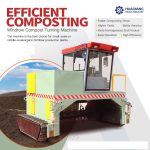
Turning is critical for oxygen supply. Sufficient oxygen is essential for aerobic fermentation; otherwise, the fertilizer will turn black, smell bad, and decompose incompletely. Trough-type turning machines are suitable for large-scale production, providing even turning and ample oxygen supply; self-propelled turning machines are suitable for smaller sites, offering flexibility and convenience.
The normal fermentation cycle is 10-15 days, going through three stages: heating, high temperature, and cooling. The material is fully decomposed when it turns brown, has no odor, and is loose and breathable.
Mastering temperature and humidity control, along with proper turning techniques, ensures a high success rate, stable quality, and high yield in organic fertilizer fermentation, forming the foundation for producing high-quality organic fertilizer.