
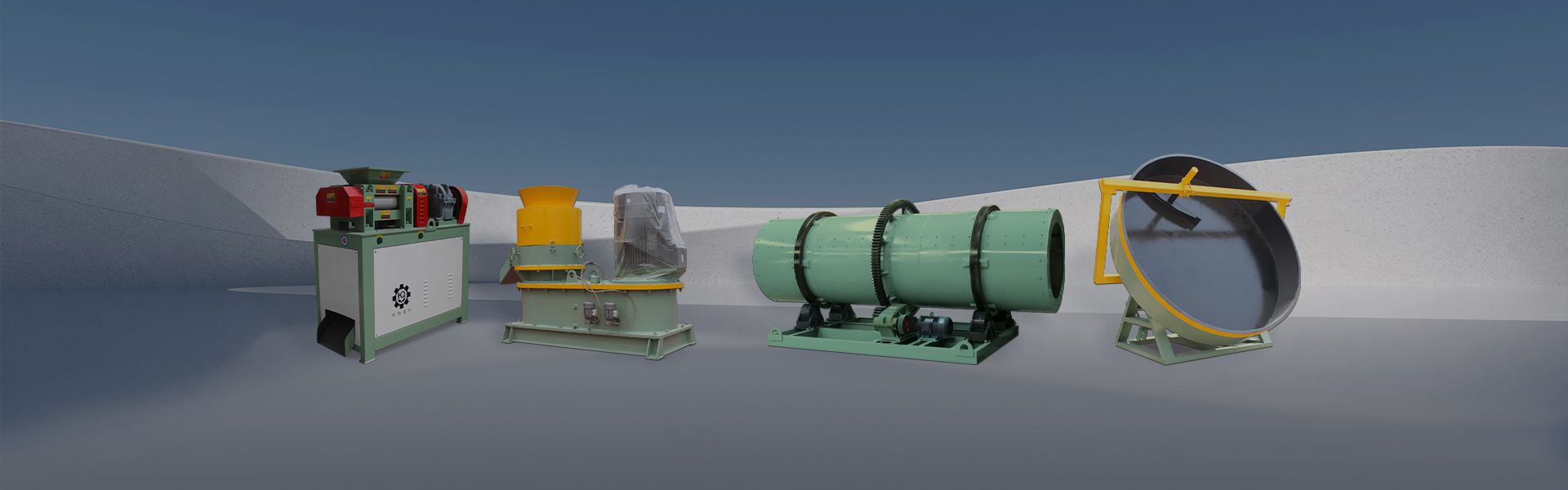
Have you ever watched an entire fertilizer production line slowly “grow” inside an empty workshop? If not, step with me into the installation site of a roller press granulation line. There are no loud shouts here, only the steady, quiet handshakes between pieces of steel.
Blueprints cover the floor. Welding sparks fall like shooting stars in the night sky – a flash, then gone. Workers gather around the main double roller press granulator, using spirit levels to calibrate the gap between the two rollers again and again. Those silver-white rollers, weighing several tons each, must be aligned to the precision of a hair’s breadth. An old master kneels on a steel beam, holding a ruler in his left hand and turning bolts with his right, murmuring, “Off by a hair, and the granules won’t be round.” Behind him, a bucket elevator is being pieced together section by section. The sprockets engage with a crisp click, as if keeping time for the installation.
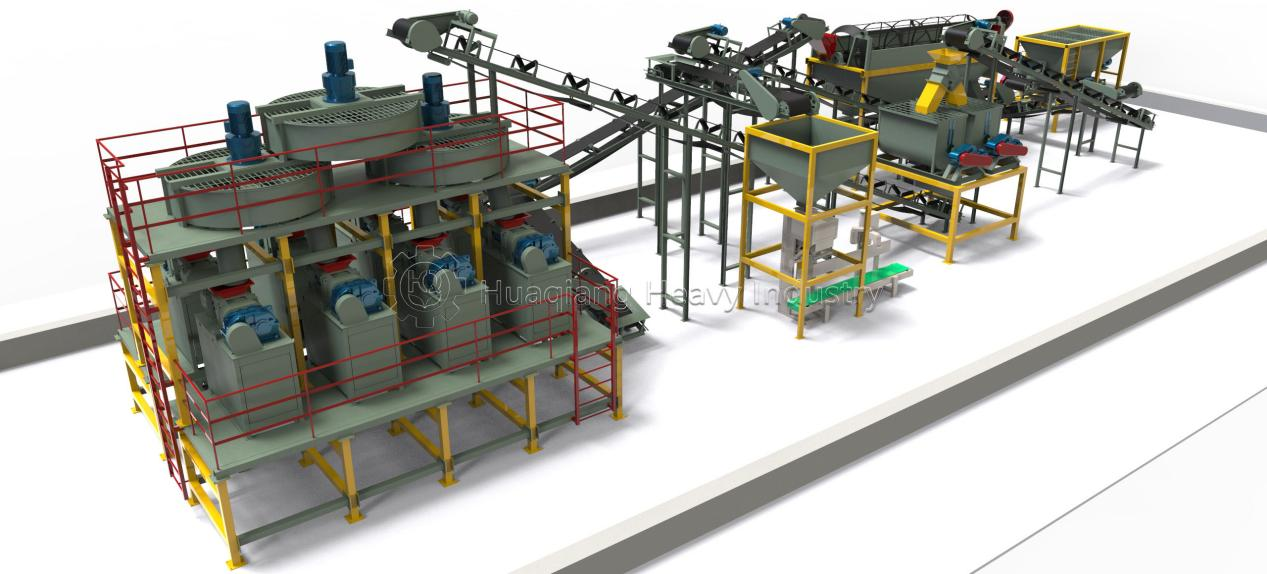
Not far away, the chain fertilizer crusher is already in place, its shell painted bright blue, squatting quietly on its concrete foundation. Several workers are attaching the feed hopper, the whine of an electric wrench rising and falling. Next to it is the twin-shaft mixer – two shafts with spiral blades lying horizontally inside the trough, waiting for the top cover to be installed. Further on, the vibrating screen and rotary cooler stand in staggered formation. Pipes and cable trays stretch out from every piece of equipment like blood vessels and nerves, all converging toward the central control cabinet.
The hardest part is the hydraulic system on the roller press. Each stainless steel oil pipe must be connected according to its number, and the bolts on the flanges tightened in a diagonal sequence. A young technician crouches beside the oil pump, glancing between a 3D model on his tablet and the actual routing of the pipes. Tiny beads of sweat form on his forehead. “If a high-pressure pipe is connected backwards, the whole line will shake,” he mutters, as if reminding himself. When the last coupling clicks shut, he exhales deeply, stands up, and waves toward the crane.
The crane slowly lifts a crossbeam for the finished-product screen. Whistles sound short and sharp. Sunlight slants through the skylight, falling on the half-assembled equipment – cold gray on the main machine, bright yellow on the platforms, red on the emergency switches. They have never met before, yet they must line up on the same foundation like a smooth river: raw materials go in at one end, then are squeezed, crushed, sized, and screened, finally emerging at the other end as uniform compound fertilizer granules.
By evening, the welding machines fall silent. Workers sit in the shade of the equipment, drinking water. One of them pats the roller press frame and says with a smile, “In three more days, you’ll be ready to ‘eat’.” The tone is not that of someone talking to a machine, but to a partner about to take the stage.
So who says steel has no life? When every bolt is tightened and every motor hums, this roller press granulation line will come alive. And right now, in this space filled with iron filings and welding smoke, a silent yet powerful handshake is taking place – between every pair of rollers, every pipe, and every single bolt.