
What if you could transform mountains of agricultural waste, manure, and sludge into premium organic fertilizer without back-breaking labor or weeks of uneven rotting? The large wheel compost turner makes this possible, and when paired with the right supporting equipment, it becomes the beating heart of a truly efficient organic fertilizer production line.
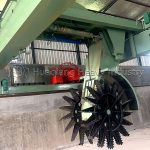
Picture a long, narrow fermentation bay lined with concrete walls, filled with rows of raw materials steaming gently as microbes get to work. Straddling these rows is the large wheel compost turner—a formidable machine that moves along rails, its massive spoked wheels churning through the pile like a gentle giant. Unlike traditional turning methods that only scratch the surface, this machine penetrates deep, lifting, mixing, and aerating the material from bottom to top. Oxygen is the lifeblood of aerobic composting, and the turner ensures every particle gets its share. Temperatures remain uniform, odors are controlled, and the beneficial bacteria thrive.
But the composter does not work alone. Before it ever reaches the fermentation bay, raw materials pass through a crusher that breaks down bulky straw, branches, or caked manure into a uniform size. Next, a horizontal mixer blends these ingredients with a precise ratio of nutrients or microbial inoculants, creating the ideal environment for decomposition. Only then does the large wheel turner take over, moving along the bay two to three times per week to maintain optimal temperature and oxygen levels. A typical fermentation cycle shortens from months to just 15 to 20 days, and the end product is stable, pathogen-free, and rich in humus.
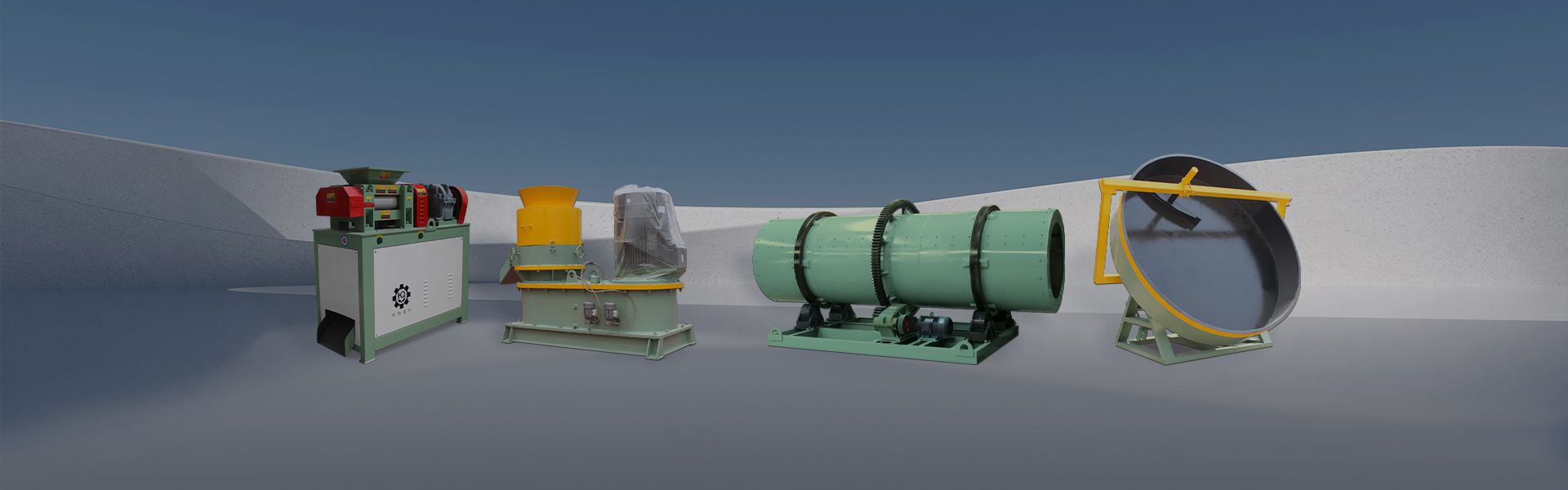
Once the material is fully matured, it moves to the next phase of the production line. A screening machine separates any remaining oversized particles, sending them back for further fermentation or crushing. The fine, uniform compost then enters a disc granulator—often a disc or roller press—where it is formed into easy-to-handle pellets. A drum fertilizer dryer and cooler may follow if moisture needs to be adjusted, and a coating drum can add a protective layer for slow-release applications. Finally, an automatic packaging system bags the finished organic fertilizer, ready for farms or gardens.
What makes the large wheel turner especially appealing is its scalability and efficiency. One machine can handle bays that stretch for dozens of meters, processing hundreds of cubic meters of material per hour. The turning mechanism is gentle enough to preserve the fluffy structure of compost yet powerful enough to break through compacted layers. And because it runs on rails, operation is precise and energy consumption moderate compared to bulky windrow turners that require constant maneuvering.
For livestock farms grappling with manure disposal, for mushroom growers needing consistent substrate, or for organic fertilizer producers aiming to meet rising global demand, the large wheel compost turner offers a clean, reliable, and surprisingly elegant solution. It takes what was once a slow, messy, and labor-intensive process and turns it into a streamlined operation that runs like clockwork. The question is not whether you can afford to invest in such a line, but whether you can afford to keep composting the old way.