
For organic fertilizer producers and large farms, composting is a core process that determines product quality and production efficiency, and the choice of turning equipment is a critical decision. Faced with the two main types of composting turners on the market – windrow turners and hydraulic trough turners – many professionals struggle with the choice: which technology is best suited to my specific needs? This article will provide a clear “Composting Turner Selection Guide” from four dimensions: fermentation efficiency, investment cost, operational requirements, and applicable scenarios.
Key Differences: The Fundamental Difference Between Open-Air and Workshop Production
The fundamental difference between these two types of equipment lies in the two different composting production models they represent.
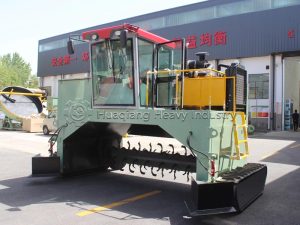
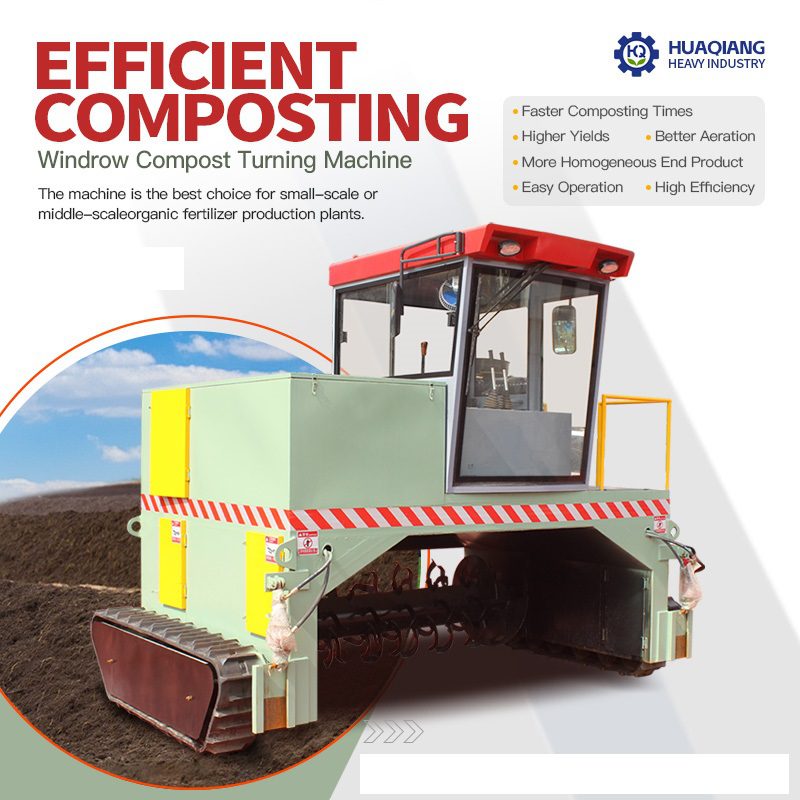
Windrow turners represent open-air dynamic fermentation. The mixed raw materials are piled on a hardened surface, forming parallel, long windrows. The equipment (commonly crawler-type self-propelled or tractor-towed) periodically travels along the windrows, using a rotating turning wheel to shred, turn, and move the material. This method has a low investment threshold and relatively flexible site requirements, but it is heavily affected by weather, and the fermentation cycle is longer, usually around 25-45 days.
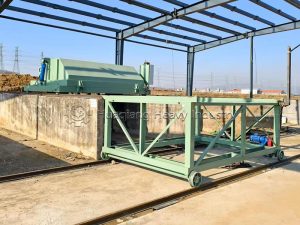
Hydraulic trough turners are typical equipment for “workshop-based high-efficiency fermentation.” The materials are placed in one or more long concrete fermentation troughs with ventilated bottom plates. One or more turners (mostly rail-mounted) travel along the troughs, using powerful hydraulic drive arms to control the turning drum below to deeply turn, shred, and throw the material. Simultaneously, the bottom aeration system provides forced ventilation according to a programmed schedule. The entire process takes place in a controlled environment, resulting in extremely high fermentation efficiency, with the cycle shortened to 10-15 days. This is standard equipment for modern large-scale organic fertilizer plants.
Key Dimensions for Selection Decisions: From Efficiency and Cost to Scale Suitability
In the specific “composting turner selection” decision, the following dimensions are crucial for comparison:
- Investment and Cost Structure
For small and medium-sized farms or startups with limited funds and a desire for quick startup, a windrow turner is a wise starting point. Its core equipment investment is relatively low, with the main costs lying in site hardening, and it does not require the construction of expensive fermentation tank facilities. However, its energy consumption per unit of material and long-term labor costs (operation and covering management) may be higher.
Hydraulic trough composting machines, on the other hand, entail higher initial investment, covering civil engineering (troughs, plant buildings), equipment, and automation control systems. However, its advantage lies in shifting costs from “variable operating costs” to “fixed investment costs.” Once built, its fermentation cost per ton of material, energy consumption, and labor dependence are significantly lower than the windrow method, demonstrating significant long-term economies of scale.
- Production Efficiency and Environmental Control
Fermentation efficiency and stability are the absolute advantages of the hydraulic trough system. Forced aeration and precise turning ensure uniformity of oxygen, temperature, and humidity, maximizing microbial activity, shortening the fermentation cycle by more than half, and producing a more stable and thoroughly composted product. At the same time, a fully enclosed or semi-enclosed workshop environment, combined with a centralized gas treatment system (such as a biofilter), can effectively control odor and dust emissions, easily meeting strict environmental requirements.
In contrast, windrow fermentation is greatly affected by seasons and rainfall; efficiency drops sharply in winter, and rainwater may wash away nutrients. Although this can be improved by using covering membranes, environmental issues (especially odor) are a major challenge near residential areas.
- Applicable Scenarios and Scale Matching
The core basis for selection is your raw material characteristics, planned capacity, and site conditions.
Windrow composting machines demonstrate excellent flexibility and adaptability to raw materials. They are very suitable for processing large volumes of low-density agricultural waste, such as straw, orchard pruning branches, and livestock bedding. For small and medium-sized farms or regional processing centers with an annual processing capacity of less than 3000 tons, seasonal raw material supply, and open sites far from sensitive areas, the windrow method is a highly cost-effective option.
Large-scale hydraulic composting machines, however, are the inevitable choice for large-scale, continuous, and industrialized production. They are especially suitable for processing concentrated and large quantities of raw materials, such as livestock manure from large-scale farms, urban sludge, and kitchen waste. For large-scale organic fertilizer enterprises or municipal waste treatment projects with a designed annual production capacity exceeding 10,000 tons, pursuing product commercialization and standardization, and facing strict environmental protection approvals, a hydraulic trough composting system is an indispensable infrastructure.
There is no “best” equipment, only the “most suitable” solution. If you are in the initial or exploratory stage and prioritize investment safety and flexibility, a windrow composting machine allows you to verify technology and market with lower risk. If you have established a commitment to large-scale development, possess a stable and abundant source of raw materials, and are dedicated to building an environmentally friendly, efficient, and branded modern factory, then investing in a large-scale hydraulic composting system will be a strategic step in building core competitiveness for the future. This is not only an equipment upgrade, but also a fundamental leap in production mode from a “workshop” to a “factory.”
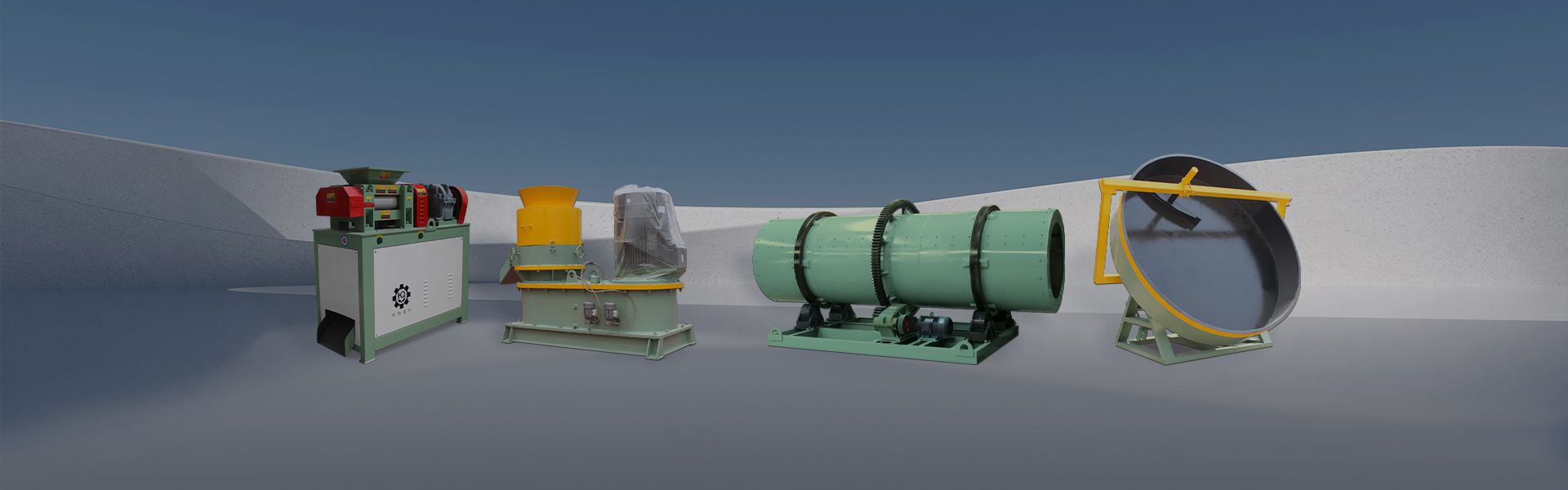
The chosen fermentation composting technology for organic fertilizer directly determines the efficiency of the initial organic fertilizer fermentation process. For open-air windrows, a large wheel compost turner or windrow composting machine provides effective fermentation composting turning technology. For controlled, high-intensity processing, trough-type aerobic fermentation composting technology is implemented using a trough-type compost turner or a double screws compost turning machine. These machines are essential equipments required for biofertilizer production. Following successful composting, the cured material is ready for shaping. This is typically achieved using a fertilizer granulator within a larger disc granulation production line to produce uniform, marketable organic fertilizer pellets. The selection between windrow and trough composting thus forms the critical first link in a complete biofertilizer manufacturing system.