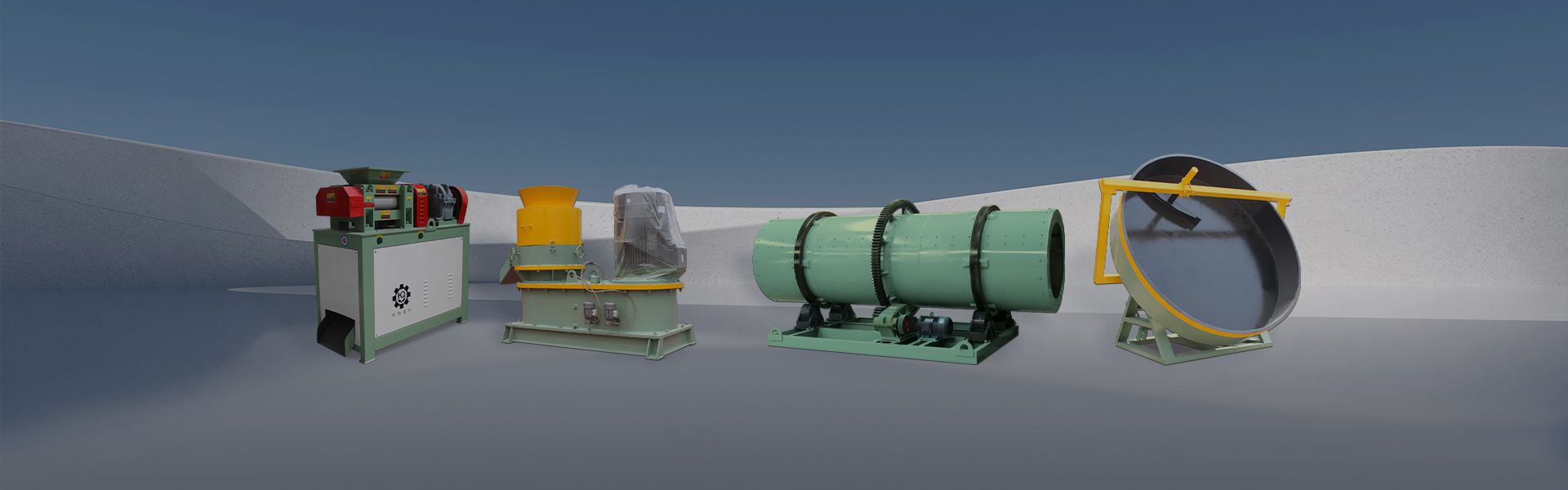

Premium WordPress theme for construction companies, contractors, builders, and a variety of other construction-related businesses.
-
28238 Kelsie Lane Apt. 451,
Port Annabelport
-
Call Us: (210) 451-123
(Sat - Thursday)
-
Monday - Friday
(10am - 05 pm)
Double Screws Compost Turning Machine
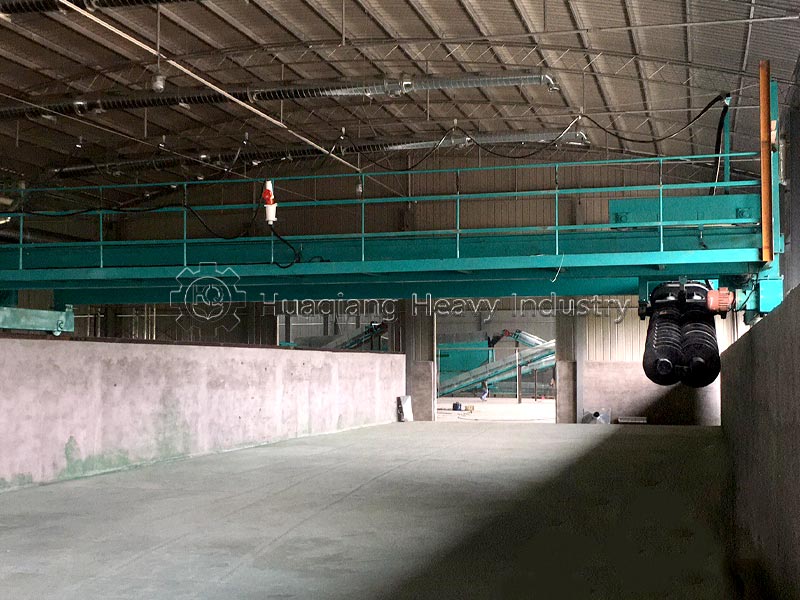
Equipment Overview
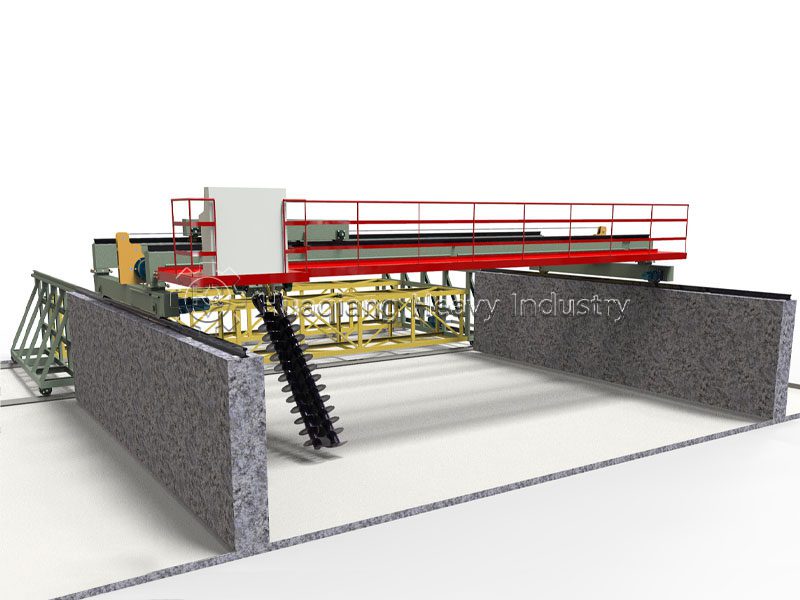
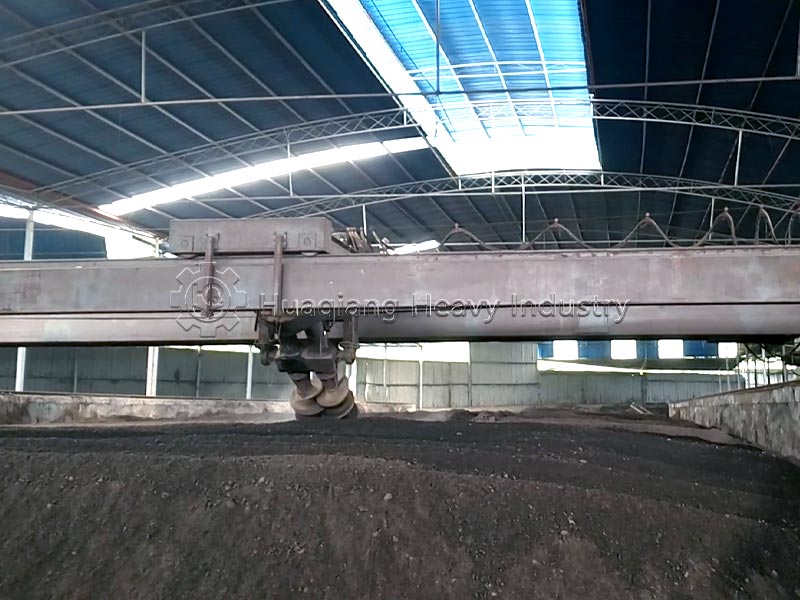
The Double Screws Compost Turning Machine is a high-efficiency trough-type fermentation equipment specifically designed for the aerobic composting of organic waste. Its core feature lies in the use of two symmetrically distributed, counter-rotating screws shafts as the turning and composting components. This equipment continuously lifts and scatters material from the bottom of the fermentation trough to the upper layer of the pile through the screws blades, simultaneously achieving lateral and longitudinal displacement of the material, thus realizing multiple functions such as oxygenation, cooling, crushing, and uniform mixing.
As a core piece of equipment for modern industrial production of organic fertilizer and the harmless treatment of organic waste, the Double Screws Compost Turning Machine is widely used in the deep aerobic fermentation treatment of materials such as livestock and poultry manure, municipal sludge, urban organic waste, and agricultural and forestry waste. Compared to traditional rotary tillage or large wheel compost turning equipment, the Double Screws Compost Turning Machine has significant technical advantages, including a greater turning depth (up to 1.5–3.0 meters), a wider processing span (up to 6–11 meters), and stronger adaptability to high-humidity and high-viscosity materials. It is particularly suitable for deep fermentation processes of materials with low organic matter and high moisture content.
Equipment Structure Composition
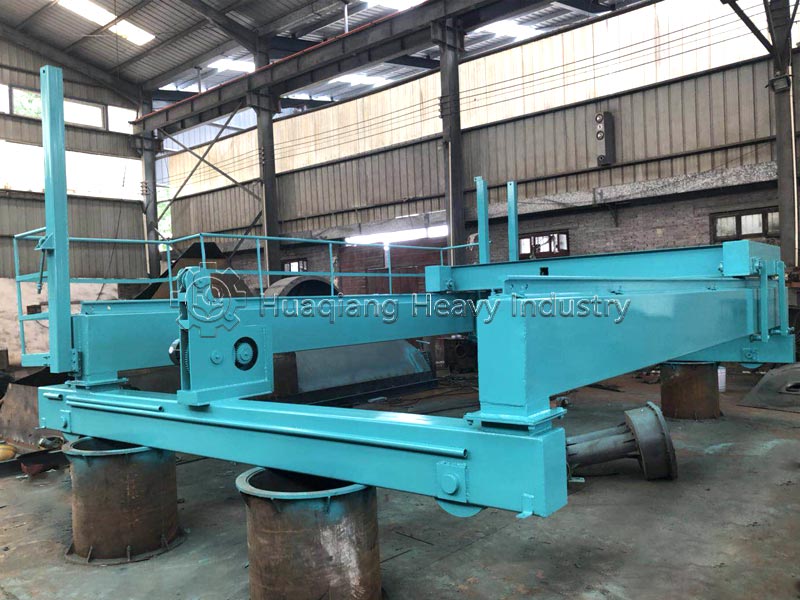
The double-screws compost turner adopts a gantry-type frame structure, spanning across the fermentation tank. It mainly consists of the following nine functional modules:
- Frame and Support Device
The entire machine has a gantry-shaped structure, welded from high-strength steel, possessing sufficient rigidity and torsional resistance. The support device includes a support frame, connecting columns, and bearing plates. Some models are equipped with a vibrating motor, which can automatically clean residual material adhering to the helical blades after operation.
- Turning Device (Core Working Component)
The turning device consists of two parallel helical shafts, helical blades (or reamers), bearing seats, and a reduction gear. The two helical shafts rotate synchronously in opposite directions at a speed of 50–120 r/min. The blades are made of high-wear-resistant alloy steel, with a surface hardened (hardness reaching HRC58–62). The blades are designed with a biomimetic sawtooth structure, and the screws angle is optimized to approximately 15°, effectively cutting the material and reducing the probability of fiber entanglement. Some high-end models feature independently spaced cutting blades on the cutter roller, creating a coordinated “blade gripping – cutting blade cutting” action specifically designed for long-fiber materials.
- Power Transmission Unit
This unit consists of a main motor, a hard-tooth surface reducer, a coupling, and a main shaft. The main motor power varies depending on the model and processing capacity, typically ranging from 15 to 110 kW. The reducer converts the high-speed, low-torque output of the motor into the low-speed, high-torque output required by the helical shaft, with a transmission efficiency usually exceeding 90%.
- Traveling Device
The traveling device includes a forward and backward traveling mechanism and a left and right lateral movement mechanism. Forward and backward movement is driven by a traveling motor via chain or gear transmission, moving the entire machine longitudinally along the fermentation tank. The traveling speed is generally adjustable from 0 to 10 m/min. The left and right lateral movement mechanism allows the equipment to switch between different fermentation tanks within the same span, enabling “one machine, multiple tanks” operation and significantly improving equipment utilization.
- Hydraulic Lifting Device
This device consists of a hydraulic pump station, solenoid valve body, hydraulic oil pipes, and hydraulic cylinder, used to adjust the working height of the turning device. The hydraulic system allows for precise raising and lowering of the auger blades, adapting to varying composting heights and fermentation stages to meet different turning depth requirements. The lifting stroke is typically 0.2–1.5 meters.
- Roller Lifting Bracket (Some Models) Before operation, the turning device is lowered to the working position. It is retracted upon completion of operation or in case of malfunction. The lifting bracket is independently controlled by a motor, ensuring the safety and maneuverability of the equipment when not in operation.
- Dynamic Desorption Device (Anti-Tangle Design) To address the issue of long-fiber materials easily entangled with the shaft, some models feature spiral desorption plates at both ends of the cutter roller, rotating synchronously with the shaft to push residual fibers outwards. The shaft adopts a streamlined tapered design with a polished surface (roughness Ra≤0.8μm) to reduce fiber adhesion. More advanced configurations also include a high-pressure airflow desorption system, which sprays airflow at 0.6–0.8 MPa at the connection between the blades and the shaft to achieve dynamic material removal.
Application Scope of the Equipment
The equipment is suitable for all industry scenarios involving high-temperature aerobic fermentation, volume reduction and dehydration, and harmless composting of organic solid waste, covering four core application areas:
- Large-scale organic fertilizer/bio-fertilizer production industry: Core main unit for fermentation sections of commercial organic fertilizer plants, compound microbial fertilizer plants, and organic-inorganic compound fertilizer plants with an annual output of 30,000 to 200,000 tons; specialized equipment for standardized trough fermentation workshops.
- Large-scale livestock and poultry manure environmental treatment field: Large-scale pig farms with tens of thousands of pigs, 100,000 laying hens/broilers, and 1,000 cattle and sheep farms; self-built manure resource utilization organic fertilizer workshops; on-site disposal of livestock manure; achieving crop-livestock cycle and environmentally compliant emissions.
- Municipal environmental organic solid waste treatment industry: Sludge treatment stations in urban sewage treatment plants, sanitation and landscaping leaf and branch treatment centers, and organic slurry fermentation workshops for pre-treatment of kitchen waste; processing municipal sludge, landscaping waste, and sorted kitchen organic solid waste; achieving solid waste reduction, harmlessness, and resource utilization.
- Deep Processing of Agricultural Products, Horticulture, and Edible Fungus Industry
1) Agricultural Product Processing Plants: Fermentation of sugar mill filter mud, baijiu/huangjiu lees, pharmaceutical residues from traditional Chinese medicine, and oilseed cakes for fertilizer production;
2) Modern Agricultural Planting Bases: Thousand-acre fruit and vegetable orchards, seedling and flower nurseries, and self-made organic cultivation substrates and base fertilizers;
3) Factory-style Edible Fungus Cultivation Enterprises: Specialized equipment for pre-fermentation and composting of substrates for button mushrooms, shiitake mushrooms, and oyster mushrooms to ensure full composting and increase edible fungus yield.
Applicable Raw Material Range
The twin-helix compost turner can handle almost all types of organic solid waste, mainly including:
| Raw Material Category | Specific Materials | Characteristic Description |
|---|---|---|
| Livestock & Poultry Manure | Chicken manure, pig manure, cow manure, sheep manure, duck manure | High moisture content (60%–80%) and high nitrogen content. Conditioners such as straw are required to adjust the C/N ratio |
| Municipal Sludge | Residual sludge from urban sewage plants, river silt | Low organic matter content, high viscosity, prone to anaerobic conditions. Deep turning is required to maintain high temperature |
| Agricultural & Forestry Waste | Crop straw, rice husk, sawdust, mushroom residue, garden waste | High carbon content and long fibers. Pre-crushing treatment to less than 50 cm is required |
| Food Processing Waste | Sugarcane bagasse, brewery distiller’s grains, food factory scraps | High sugar or high acidity, fermentation speed needs to be controlled |
| Urban Organic Waste | Kitchen waste, fruit & vegetable waste, agricultural market waste | Complex composition with impurities, sorting pretreatment is required |
| Digestate Solid Residues | Solid residues after anaerobic fermentation | Partially degraded, secondary aerobic fermentation and ripening are required |
For long-fiber materials (such as corn stalks), it is recommended to cut them to less than 1 meter using a chaff cutter first; for large pieces of material or waste containing impurities, sorting and crushing pretreatment are required to avoid damaging the helical blades or causing material jamming.
Working Principle of the Equipment
The machine operates through three independent, interconnected systems: a track-based reciprocating system, a double-screws reverse-tumbling system, and a hydraulic depth lifting and adjustment system. These systems simultaneously perform six fermentation auxiliary functions: material crushing, lifting, mixing, oxygen supply, heat dissipation, and translation.
- Track-based Movement Logic: Parallel load-bearing tracks are laid on both sides of the fermentation tank. A variable frequency motor drives the wheels, causing the machine to move reciprocally along the tracks at a uniform speed. The movement speed can be flexibly adjusted according to the fermentation stage. Limit switches at both ends of the tracks automatically trigger a stop and reversal, eliminating the need for manual operation.
- Core Material Handling Principle of double-screwsReverse Tumbling and Disposal: Two main motors drive two parallel spiral shafts to rotate synchronously in opposite directions. The spiral blades deeply penetrate the material layer within the tank, forming a bidirectional convective material flow, completely achieving four-layer material replacement processing:
1) Deep Material Lifting: The spiral blades vertically lift the compacted, oxygen-deficient, and low-temperature materials at the bottom of the fermentation tank upwards;
2) Surface Material Settling: The reverse spiral pushes the high-temperature, oxygen-rich surface materials to the deeper layers of the pile, achieving complete material replacement between the upper and lower layers;
3) Crushing and Mixing: The spiral blades powerfully break up clumps of manure and straw, uniformly mixing the main material, straw auxiliary material, and fermentation agent, eliminating dead zones where fermentation is incomplete;
4) Oxygen Supply, Heat Dissipation, and Translation: The material is thrown into the air by the spiral, making full contact with the air, quickly replenishing oxygen and releasing the high temperature of the pile; the spiral thrust propels the material at a uniform speed of 0.2~1.5m towards the discharge end of the fermentation tank, adapting to a production line mode with continuous feeding at the front and continuous discharge of decomposed material at the rear. 3. Hydraulic Lifting Adjustment Principle (For Hydraulic Model Only) After the electrical control cabinet issues a lifting command, the hydraulic pump motor drives the hydraulic pump station to output high-pressure hydraulic oil, which is then delivered to the dual-sided lifting cylinders via an electromagnetic reversing valve. The cylinders extend and retract, driving the spiral support arm to raise/lower the double spiral assembly, precisely controlling the turning depth:
1) Ground flatness error <15mm: Spiral blades 30~50mm off the ground;
2) Poor ground flatness, severe material clumping: Blades fixed 50mm off the ground to prevent blades from scraping the bottom of the fermentation tank and causing equipment damage;
3) When the equipment is stopped for transfer, inspection, or maintenance, the spiral can be completely raised above the highest point of the material pile to prevent material accumulation below the spiral, which could cause excessive load and burn out the main motor during the next startup.
Equipment Operation Method
I. Pre-operation Inspection
1. Power System: Check if the motor wiring connection is secure and the grounding is reliable; check if the motor voltage meets the rated requirements (380V industrial power).
2. Transmission System: Check the lubrication of the screw shaft, chain, and gearbox; add sufficient lubricating oil (grease); check the chain tension.
3. Working Parts: Check if the screw blades are intact, without deformation, cracks, or severe wear; clean any residual material from the screw shaft and frame.
4. Safety Devices: Confirm that the emergency stop button, limit switches, guardrails, and other safety components are intact and effective.
5. Hydraulic System: Check if the oil pressure is normal and if there are any oil leaks.
II. Site and Material Preparation
1. Remove stones, metal, and other hard objects from the fermentation tank to avoid damaging the screw blades.
2. Confirm that the moisture content of the material to be turned is 50%–60% (suitable for aerobic fermentation); if it exceeds 70%, dry straw needs to be mixed in to adjust; if it is below 40%, water needs to be sprayed in advance.
3. The material pile height must meet the equipment’s rated turning height requirements.
III. Start-up and Trial Run
1. Turn on the power switch, press the start button, and observe whether the motor runs smoothly.
2. Start the screws turning device, run it idle for 1-2 minutes, and check whether the screws shaft rotation direction is correct, without jamming or abnormal noise.
3. Operate the walking device to confirm that the walking is smooth and the braking is effective.
4. If the rotation direction is reversed, stop immediately and change the three-phase circuit connection to change the rotation direction.
IV. Formal Operation
1. Adjust the walking speed (commonly 0.5-3 km/h) and screws shaft speed according to the material characteristics and fermentation requirements.
2. When the material viscosity is high or the fiber content is high, reduce the walking speed and increase the screws shaft speed.
3. Align the equipment with the material pile, slowly lower the screws auger to the set turning depth, and start the walking system to begin the turning operation.
V. Shutdown Operation
1. After turning is complete, raise the screws auger to a safe height.
2. Turn off the screws rotation power, walking power, and main power.
VI. Operating Precautions
1. 1. No one may pass in front of or behind the turning machine during production. Before starting the machine, observe the surrounding area and keep personnel away from it.
2. No maintenance or lubrication is allowed during production.
3. Turning must be done according to the prescribed procedure; reverse operation is strictly prohibited.
4. No one other than the machine operator may operate the machine without authorization.
5. Lubricating oil is strictly prohibited during production or maintenance.
Common equipment malfunctions and troubleshooting solutions
| Fault Phenomenon | Possible Causes | Solutions |
|---|---|---|
| Excessive equipment vibration and abnormal noise | Damaged bearings; worn transmission parts; deformed or loose spiral blades; unstable foundation; unbalanced material agglomerates | Stop the machine for inspection and replace damaged bearings; repair or replace gears and couplings; calibrate or replace deformed blades and fasten loose components; reinforce the equipment foundation; clean agglomerated materials |
| Motor overload or overheating | Excessive load caused by high material viscosity; unstable voltage; poor motor heat dissipation; insufficient lubrication of transmission system; faulty electrical components | Reduce feeding volume and process in batches; detect power supply voltage to ensure it is within the rated range; clean the motor heat dissipation channel; inject lubricating oil as required; inspect electrical circuits to eliminate short circuits |
| Spiral blade stuck | Metal foreign matter mixed in materials; too small gap between blades and frame; damaged bearings; overload operation | Stop the machine immediately and clean foreign objects; adjust blade clearance; replace damaged bearings; control operating load within the rated range |
| Insufficient turning depth and short material throwing distance | Insufficient hydraulic system pressure; severe wear of spiral blades; too low rotating speed; excessive material moisture | Check hydraulic pump and valve group to eliminate internal leakage; replace or repair blades; adjust variable frequency speed to rated value; add dry materials to reduce water content |
| Walking mechanism malfunction | Fault of walking motor; fracture of transmission chain; jamming of walking wheel bearing; deformed track or foreign objects | Inspect motor and frequency converter; replace chains; replace bearings; clean tracks and calibrate deformations |
| Hydraulic system failure (slow lifting or unable to lift) | Internal leakage of hydraulic pump; stuck solenoid valve; internal or external leakage of oil cylinder; contaminated or insufficient hydraulic oil | Repair or replace hydraulic pump; disassemble, clean or replace valve group; replace oil cylinder sealing parts; replace hydraulic oil and clean oil tank |
| Control system failure | Aging electrical components; poor circuit contact; sensor failure; incorrect program settings; excessive ambient humidity | Replace aging components; re-plug circuits; calibrate or replace sensors; restore factory settings or reprogram; improve environmental humidity of control cabinet |
| Long fibers winding the spiral shaft | Insufficient material pretreatment; reduced blade cutting capacity; failure of stripping device | Pretreat and cut off overlong fibers; grind or replace cutting blades; check stripping plate and air flow system |
Application of Equipment in Organic Fertilizer Production Lines
The double-screws compost turner is the core machine in the fermentation section of an organic fertilizer production line. The entire organic fertilizer production line is divided into a raw material pretreatment section, a trough-type aerobic fermentation section, and a post-processing granulation and deep processing section. The double-screws compost turner connects these stages and is the decisive equipment for the overall production line capacity and the quality of the finished organic fertilizer:
- Upstream Raw Material Pretreatment: Livestock manure, straw, and fermentation agents are processed by a solid-liquid separator, straw crusher, and automatic batching mixer to adjust the carbon-nitrogen ratio and moisture content. Then, they are conveyed by a belt conveyor to the concrete fermentation tank for even distribution, completing the pre-fermentation process;
- Core Fermentation Section (Core Application of Equipment): The SFP double-screwscompost turner completes 15~25 [units of processing] within the fermentation tank. Throughout the entire process, materials are turned over, oxygenated, temperature-controlled, and mixed for thorough composting, eliminating insect eggs, pathogens, and weed seeds in the compost pile, and fully degrading organic matter into humus. Combined with a cross-tank transfer vehicle, multiple fermentation tanks can be used for parallel fermentation, significantly increasing the overall daily material processing capacity of the workshop.
- Downstream Post-Processing Section: The fermented and composted material is continuously discharged from the tank end by a conveyor to a drum crusher and drum screener. After screening, it is divided into two finished product production paths:
Path 1: Qualified powdered organic fertilizer is directly conveyed to an automatic packaging machine for bagged finished products;
Path 2: The screened powder is sent to the granulation section for processing into granular commercial organic fertilizer.
Supporting Granulation Process
(Processing of Well-Decomposed Material Granulated Organic Fertilizer)
1) The double-screws compost turner itself does not directly participate in granulation, but it is an essential pretreatment device before granulation.
2) Fermentation and decomposition are prerequisites for organic fertilizer granulation. After the material undergoes sufficient aerobic fermentation in the double-screws compost turner, the degree of decomposition reaches the standard, and pathogens and weed seeds are completely killed. Only then is the material ready for the granulation process.
3) When making fertilizer, the compost turner needs to adjust the carbon-to-nitrogen ratio, pH, and moisture content of the raw materials. After adding auxiliary materials in proportion, the compost turner completes the mixing operation and uniformly mixes the materials, making them meet the requirements for granulation in the granulator.
4) After fermentation and decomposition, the materials enter the granulation stage, mainly using the following granulation methods:
- Disc granulator: Wet rolling to form pellets, producing rounded granules, suitable for high-organic-content raw materials such as chicken manure and sheep manure.
- Drum granulator: Suitable for large-scale production, producing high-quality pellets. Fully decomposed materials have a higher forming rate and lower return rate during the granulation process, resulting in more stable quality of the finished organic fertilizer.
Fermentation Process of the Equipment
The double-screws compost turner serves the trough-type aerobic composting fermentation process.
- Aerobic Fermentation Principle
The double-screws compost turner relies on the core technology of “double-screws reverse rotation + three-dimensional turning,” specifically optimized for trough-type fermentation scenarios. The equipment eliminates the need for a high-pressure forced oxygen supply system, achieving all-around turning and uniform oxygen supply to the material, accelerating the composting process.
During operation, the raw material granules fully contact and mix with air, allowing the pile to retain a large amount of fresh air. This helps aerobic microorganisms actively generate fermentation heat, raising the pile temperature. When the temperature becomes too high, the replenishment of fresh air lowers the pile temperature, creating an alternating state of medium-high temperature-medium-high temperature, allowing various beneficial microorganisms to rapidly multiply within their suitable temperature range.
- Fermentation Temperature Control
The three-dimensional turning of the double-screws compost turner rapidly raises the pile temperature to between 55–70℃. Compared to single-shaft equipment, the double-screws structure increases the throwing height and air-holding time of the material, allowing the pile temperature to reach 70℃ within 24 hours. The equipment can operate at high temperatures for a sufficiently long time to effectively kill pathogens, insect eggs, and weed seeds in the raw materials. Nitrogen retention can be increased to over 85%.
- Fermentation Cycle
The double-screws compost turner can significantly shorten the traditional 60-90 day fermentation cycle:
Conventional fermentation cycle: 15-25 days
Under optimized conditions: 10-15 days
In some high-efficiency scenarios, the fermentation cycle can be compressed to 7-15 days.
- Turning Uniformity
The double helixes work in opposite directions in synergistic operation, controlling the material throwing distance to 1.5-2.2 meters, achieving a fermentation uniformity of over 92%. The helical blade angle is optimized through CFD fluid simulation to ensure precise and controllable throwing distance. This completely solves the problems of uneven turning and dead zones inherent in single-helix turning.
- Aeration and Deodorization System
High-quality double-screws compost turners are typically equipped with aeration and dust removal systems. The aeration system introduces air into the material layer simultaneously during the turning process through aeration pipes near the helical auger, enhancing aerobic fermentation. The deodorization system collects dust generated during the turning and tamping process by installing a dust cover and a pulse bag filter above the equipment. The equipment can be integrated with biological deodorization nozzles to achieve integrated control of turning, cooling, and deodorization.
Equipment Parameters
Double Screws Compost Turning Machine
| Model | Main Motor | Small Car Traveling Motor | Big Car Traveling Motor | Hydraulic Pump Motor |
|---|---|---|---|---|
| SLP-10m | 15KW | 1.5KW×2 | 1.5KW×2(4) | 4KW |
| SLP-12m | 15KW | 1.5KW×2 | 1.5KW×2(4) | 4KW |
| SLP-15m | 15KW | 1.5KW×2 | 1.5KW×2(4) | 4KW |
| SLP-20m | 15KW | 1.5KW×2 | 1.5KW×2(4) | 4KW |
Target Customers for the Double Screws Compost Turner
The main target customers for the double-screws compost turner include:
- Large-scale Livestock Farms
Large-scale pig farms, chicken farms, cattle farms, etc., require the processing of large quantities of livestock and poultry manure. The equipment can process over 200 tons per day, fully meeting the manure treatment needs of large-scale farms. It is especially suitable for livestock enterprises implementing an integrated crop-livestock circular agriculture model.
- Large-scale Organic Fertilizer Production Enterprises
The double-screws compost turner is a core model among organic fertilizer turning equipment for medium and large-scale production capacity. From medium-sized plants with an annual output of 10,000 tons to large plants with an annual output of over 100,000 tons, different specifications of equipment can be selected according to capacity requirements.
- Environmental Solid Waste Disposal Centers/Sludge Treatment Plants
Environmental protection enterprises that need to treat organic solid waste such as municipal sludge and kitchen waste. The double-screws compost turner is particularly suitable for the fermentation of low-organic-matter materials.
- Compound Fertilizer Plants
Compound fertilizer production enterprises that require organic raw material fermentation treatment. 5. Sugar Mills/Food Processing Plants: Production enterprises that need to treat industrial organic waste such as sugar mill filter mud and distiller’s grains.
- Horticultural Farms/Button Mushroom Cultivation Farms: Enterprises that need to treat garden waste or ferment mushroom substrate.
- Environmental Engineering Companies/EPC General Contractors: Engineering companies and general contractors that undertake organic solid waste treatment projects.
- Agricultural Cooperatives/Modern Agricultural Parks: Large-scale agricultural operators engaged in circular agriculture and ecological agriculture.
Comparison and selection with other turning equipment
| Comparison Dimension | Double Spiral Compost Turner | Wheel Disc Compost Turner | Chain Plate Compost Turner | Crawler Compost Turner |
|---|---|---|---|---|
| Turning Depth | 1.5–3.0 m (Deep) | 1.2–2.0 m (Medium) | 1.0–1.5 m (Shallow) | 0.8–1.5 m (Shallow) |
| Processing Span | 6–11 m (Wide) | 3–6 m (Medium) | 2–4 m (Narrow) | Unlimited (Ground windrow) |
| Material Adaptability | Excellent for high-moisture, high-viscosity and low-organic matter materials | Excellent for fluffy materials and straw-type raw materials | Excellent for fine materials and uniform material piles | Flexible site, no need to build fermentation troughs |
| Crushing Capacity | Strong (Double-shaft shear crushing) | Medium (Wheel disc rake tooth crushing) | Weak (Mainly for turning and mixing only) | Medium (Rotary tiller blade crushing) |
| Floor Space Occupied | Small (Deep fermentation trough, fully utilize vertical space) | Medium | Small | Large (Windrow stacking requires reserved operation spacing) |
| Automation Level | High (Equipped with PLC automatic control system + wireless remote control) | Medium-High | Medium | Medium |
| Investment Cost | Medium-High | Medium | Low | Medium |
| Applicable Scale | Medium and large-scale industrial organic fertilizer production projects | Small and medium-sized fertilizer processing plants | Small organic fertilizer production lines | Self-use for livestock and poultry farms, open-air outdoor composting operations |
As a core piece of equipment for modern aerobic fermentation of organic waste, the double-screws compost turner’s technological maturity and equipment reliability have been widely verified in the industry. Through its three-dimensional turning mechanism of dual-axis counter-rotation, this equipment demonstrates significant technological advantages in deep-trough fermentation, high-moisture material processing, and large-span operations. Against the backdrop of the continuous expansion of the organic fertilizer industry and increasingly stringent environmental standards, the double-screws compost turner is evolving towards intelligence, efficiency, and environmental friendliness, becoming a key technological bridge connecting organic waste and soil improvement resources. When selecting a model, users should fully consider the characteristics of raw materials, production capacity requirements, site conditions, and subsequent production line support, choosing a professional manufacturer with a comprehensive technical service system to ensure long-term stable operation and achieve optimal economic benefits.
Whether you need a fermentation compost turner or plan an entire fertilizer production line—from fermentation turning and crushing to granulation, drying, cooling, screening, and packaging—we can provide you with a one-stop solution.