
Premium WordPress theme for construction companies, contractors, builders, and a variety of other construction-related businesses.
-
28238 Kelsie Lane Apt. 451,
Port Annabelport
-
Call Us: (210) 451-123
(Sat - Thursday)
-
Monday - Friday
(10am - 05 pm)
Hydraulic Compost Turning Machine
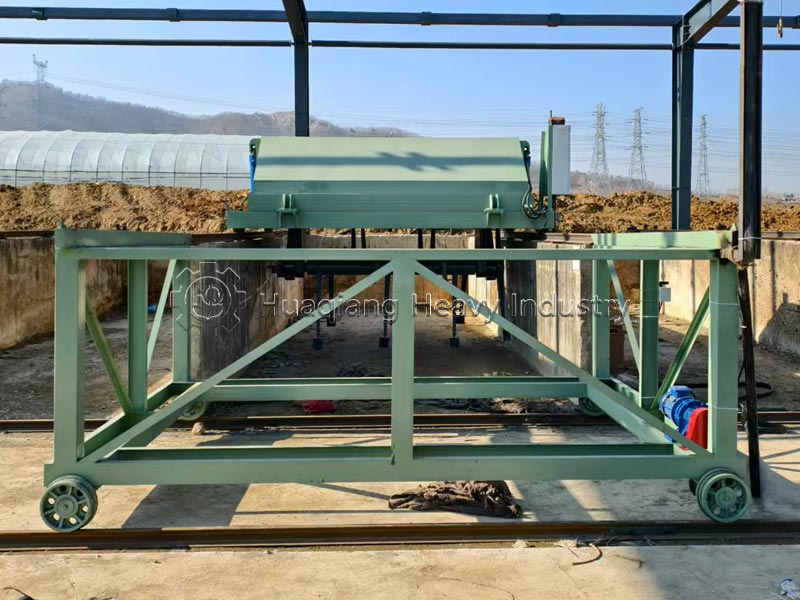
Equipment Introduction
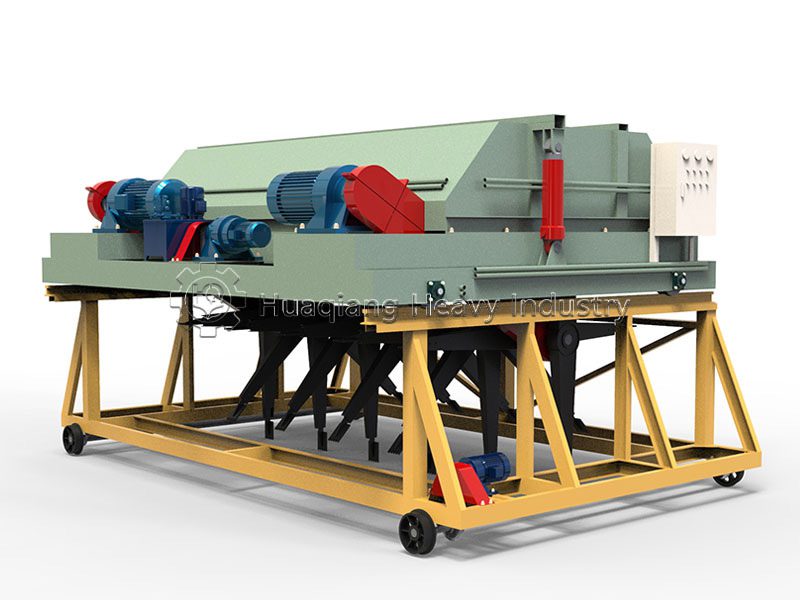
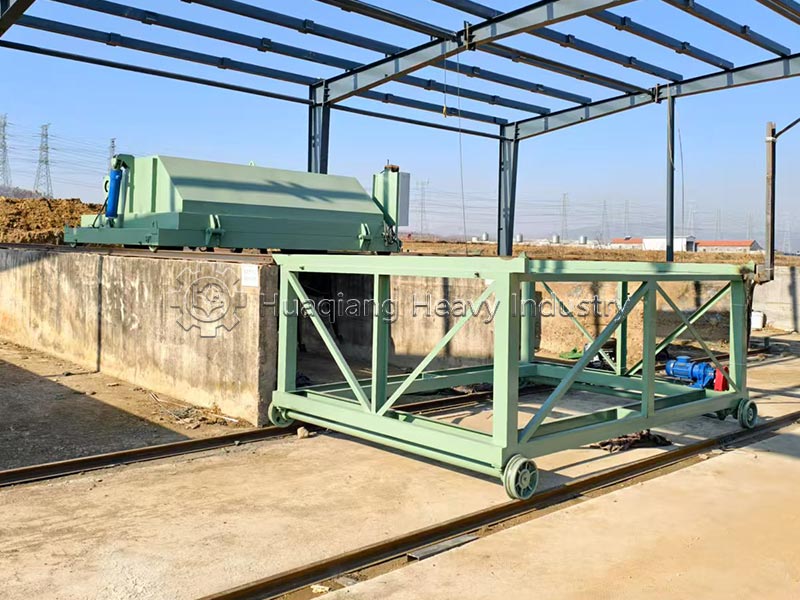
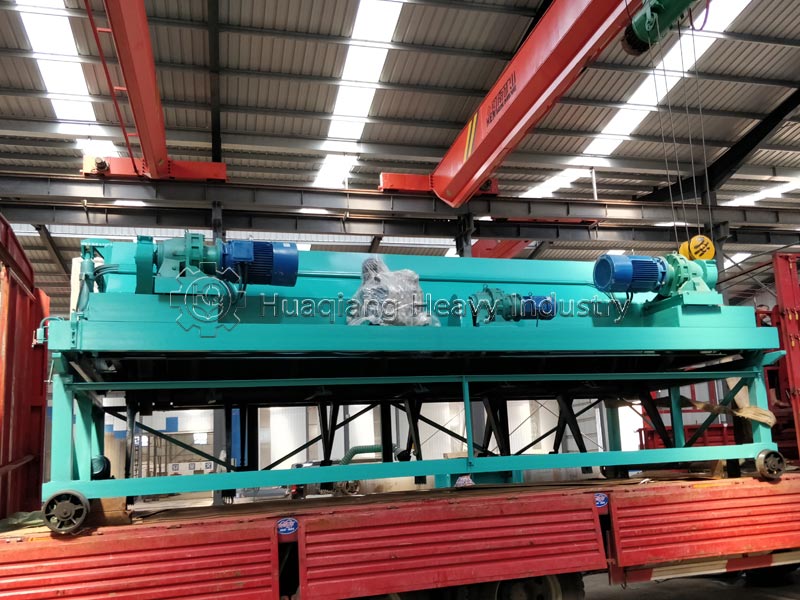
The hydraulic trough-type compost turner is a core fermentation equipment in organic fertilizer and bio-organic fertilizer production lines. Utilizing deep-trough fermentation technology, it provides the necessary oxygen for microbial fermentation and regulates material moisture through efficient stirring and turning, making it the preferred choice for large-scale fermentation plants.
The hydraulic trough-type compost turner is a turning device that operates in large-span, deep-trough fermentation tanks. Compared to ordinary compost turners, its biggest feature is the adoption of a hydraulic lifting system. It is a high-end core piece of equipment for trough-type aerobic fermentation technology, relying on a hydraulic lifting system to replace the traditional mechanical winch lifting structure, combined with a track-based chassis, and is specifically designed for deep turning, oxygen supply, crushing, mixing, and repositioning composting operations of various organic solid wastes.
Core Technological Advantages:
1. Infinitely Adjustable Turning Height, Adaptable to the Entire Fermentation Cycle: Hydraulic cylinders drive the roller lifting mechanism, allowing for stepless adjustment of the turning depth from 0.5 to 2.0 meters. Shallow turning facilitates aeration in the early stages of fermentation, deep turning dissipates heat in the middle stages, and precise height control for dehydration in the later stages. This shortens the fermentation cycle by 3-7 days and increases the humus content of the finished product by 15%-20%.
2. Flexible Hydraulic Transmission, Protected Under Heavy Loads: The hydraulic system adjusts the output torque in real time based on material resistance. It automatically buffers and releases pressure when encountering clumps or hard debris, preventing motor overload and burnout, and drive shaft breakage. It is suitable for high-humidity, high-viscosity livestock and poultry manure conditions.
3. Adaptable to Large-Volume Fermentation, Lower Infrastructure Costs: The maximum turning depth reaches 2.5 meters, increasing the utilization rate of the fermentation tank by over 40%. For the same production capacity, the fermentation workshop occupies a smaller area, reducing civil engineering investment.
4. High degree of automation and low labor costs: The control cabinet integrates manual/automatic modes, allowing preset walking speed, reciprocating turning frequency, and roller lifting height. Limit switches enable automatic stopping at both ends of the track, allowing a single person to complete the entire fermentation process.
5. Smooth operation, low noise and low vibration: Hydraulic lifting eliminates chain winch impact, resulting in minimal machine vibration and significantly reduced wear on the frame and bearings. The overall equipment failure rate is lower than that of mechanical lifting models.
6. Flexible multi-tank production: Equipped with a transfer vehicle, a single FPY hydraulic turning machine can switch between multiple fermentation tanks, significantly reducing the number of equipment required and adapting to the multi-tank parallel fermentation mode of large-scale organic fertilizer plants.
3) Applicable scenarios: It can be fully integrated with solar fermentation greenhouses, forced aeration systems at the bottom of the tank, automatic material feeders, and continuous discharge machines at the tank ends. The fermentation tanks support both continuous and batch discharge production modes, adapting to continuous organic fertilizer production lines.
Equipment Structure and Composition
The hydraulic trough-type compost turner adopts a modular design, mainly composed of the following six core systems:
1. Frame and Main Structure
The main load-bearing frame of the equipment is made of high-quality carbon steel, treated with rust removal and anti-corrosion to resist corrosion from fermentation materials and extend the service life of the equipment. The heavy-duty frame design has strong load-bearing capacity and can adapt to long-term high-intensity deep turning operations.
2. Power Transmission Device (Turning Power System)
Composed of a motor, reducer, sprocket, bearing housing, main shaft, etc., it is the core device that provides power to the turning drum. The motor transmits power to the cycloidal pinwheel reducer, which then transmits it to the turning drum via the sprocket.
3. Traveling Device
Composed of a traveling motor, transmission gears, transmission shaft, traveling sprocket, etc. The equipment moves smoothly along the tracks laid on both sides of the fermentation trough. The traveling system adopts a track-type design, ensuring smooth movement, low noise, and a low failure rate.
4. Hydraulic Lifting Device (Core Feature)
Adopting a fully hydraulic lifting system, it consists of a hydraulic pump station, solenoid valve body, hydraulic oil pipes, hydraulic cylinder, etc. This is the core difference between a hydraulic trough-type compost turner and a traditional mechanical compost turner. The hydraulic system includes an electric motor, hydraulic pump unit, hydraulic oil tank, and control valve group. The hydraulic cylinders precisely control the lifting height of the turning drum, flexibly adapting to different pile heights and material states at different fermentation stages.
5. Turning Device (Turning Rotor/Drum)
This consists of sprockets, support arms, and turning drums. The wear-resistant alloy steel rake teeth (or spirally arranged alloy stirring teeth) installed on the drum deeply scoop up, break up, and crush the organic material in the trough, then throw it backwards. The turning rotor’s main shaft is made of thick-walled seamless steel pipe, and the stirring teeth are made of high-chromium alloy steel casting with a wear-resistant weld overlay treatment, achieving a hardness of HRC60 or higher.
6. Transfer Vehicle (Shift Vehicle/Transfer Machine)
This consists of a walking motor, transmission gears, drive shaft, and walking wheels, providing a temporary transport tool for changing troughs with the compost turner. The main unit and the transfer machine can be used together to achieve multi-trough operation with one machine.
Application Scope of the Equipment
The equipment is suitable for all industry scenarios involving aerobic high-temperature harmless fermentation, volume reduction and dehydration, and composting for organic solid waste, covering four core areas:
1. Organic Fertilizer/Bio-Fertilizer Production Industry: Core supporting equipment for fermentation sections of commercial organic fertilizer plants, compound microbial fertilizer plants, and bio-fertilizer plants, with an annual production capacity of 10,000 to 200,000 tons of organic fertilizer.
2. Livestock and Poultry Breeding Environmental Disposal: Self-built manure treatment workshops for large-scale pig farms, chicken farms, and cattle and sheep farms, enabling on-site disposal of livestock manure and production of organic fertilizer to achieve a cycle of planting and breeding.
3. Municipal Solid Waste Environmental Treatment Industry: Sludge treatment stations in urban sewage treatment plants, sanitation and landscaping leaf and branch treatment plants, and organic slurry fermentation workshops for pre-treatment of kitchen waste, completing the harmless reduction and volume reduction of municipal organic solid waste.
4. Deep processing of agricultural products, planting, and edible fungi industry
Agricultural product processing plants: fermentation and treatment of sugar mill filter mud, brewing lees, Chinese medicine residue, and oilseed cake;
Horticultural planting bases: composting of substrates for thousands of acres of orchards, vegetable bases, and flower seedling cultivation;
Edible fungi factories: pre-fermentation and composting stages for cultivation materials of button mushrooms, shiitake mushrooms, and oyster mushrooms.
Raw Materials for the Equipment
The hydraulic trough compost turner primarily processes various organic wastes, including but not limited to:
1. Livestock waste: chicken manure, pig manure, cow manure, sheep manure, and other livestock and poultry manure
2. Municipal waste: urban sludge, sewage sludge
3. Agricultural processing waste: sugar mill filter mud, residue cake
4. Agricultural waste: straw, sawdust
5. Kitchen waste: kitchen garbage
The raw materials typically possess characteristics such as high moisture content, high viscosity, presence of sand and fiber, and strong corrosiveness. To address these characteristics, the hydraulic trough compost turner has undergone significant reinforcement in terms of materials and anti-clogging design.
Working Principle of the Equipment
The entire machine operates through three independent, interconnected systems: track walking, drum turning, and hydraulic lifting adjustment. These systems enable the complete physical processing of materials for aerobic fermentation:
1) Machine Walking Logic: Parallel load-bearing tracks are laid on both sides of the fermentation tank. The walking motor drives the wheels, causing the entire machine to move back and forth along the tracks at a uniform speed. The walking speed can be steplessly adjusted via the electrical control cabinet to adapt to the turning frequency requirements at different fermentation stages.
2) Material Handling Principle of the Turning Drum
Dual main motors drive the turning drum to rotate at high speed via a reducer and sprocket. The spiral wear-resistant alloy rake teeth on the drum surface continuously cut and grab deep-seated materials at the bottom of the trough, completing four core auxiliary functions for fermentation:
1. Oxygen Supply and Aeration: Breaks up dense material clumps, introducing air into the pile to meet the oxygen requirements for the reproduction of aerobic thermophilic microorganisms and eliminate anaerobic odor;
2. Temperature Control and Heat Dissipation: Turns the high-temperature material (55~70℃) inside the pile to the surface to release heat, stabilizing the harmless temperature range of the pile (above 55℃ for 7 days, killing insect eggs, pathogens, and weed seeds);
3. Crushing and Mixing: Powerfully breaks up compacted manure clumps and straw balls, achieving uniform mixing of main materials, straw auxiliary materials, and fermentation agents, avoiding incomplete local fermentation;
4. Continuous Material Displacement: The propeller blades generate forward pushing force, uniformly moving the material towards the discharge end of the fermentation tank. 0.2~1m, enabling a continuous feeding at the front end and continuous discharge of fermented material at the rear in a streamlined production line mode.
3) Hydraulic Lifting Adjustment Principle: After the electrical control cabinet sends a lifting command, the hydraulic pump motor drives the pump station to output high-pressure hydraulic oil, which is delivered to the lifting cylinders on both sides via an electromagnetic reversing valve. The cylinders extend and retract, driving the roller support arm to raise/lower the roller, achieving precise adjustment of the turning depth:
1. Ground flatness error <15mm: Roller blades 30~50mm off the ground;
2. Poor ground flatness: Blades fixed at 50mm off the ground to avoid the rake teeth scraping the bottom of the fermentation tank and damaging the equipment;
3. When the machine is stopped and unloaded for transfer, the roller can be completely raised above the highest point of the material pile to prevent material accumulation below the roller from causing the motor to overload and burn out upon the next start-up.
Equipment Operation Method
Pre-start Inspection: Check all lubrication points, hydraulic oil levels, and electrical connections for proper functioning.
Positioning: Use the transfer cart to align the equipment with the target fermentation tank.
Hydraulic Lowering: Activate the hydraulic system to lower the turning drum to the material depth.
Start Operation: Start the rotary motor, followed by the travel motor to begin turning.
Cyclic Operation: After turning to the end of the tank, raise the drum, and the equipment can quickly retract or be switched using the transfer cart.
Common Equipment Problems and Solutions
| Fault Type | Fault Performance | Common Causes | Solutions |
|---|---|---|---|
| Slow Lifting or Lifting Failure | The lifting speed of the cutter shaft is obviously slow; it cannot rise further after lifting to a certain height, or even sinks automatically | Insufficient or deteriorated hydraulic oil; blocked hydraulic oil filter element; internal leakage caused by worn hydraulic pump; oil leakage due to aging cylinder sealing rings; low preset pressure of overflow valve | 1. Check the oil level of the hydraulic oil tank; add the same type of hydraulic oil to the specified scale line if insufficient 2. Observe the color of hydraulic oil; replace it in time if it is black, emulsified or contains impurities (it is recommended to replace it every 1000 operating hours or every six months) 3. Inspect the oil suction filter and return oil filter; clean or replace them if severely blocked 4. Oil stains outside the oil cylinder indicate aging sealing rings; replace the cylinder sealing parts 5. Contact professional technicians to overhaul the hydraulic pump or adjust the overflow valve pressure if the above troubleshooting is ineffective |
| Uneven Compost Turning | The material surface is uneven after turning; local materials in the trough are not turned, or the turning depth is inconsistent | Improper angle adjustment of cutter shaft; severely worn or broken blades; excessively fast traveling speed; hard agglomerated materials | 1. Adjust the hydraulic lifting mechanism of the cutter shaft to ensure the cutter shafts on the left and right are at the same horizontal level, with an angle of 15–20° (lower front, higher rear) 2. Replace blades in groups when the wear exceeds 1/3 of the original length to maintain dynamic balance 3. Appropriately reduce the traveling speed, recommended to be controlled at 3–6 meters per minute 4. Spray water appropriately to soften hardened materials before turning or increase the turning frequency |
| Machine Drifting During Traveling | The machine obviously drifts to one side when traveling in the fermentation trough, causing the crawler to rub against the trough wall or even derailment | Inconsistent tension of left and right crawlers; uneven wear of support wheels or carrier rollers; asynchronous output of hydraulic motors; uneven base of trough bottom | 1. Adjust the tension cylinder to make the tension of both crawlers consistent; the standard is that the middle of the crawler can be pressed down by 2–3 cm 2. Check the rotation flexibility of support wheels and carrier rollers; replace them if severely worn 3. Adjust the flow distribution of the traveling valve or check the wear of the motor 4. Check the settlement of the trough bottom base; level it if necessary |
| Hydraulic System Fault | Slow and weak lifting & turning movements, or complete failure of movements; oil leakage of hydraulic pipelines; abnormal noise during system operation | Insufficient / deteriorated hydraulic oil; aging sealing parts; worn hydraulic pump; stuck electromagnetic valve | 1. Lift the compost turner to the highest position, shut down the machine and observe whether the cylinder rod slides down automatically 2. Tie a marking tape on the cylinder rod; maintenance is required if it slides down more than 5 mm within half an hour 3. It is recommended to contact professional service personnel to overhaul core components such as pumps and valves in case of failure |
| Chain Fault | Abnormal noise and tooth jumping during operation; severe chain breakage leads to sudden machine shutdown | Elongated worn chain; worn sprocket tooth surface; insufficient lubrication; foreign objects jammed inside | 1. Shut down the machine to check chain tension and wear; replace the chain in time if excessively elongated 2. Clean foreign objects between sprockets and add special chain lubricating oil regularly 3. Replace sprockets and chains in pairs when the sprocket tooth surface is severely worn |
| Overheated Motor | Excessively high motor temperature during operation, with risks of malfunction or excessive load | Excessive load; worn bearings; poor heat dissipation; abnormal voltage | 1. Shut down the machine immediately for cooling; check for material overload or mechanical jamming 2. Inspect motor bearing wear and replace bearings if necessary 3. Clean dust on motor cooling fins to improve ventilation 4. Detect whether the power supply voltage is within the rated range |
| Emergency Handling | Sudden failure of lifting system, potential safety hazards of the machine | Sudden hydraulic system failure; pipeline burst; power cut-off | 1. Cut off the main power supply immediately 2. If the compost turner is in a lifted state, fix it firmly with supports before troubleshooting 3. It is strictly forbidden to enter the lower part of the machine for maintenance without supports |
Application of the Equipment in the Production Line
The hydraulic trough compost turner is a widely used piece of equipment in organic fertilizer production lines. Located between solid-liquid separation and aging screening, it is the “main battlefield” for biochemical reactions.
1. Positioning in the Production Line
In the entire organic fertilizer production line, the hydraulic trough compost turner plays a core role in turning and disposing of materials. The equipment adopts a modular structure design, making installation convenient and allowing for rapid integration into large-scale organic fertilizer production lines. It can seamlessly connect to equipment such as crushers, mixers, and granulators, achieving integrated operations of organic raw material crushing, mixing, turning, and composting.
2. One Machine, Multiple Troughs Operation
With the aid of a transfer vehicle (shifting machine), “one machine, multiple troughs” can be operated in rotation, greatly improving equipment utilization and saving on infrastructure and equipment investment costs. For organic fertilizer projects with an annual production capacity of tens of thousands of tons or more, multiple troughs can be connected in parallel with one compost turner to achieve continuous feeding and discharging, significantly improving site utilization and production continuity.
3. Value in the Production Process: Stable turning and turning quality provides high-quality raw materials with suitable moisture content and uniform fineness for subsequent crushing and granulation processes, significantly reducing recycle rate and energy consumption. The equipment often integrates a biological deodorizing spray system, simultaneously spraying deodorizing bacteria during the turning and turning process to inhibit the volatilization of ammonia and hydrogen sulfide at the source, improving the factory environment.
Fermentation process of equipment
Hydraulic trough compost turner is the core equipment for realizing aerobic compost fermentation.
1. Principle of aerobic fermentation
The equipment uses aerobic compost turning and throwing technology to achieve aerobic fermentation of materials through turning and throwing. The turning process plays a decisive role in regulating temperature, moisture and oxygen content in the aerobic composting process.
2. Fermentation process control
Warming period (1-3 days): Toss slowly to avoid temperature loss and help activate microorganisms. Turning depth 60-80cm, walking speed 3-4m/min, 1-2 times a day
High temperature period (4-8 days): deep turning, sufficient oxygen supply, and controlled temperature ≤65℃. Turning depth 80-120cm, walking speed 2-3m/min, 2-3 times a day
Cooling period (9-12 days): Shallow tossing to reduce energy consumption and maintain decomposition. Turning depth 60-80cm, walking speed 3-5m/min, once a day
3. Fermentation effect
Through the deep turning mode, the temperature of the pile can quickly rise to above 70°C within 48 hours, completely killing pathogenic bacteria, insect eggs and weed seeds. The stacking temperature is stabilized in the optimal decomposition range of 55-65°C to accelerate microbial activity. The fermentation cycle is greatly shortened to 7-20 days (traditional fermentation takes more than 30 days).
4. Fermentation tank configuration
Build two fermentation tanks with a height of 1.5-1.8 meters, a length of 60-80 meters, and a distance of 3-10 meters between the two walls, and set up light rails on the walls. A flipping machine that can move forward, backward, left and right, and up and down is installed on the track. Fresh livestock and poultry manure enters the trough from one side and is continuously turned by the compost turner to form decomposed organic fertilizer on the other side of the trough.
Equipment Parameters
| Model | Main Motor | Walking Motor | Moving Motor | Hydraulic Pump Motor |
|---|---|---|---|---|
| FPY4 | 22kw | 1.5kw | 1.1kw | 4kw |
| FPY5 | 30kw | 1.5kw | 1.5kw | 4kw |
| FPY6 | 37kw | 2.2kw | 1.5kw | 4kw |
Target Customers for the Hydraulic Trench Compost Turner
The main target customers and applicable clients for the hydraulic trough compost turner include:
1. Organic Fertilizer Production Enterprises
Large-scale organic fertilizer plants: Enterprises with an annual output of over 10,000 tons
Small and medium-sized organic fertilizer plants: Fermentation operations with a daily processing capacity of 10-50 tons
Organic fertilizer enterprises with an annual output of over 100,000 tons
2. Large-scale Livestock Farms
Large-scale livestock and poultry farms (chickens, pigs, cattle, sheep, etc.); farms requiring the processing of large quantities of livestock manure
3. Environmental Protection Enterprises
Urban sewage treatment plants (sludge treatment); urban waste treatment enterprises; municipal environmental protection projects
4. Agriculture and Horticulture Related Enterprises
Compound fertilizer plants; horticultural farms; button mushroom cultivation farms
5. Government and Subsidized Projects
Manure treatment centers; agricultural waste resource utilization projects; enterprises undergoing rectification under environmental supervision pressure
6. Equipment Features and Customer Value
This machine features a reasonable design structure, high efficiency, low energy consumption, high degree of automation, ease of use, low cost, and wide application, making it a highly efficient model that is popular with users. For companies facing environmental inspection pressures and pursuing high-quality organic fertilizer production, investing in a high-performance hydraulic trough-type compost turner is not only a guarantee of compliant pollution discharge, but also a powerful tool for cost reduction and efficiency improvement.
Summary of Equipment Advantages
Compared to traditional mechanical compost turners, hydraulic trough turners offer the following significant advantages:
- Powerful Performance: The hydraulic system boasts high torque and rapid response, delivering 1.5-2 times the turning force of ordinary models, easily crushing high-moisture, high-viscosity, and large-lump organic materials.
- Flexible Adjustment: The hydraulic system enables stepless lifting of the drum and smooth adjustment of the travel speed.
- Deep Turning: Turning depth can reach up to 2.5 meters, eliminating dead zones.
- High Automation: Equipped with a PLC control cabinet or wireless remote control, enabling fully automatic cyclic operation.
- Energy Efficient: Energy consumption per ton is 20% lower than traditional equipment, and the fermentation cycle is shortened by more than 30%.
- Strong Adaptability: One machine can operate in multiple troughs, significantly improving equipment utilization.
- Robust and Durable: Key components are made of wear-resistant alloy materials, with a service life 2-3 times that of ordinary turning teeth.