
Core Functions of Turning: In aerobic composting, turning is not simply moving materials; it performs four key functions: Oxygen Supply—bringing air into the compost pile to maintain the activity of aerobic microorganisms; Temperature Regulation—breaking up high-temperature areas and preventing local temperatures exceeding 70°C from killing the microorganisms; Moisture Removal—evaporating excess moisture through turning to maintain suitable humidity; Homogenization—turning the outer, dry, and cool material into the interior, and the inner, moist, and hot material to the surface, achieving uniform overall composting. Therefore, the quality of the turning operation directly determines the fermentation cycle and the quality of the finished product.
Determining the Timing of Turning: Many beginners tend to turn the compost at fixed times, such as “every three days.” A better approach is to determine the turning time based on the actual condition of the compost pile. Temperature is the most direct indicator: when the temperature at the center of the compost pile exceeds 65°C, turning is needed to cool it down; if the temperature remains stagnant at 40-50°C for an extended period, it indicates insufficient oxygen supply, and turning should be done promptly. In addition, the appearance of white mycelium (actinomycete growth) on the surface of the pile and the compaction and caking of the material are both signs that turning is necessary.
A practical technique for determining the timing of turning is “temperature-guided turning”: During the fermentation heating period, turn as little as possible to allow heat to accumulate; during the high-temperature period, turn every 2-3 days, ensuring the temperature does not exceed 70℃; during the cooling period, loose turning is the main method to allow moisture evaporation. For high-nitrogen materials such as chicken manure, which heat up rapidly and have a strong ammonia smell, the turning frequency should be increased to once every 1-2 days; for fibrous raw materials such as cow manure and straw, which have a loose structure, turning can be reduced to once every 3-5 days. In winter, when heat preservation is difficult, the turning frequency can be reduced; in summer, to prevent overheating, the frequency needs to be increased.
Turning Operation Techniques: Regarding the operating depth, the turning wheel or roller should reach the bottom of the pile, thoroughly turning over the bottom 5-10 cm of material to avoid bottom compaction and oxygen deficiency. The walking speed should be 5-10 meters per minute; too slow and the efficiency is low, too fast and the turning is incomplete. Maintain a constant speed during equipment operation to avoid sudden changes in speed that could lead to excessively deep or shallow turning in certain areas. After turning, the compost pile should return to a loose state, with a trapezoidal cross-section, and its height can be slightly lower than before turning by 5-10 cm—this reduction mainly comes from moisture loss and loosening of material compaction.
Turning Strategies for Different Fermentation Modes:
Wind stack composting is suitable for small to medium-scale operations, with the turning frequency as described above. It uses wheeled or tractor-mounted turners, with the equipment straddling the windrows. Its advantages are flexibility and no need for civil engineering; its disadvantage is significant weather dependence, making operation impossible in rainy weather.
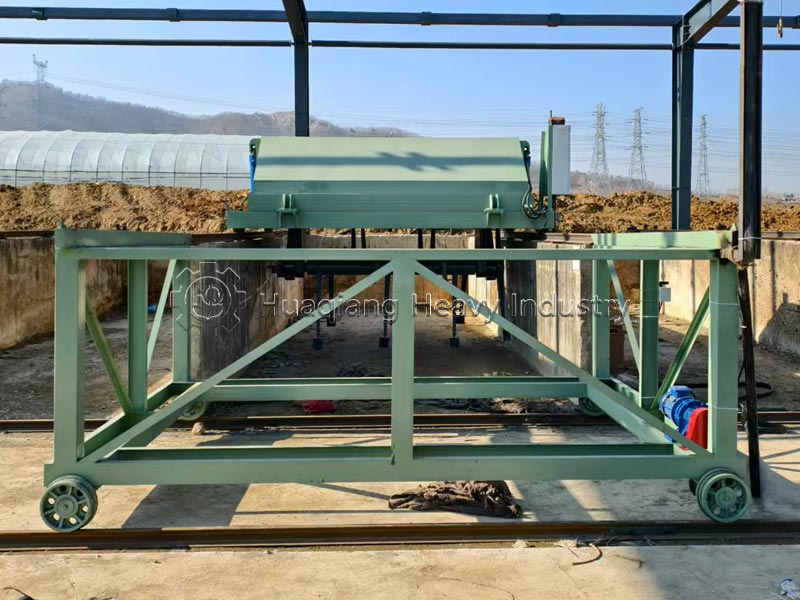
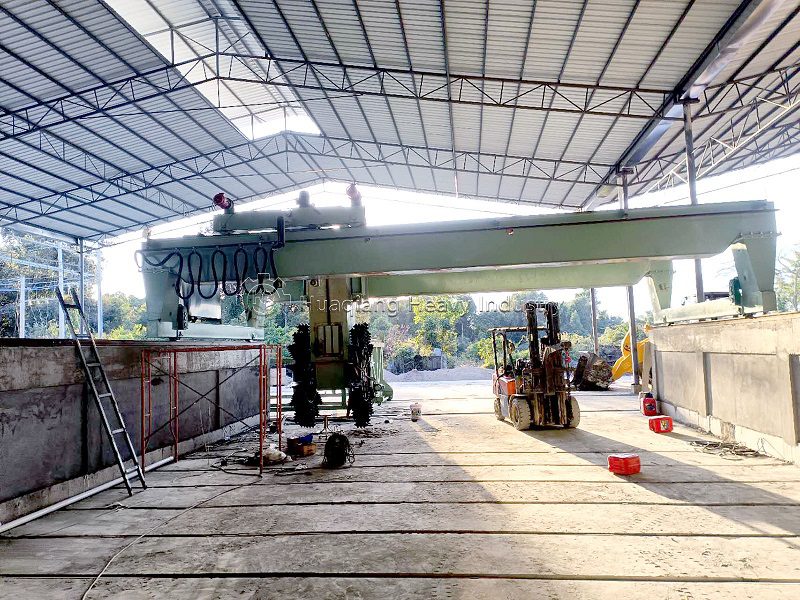
Trough fermentation is suitable for large-scale continuous production. The turner reciprocates along a track and can be combined with a bottom aeration system for precise oxygen supply. Turning depth can reach 1.5-1.8 meters, with large processing capacity and low energy consumption. Trough technology allows for scheduled daily turning, making standardized management easier.
Biological fermentation tanks (drum type) are closed systems with forced aeration. Internal blades continuously turn the material, typically turning it every hour or every few hours. The fermentation cycle is only 7-10 days, but the equipment investment is relatively high.
Common Misconceptions about Turning and Turning
Misconception 1: The more frequent the turning, the better. Excessive turning will reduce heat dissipation, prolong the high-temperature period, which is detrimental to humus synthesis and increases power consumption.
Misconception 2: Only turning the surface layer. Insufficient turning depth will lead to anaerobic conditions at the bottom, producing a sour and putrid odor.
Misconception 3: Ignoring the moisture content of the material. Turning will produce a lot of dust when the material is too dry; a suitable amount of water should be sprayed before turning. When the material is too wet, the aeration time should be extended after turning or dry additives should be added.
Self-Checking the Turning Effect
After the turning operation is completed, the following methods can be used for self-checking: Insert a thermometer to measure the temperature at different locations in the pile; the temperature difference should be within 10℃; observe that the cross-section has a uniform pore structure without a crusty layer; smell that it has a fresh earthy fragrance, without an ammonia or sour odor. If the pile temperature drops instead of rises the day after turning, it indicates that excessive turning has led to heat loss. The depth or frequency of turning should be reduced next time.
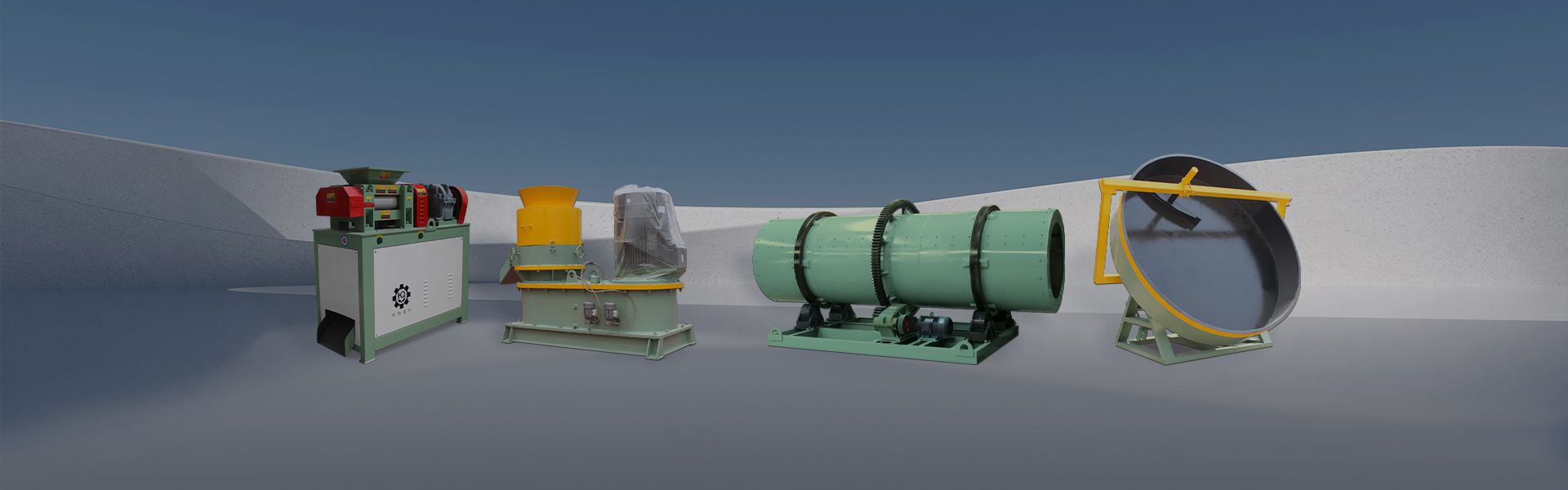
Mastering the art and science of turning is the essence of fermentation composting technology for organic fertilizer. The four core functions—oxygen supply, temperature regulation, moisture removal, and homogenization—are executed through specific fermentation composting turning technology. The choice of equipment—a large wheel compost turner (or large wheel compost turning machine) for open-air windrows, a windrow composting machine for flexible operation, a trough-type compost turner for controlled environments, or a double screws compost turning machine for gentle, deep turning—determines the efficiency of these functions. Trough-type aerobic fermentation composting technology allows for precise control with bottom aeration systems. The key is “temperature-guided turning”: during the heating period, turn sparingly; during the high-temperature period (55-65°C), turn every 2-3 days; during the cooling period, use loose turning. For high-nitrogen materials like chicken manure, increase turning frequency to once every 1-2 days. For fibrous materials like cow manure, reduce to once every 3-5 days. Proper turning depth (reaching the bottom 5-10 cm) and walking speed (5-10 m/min) are critical. After successful composting, the mature material is ready for a disc granulation production line. By refining the turning process, the fermentation cycle can be shortened by 20%-30%, producing higher quality organic fertilizer. Avoiding common misconceptions—excessive turning, only turning the surface, or ignoring moisture—is essential. A well-executed turning process is the foundation of an efficient, high-quality organic fertilizer production system.
A proper turning process can shorten the fermentation cycle by 20%-30%, while improving the maturity of organic fertilizer and nutrient retention. Refining the turning process will benefit the efficiency of the entire production line.