
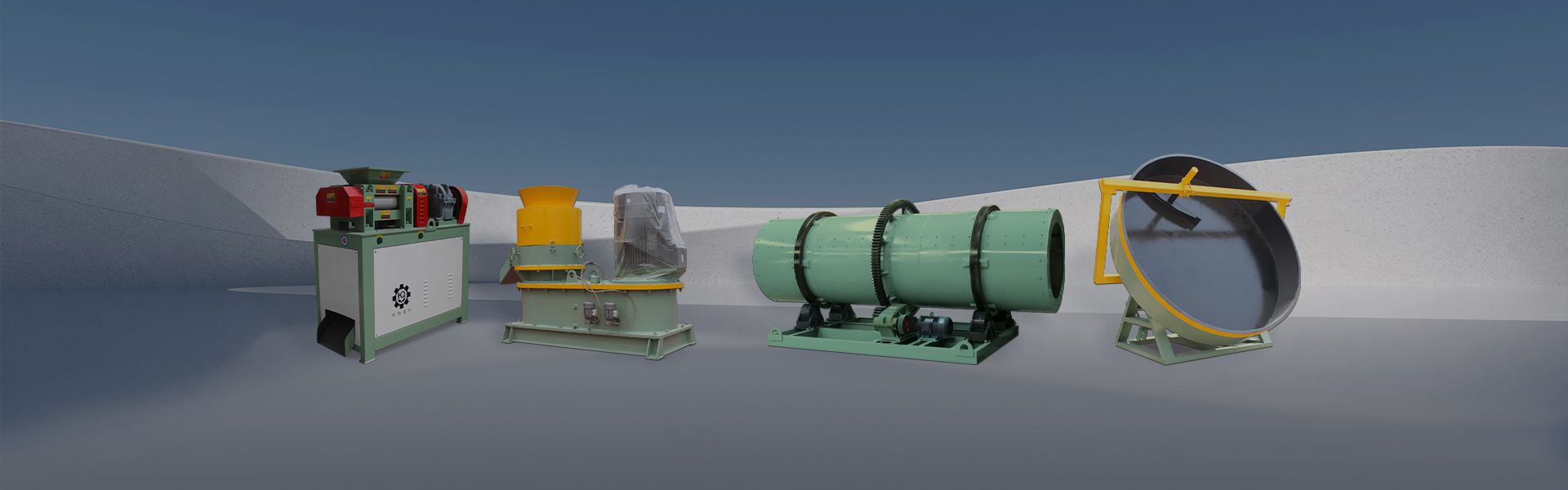
If you think all fertilizer granulation requires roaring hot air furnaces, the installation site of this roller press granulator production line might just change your mind about what “granulation” really means.
Walking into the workshop, you won’t find the massive cylinder of a dryer lying horizontally, nor will you see hot air ducts winding their way overhead. Instead, what greets you are rows of compact, sharply defined pieces of equipment lined up along the foundation—from the raw material bin, double roller press granulator, crusher, and screener, to the cooler and packaging scale. They stand like a well-formed phalanx, waiting for the command to move.
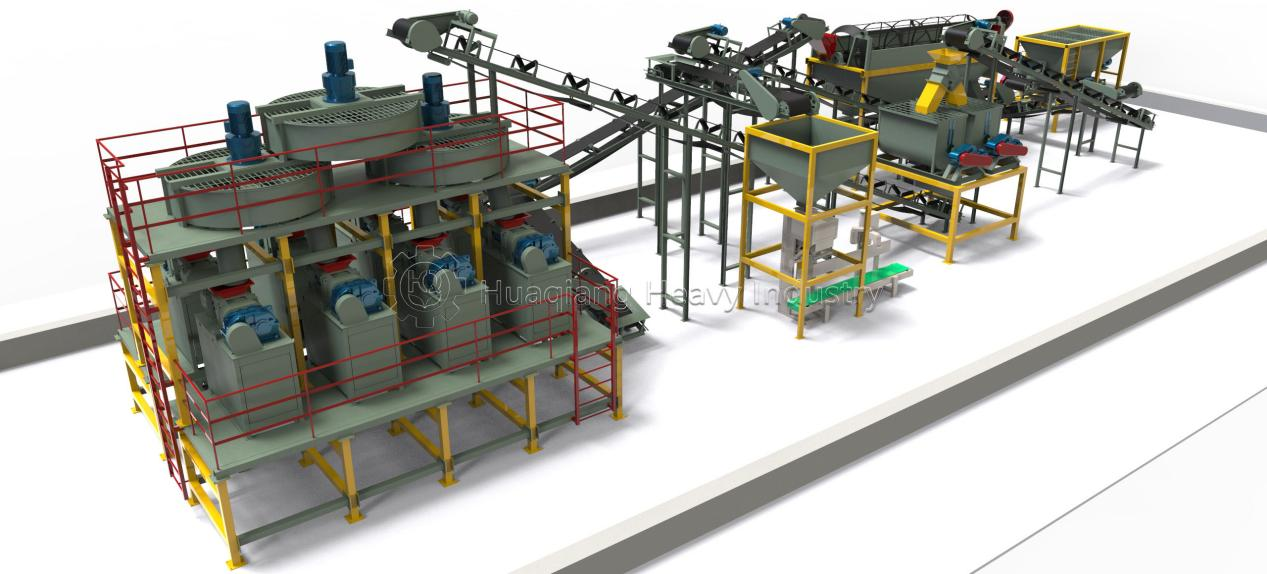
All eyes are on the heart of the production line: the roller press granulator. Two fitters crouch on either side of the twin rollers, holding micrometers and measuring the gap between them again and again. “0.3 millimeters, no more,” says the old master in a low voice that leaves no room for doubt. These rollers, over a meter in diameter, their surfaces studded with wear-resistant grooves, will squeeze powder into dense cakes under hundreds of tons of pressure. No water, no steam, no binder added—the advantage of dry granulation lies hidden between these two cold pieces of steel.
“With traditional drum granulation, you need a dryer and a cooler. High energy consumption, and exhaust treatment is a headache,” explains the project manager, gesturing toward the roller press being installed. “This setup eliminates the hot air system entirely. You don’t need as large a workshop, and operating costs drop significantly.” As he speaks, the crane slowly lifts a set of hydraulic cylinders. Workers on the platform catch them smoothly, thread the bolts through, and tighten them in one fluid motion.
The chain fertilizer crusher sits right next to the roller press, its sharp blades arranged in staggered rows inside the housing, ready to break the cakes into uniform granules. Further down is the double-layer vibrating screen, the mesh already stretched taut. A worker taps the screen frame lightly with a rubber mallet, listening to the sound to gauge whether the tension is even across the mesh. “If the screening isn’t clean, the return material increases, and the whole line’s efficiency suffers right here,” the foreman says, tilting his head to listen. The tapping sounds crisp, like a doctor auscultating a patient.
What stands out most is how compact the layout is, despite the number of machines. The belt conveyors are short and straight; material moves from granulation to screening to cooling with almost no detours. A foreign client, on-site for acceptance testing, stands on the operating platform, looks around, and remarks in halting Chinese, “No drying—good.”
As dusk falls, power is switched on to the control cabinet, and the motors begin their low hum. Workers pack up their tools, and one of them pats the frame of the roller press with a smile: “Once you start running, the plant’s electricity bill is going to look a lot better.”
Yes, this line has no flame, yet it turns powder into granules. It produces no smoke, yet it makes efficiency grow. Perhaps that’s what real technology looks like—hiding complexity within simplicity, and pressing strength into silence.