
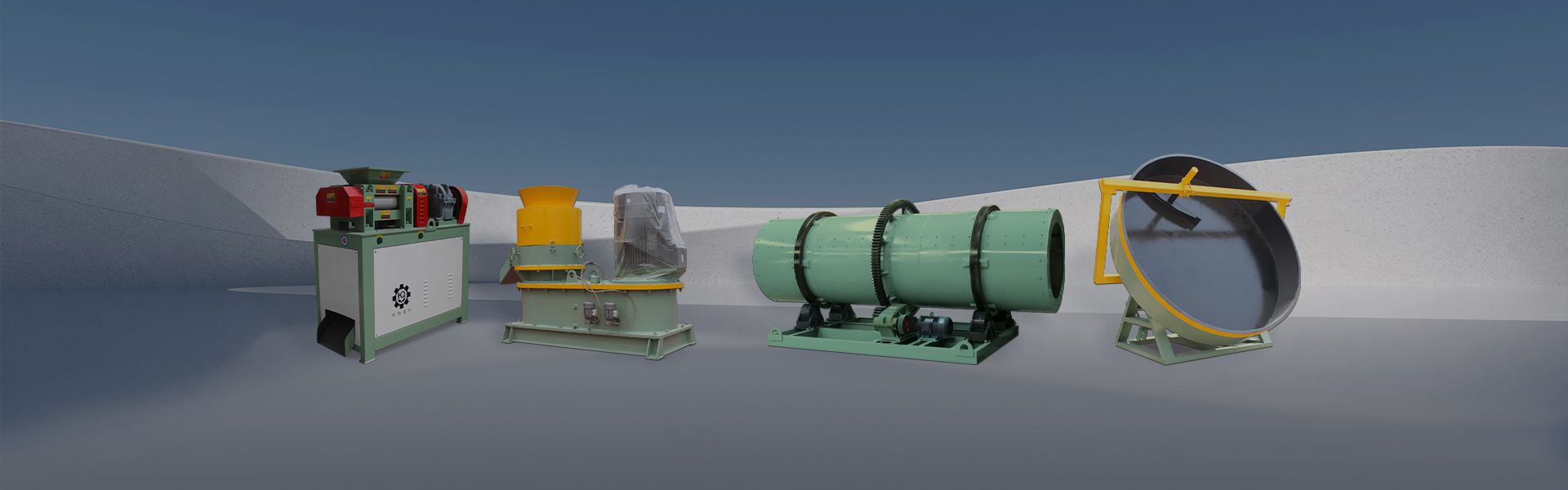
Have you ever wondered if you could make high-quality fertilizer granules without using a single drop of water or a massive drying drum? The double roller press granulator makes that possible. It is a machine that turns powder into solid particles through simple, yet powerful mechanical pressure. But as impressive as it stands alone, its true potential is unlocked only when it works in harmony with the rest of the production line.
The process begins long before the material reaches the rollers. An automatic batching system weighs out the raw ingredients, such as nitrogen, phosphorus, potassium, and organic matter, according to a precise recipe. These ingredients are then sent to a horizontal mixer, where they are thoroughly blended until the mixture is perfectly uniform. Without this step, the final granules would lack consistency. Once mixed, the material is carried by a bucket elevator to a buffer silo located just above the granulator, ensuring a steady and continuous feed.
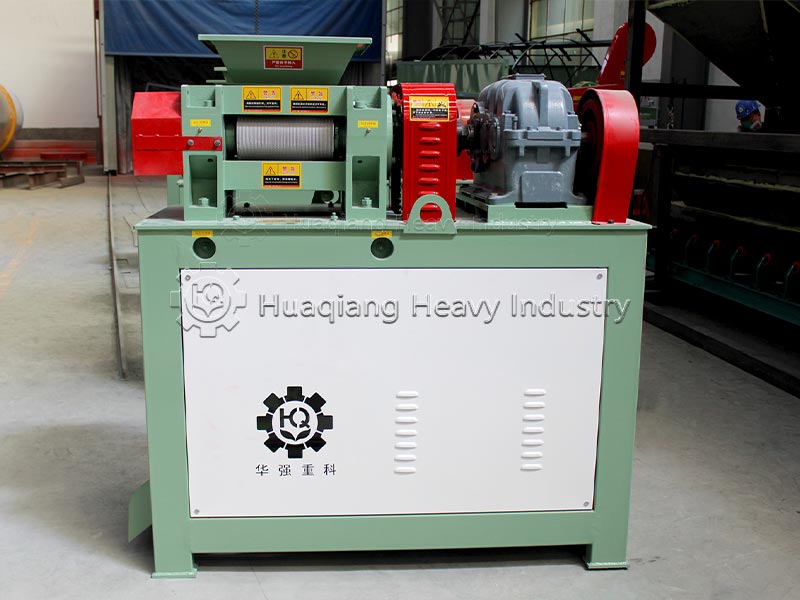
Now the main event begins. The powder is forced between two counter-rotating rollers. One roller is fixed in place, while the other is pushed toward it by a powerful hydraulic system. The pressure is immense, often reaching tens of kilonewtons per square centimeter. Under this force, the powder is instantly compressed into dense sheets or strips. The density of the material can increase by two to three times its original volume, transforming it into a solid, handleable form.
These compacted strips are not yet the final product. They fall into a chain fertilizer crusher, where rotating blades break them down into smaller, irregular pieces. This is the stage where the actual granule size is determined. The material then moves to a rotary screener machine, which separates it into three streams. Particles that are just the right size proceed to the packaging line. Pieces that are too large are sent back to the crusher for another pass. And the fine dust that is too small is returned via a screw conveyor to the roller press, where it will be mixed with fresh material and compressed again.
One of the greatest advantages of this method is that it requires absolutely no drying or cooling equipment. Because no water or heat is used in the process, the energy savings are substantial. This also makes it ideal for materials that are sensitive to high temperatures, such as bio-organic fertilizers or products containing live microorganisms. The entire line is compact, efficient, and clean, especially when paired with a pulse-jet dust collector that captures and recycles any stray powder.
For those who need a more polished final product, a coating drum can be added after the screening stage. This machine applies a thin layer of oil or powder to the surface of each granule, improving its appearance or adding a slow-release function. The roller press itself is also highly adaptable. By changing the pattern on the roller surfaces, you can produce granules that are round, oval, rod-shaped, or even pillow-shaped, depending on the needs of your crops or customers.
So, if you are looking for a way to produce granules that is simple, energy-efficient, and free from the complications of drying, the double roller press granulation line deserves a close look. It proves that sometimes, the best things come not from fire or water, but from pressure alone.