
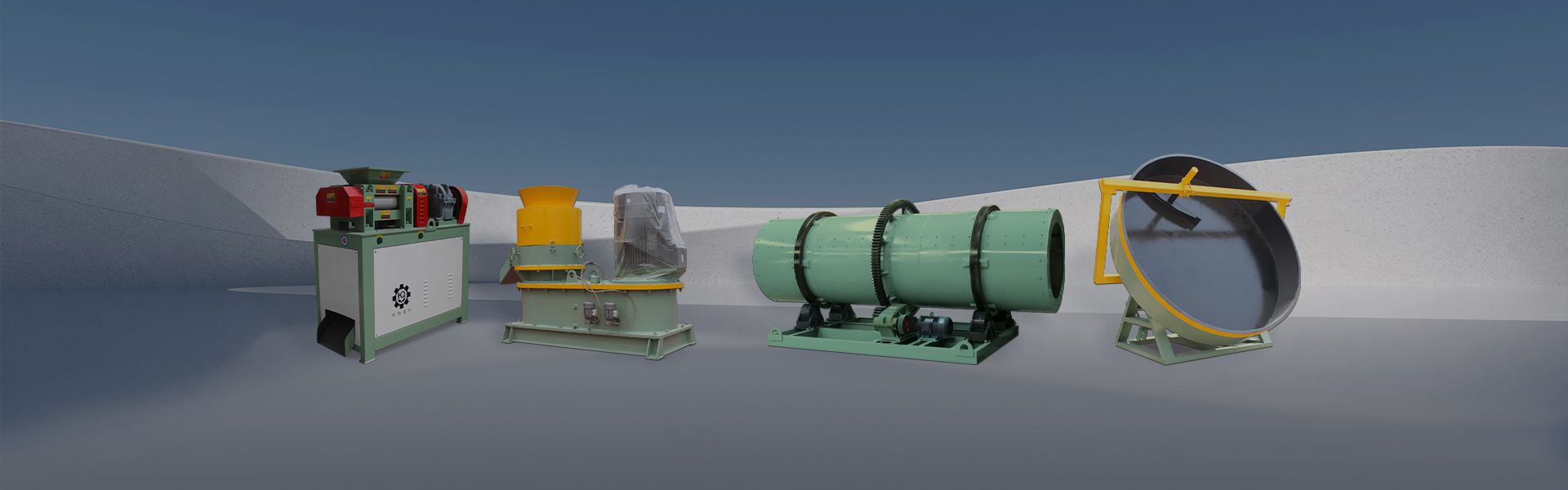
Have you ever watched wet snow roll downhill, gathering mass and shape until it becomes an avalanche-ready ball? That natural phenomenon is exactly what happens inside a disc granulator—except this snow never stops rolling, and the balls it creates will eventually feed the world.
Walk onto the floor of a disc granulation production line, and you’ll immediately understand why this equipment has survived decades of technological innovation. Massive pans, tilted at precise angles like cosmic satellite dishes, rotate slowly and steadily. Their surfaces crawl with material in various stages of transformation—fine powder near the top, growing granules in the middle, and perfect spheres cascading over the lower edge. It’s hypnotic. It’s ancient. And it works brilliantly.
The Heart of the Line: The Disc Itself
So what makes this spinning pan so special? Imagine feeding dry, powdered raw materials onto a rotating disc angled between 45 and 55 degrees. As the pan turns, centrifugal force and gravity work together, lifting the material and letting it tumble back down. Spray nozzles mounted above mist the cascading powder with just enough liquid binder—water, steam, or dissolved urea—to create stickiness.
And then the magic begins. Small particles attract smaller particles, growing layer by layer like pearls forming in oysters. The longer material stays on the disc, the larger the granules become. But here’s the genius of the design: because the disc is open and visible, operators can see exactly what’s happening in real time. Too many fines riding on top? Increase the angle, speed up the roll. Granules getting too large? Reduce retention time by tilting the pan steeper. It’s responsive, intuitive, and oddly personal.
The Supporting Cast
But the disc doesn’t work alone. Behind every great granulator stands a carefully orchestrated lineup of support equipment:
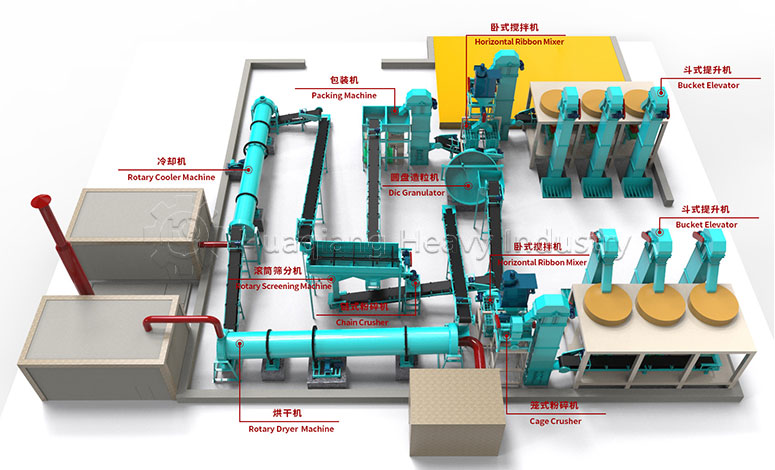
A batching system leads the charge, weighing raw materials with pharmaceutical precision. Nitrogen, phosphorus, potassium, and any additives must meet their targets before anything moves forward. From there, a vertical disc mixer blends everything into a homogeneous powder—no streaks, no variation, just uniform potential.
Conveyors carry this pre-blended material to the disc’s feed point, joining a continuous cascade of tumbling product. Below the pan, swing-arm scrapers constantly clean the disc surface, preventing buildup that would ruin the delicate balance of rolling. It’s a duet between creation and maintenance.
Once granules spill over the disc’s lower edge—ripe fruit falling from the tree—they’re not finished yet. They tumble into a rotary dryer, where warm air strips away moisture and locks in their structure. A cooler follows, bringing temperatures down so granules won’t cake in storage. Then screens separate the perfect product from oversize and undersize; oversize gets crushed and returned, fines go back to the disc as fresh seed material. Nothing wasted. Nothing lost.
Why Choose Disc Granulation?
What kinds of products thrive on a disc granulator? Almost anything you can imagine. Straight fertilizers like single superphosphate roll beautifully on discs. Compound NPK formulations, especially those with higher organic content, often prefer the disc’s gentle touch. Some producers even use discs to create premium-grade products—uniform, spherical granules that farmers love because they flow easily through planters and dissolve predictably in soil.
The disc offers distinct advantages over other granulation methods. Capital costs run significantly lower than drum granulation or prilling towers. Energy consumption stays modest because the process relies on mechanical tumbling rather than high heat or pressure. And the open design means operators can make adjustments instantly, without stopping production.
The Operator’s Dance
Stand beside an experienced operator running a disc line, and you’ll witness something remarkable. They don’t just watch gauges and readouts. They listen to the sound of material cascading. They feel the vibration through the floor. They catch a handful of granules, roll them between thumb and fingers, and know instantly whether adjustments are needed.
“Too wet,” they’ll mutter, and reach for the spray control. “Too many fines,” and the disc angle changes by half a degree. It’s a dance—intuitive, responsive, and grounded in years of feel. Machines can automate parts of this process, but they can’t replace the human connection between operator and disc.