
There’s a peculiar energy on the day a windrow compost turner arrives at its new home. The machines that will support it are already in place—some bolted to concrete pads, others waiting on flatbed trucks—but the site itself is still a canvas. Bare earth, survey stakes, and the low rumble of diesel engines set the scene for something remarkable: the birth of a composting operation.
The installation begins long before the first bolt is tightened. Surveyors mark the turning pad—a long, straight stretch of reinforced concrete that will soon cradle windrow after windrow. It must be perfectly level, wide enough for the turner’s massive wheels, and long enough to accommodate weeks of continuous operation. Drainage channels cut alongside ensure that rainwater never pools. Nearby, a concrete foundation waits for the supporting cast: the crusher, the double axis mixer, the screening station.
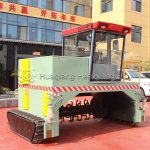
Now the windrow compost turner arrives. A lowboy trailer backs slowly into position, and a mobile crane swings into action. Steel cables tighten, and the turner—easily twenty feet long, its drum bristling with paddles—lifts gracefully from the trailer. Workers guide it into place above the turning pad, their hand signals sharp and practiced. The machine settles onto its rails or wheels with a solid thud that echoes across the site. Leveling screws turn, hydraulic lines connect, and within hours, the turner sits precisely where it will work for years to come.
But installation is never just about one machine. While the turner takes shape, other equipment finds its place along the production line.
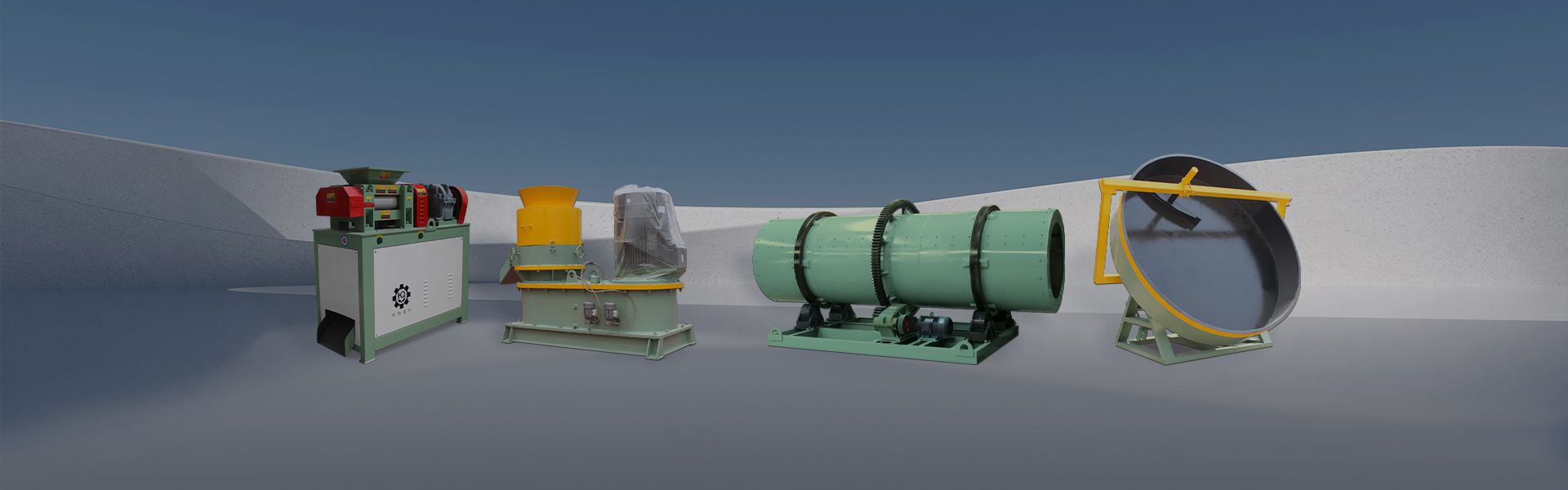
At one end of the pad, a heavy-duty crusher is bolted to its foundation. Its massive hopper faces the delivery area, ready to swallow bales of straw, piles of manure, and truckloads of green waste. Nearby, a horizontal mixer waits on its own concrete pad, its spiral blades designed to blend carbon-rich browns with nitrogen-rich greens before the material ever reaches the windrows. Conveyors snake between them—steel belts that will carry material from shredder to mixer, from mixer to windrow former, and eventually from finished compost to screening.
Across the site, electricians pull wire through conduit, connecting motors and sensors to a central control panel. Programmable logic controllers are programmed with the turner’s operating parameters—forward speed, drum rotation, turning frequency. A water line is tapped, leading to a spray bar that will keep piles moist during active composting. A biofilter, looking like a long bed of wood chips, is laid down to capture any odors before they drift beyond the property line.
At the opposite end of the turning pad, a rotary screener machine sits on its own foundation, ready to separate finished compost from oversize particles. Beside it, an automatic bagging machine waits for calibration, its hopper gleaming in the afternoon light. A palletizer—a robotic arm that stacks filled bags with inhuman precision—stands silent but ready.
The installation takes days. Crews work in sequence: concrete finishers one day, riggers the next, electricians and programmers after that. Slowly, the site transforms from empty ground to a choreographed system. The shredder roars to life for its first test, chewing through a load of woody debris. The mixer spins empty, its bearings singing. Conveyors roll, belts tracking true. And finally, the windrow compost turner moves—a tentative few feet at first, then a full pass along the empty pad, its drum rotating, its wheels tracking perfectly along the rails.
On the final day, the team runs a full test. A front-end loader feeds the shredder. Material moves through the mixer, forms a windrow, and the turner makes its first real pass. Steam rises. Sensors flash their readings to the control panel. At the far end, the trommel screen spins, and for the first time, finished compost drops into a waiting truck.