
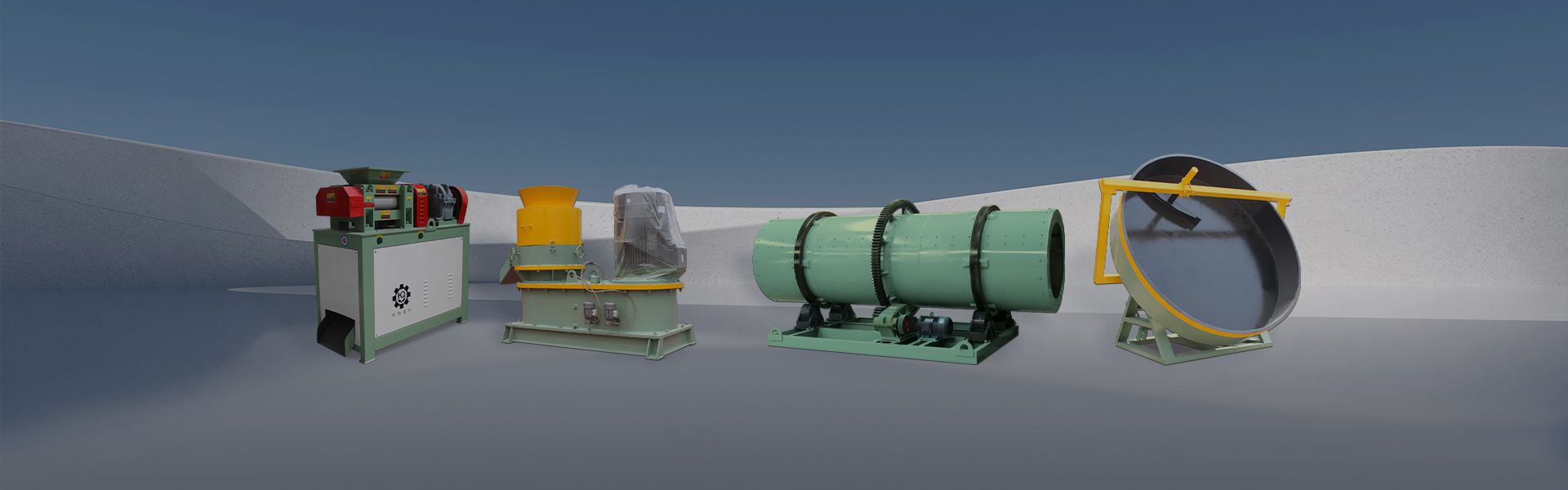
Walking into the installation site of an organic fertilizer production line, the first thing that commands your attention is not the towering ingredient bins or the rows of belt conveyors, but a chain compost turner straddling the fermentation bay. It lies motionless on its steel rails like a silent beast, its long chains hanging down, each paddle glinting with a cold metallic sheen. Workers swarm around it—some adjusting chain tension, others filling the gearbox with lubricant. The sharp clink of wrenches against bolts mingles with the hiss of welding in the distance, filling the workshop with a focused, purposeful energy.
You might wonder: can a few chains really turn over a pile of composting material several meters high? The answer is—not only can they, but they do it with relentless thoroughness. The turner uses its chains to drive paddles through the material at a steady speed, forcibly lifting and scattering the lower layers before letting them fall back naturally. It works like a giant comb, passing through the pile again and again, delivering oxygen, moisture, and microbes to every corner. Standing by the bay, you hear the soft, persistent rustle of chains moving through material—unhurried yet unmistakably powerful.
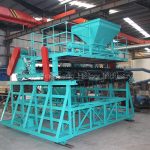
Behind the chain compost turner, other fertilizer equipment is falling into place. To the left, a chain fertilizer crusher is being leveled with precision instruments; to the right, a dynamic batching system stands with its stainless steel hoppers already positioned, awaiting sensor connections. Further ahead, the drum of a granulator rests on temporary supports, as technicians crouch beside it, cross-referencing drawings and double-checking flange sizes. Each piece of equipment has its own character—some rugged, some refined—but together, they are being woven into a single, integrated system by pipes, wires, and cables.
What strikes you most, though, is the installers’ obsession with details. A young technician lies flat on the track of the turner, sliding a feeler gauge inch by inch between the wheel flange and the rail, muttering, “Half a millimeter off, and this thing will start clunking down the line.” An older worker overhears and grins, adding, “Clunking is the least of it—uneven turning is what really hurts.” This seemingly trivial dedication makes you realize: no matter how advanced the machinery, it only comes alive through the patience and respect of human hands.
As the sun dips toward the horizon, the chain turner powers up for its first test run. The chains begin their slow rotation, paddles biting into the material with a deep, steady rhythm. This is not noise—it is an industrial symphony, a bridge between steel and soil. Standing amidst this forest of equipment, I can’t help but think: who says machines have no warmth? Look at this chain—every time it turns, it is quietly laying the groundwork for the harvest to come.