
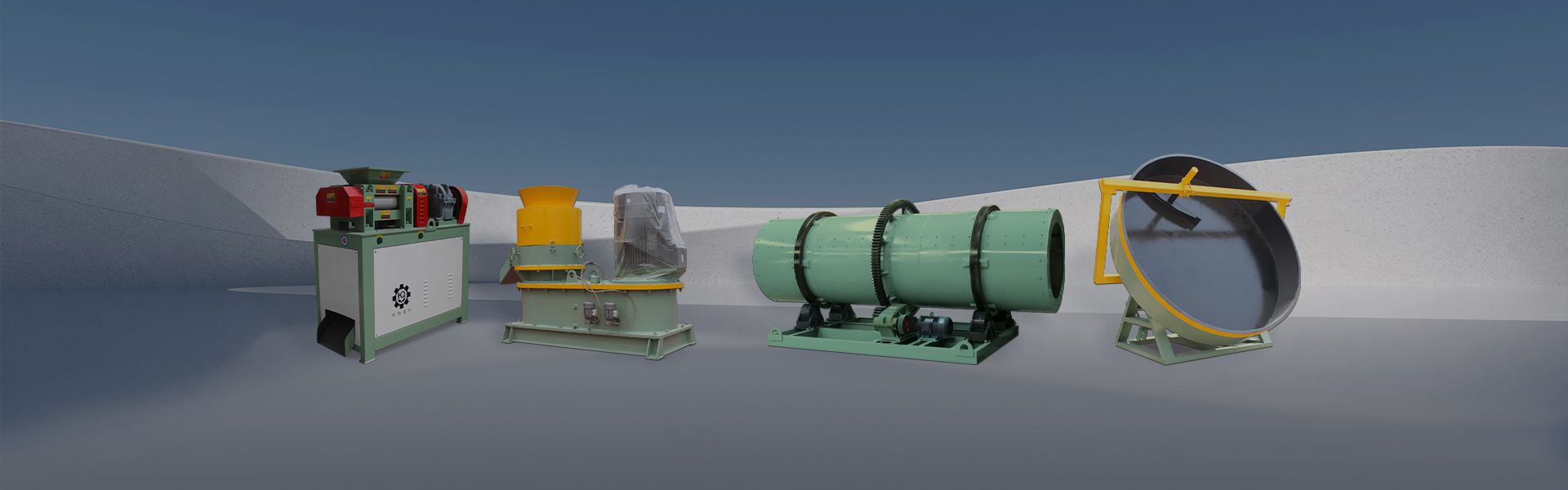
What do you do when your raw material is too wet for a hammer mill, too fibrous for a chain crusher, and too sticky to even feed through a conventional machine? You turn to the half-wet material crusher—a piece of equipment designed specifically for the messy, high-moisture inputs that other crushers refuse to touch.
Imagine a poultry farm with mountains of fresh manure, or a mushroom operation piled high with spent substrate, or a processing plant sitting on a stockpile of fruit waste and vegetable trimmings. These materials are rich in organic value, but they are also damp, clingy, and unpredictable. A standard crusher would clog within minutes. The half-wet material crusher, however, welcomes the challenge.
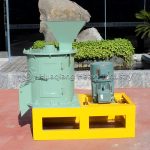
At its core, this machine operates on a simple but aggressive principle. Inside a sturdy casing, a rotor spins at high speed, fitted with rows of heavy-duty hammers or blades. These are not the delicate knives found on conventional crushers; they are thick, forged components built to smash, shred, and tear. As material enters, the hammers strike it repeatedly against a corrugated liner, breaking down lumps, tearing apart fibers, and reducing even sticky masses to a manageable granular consistency.
What makes the half-wet material crusher truly unique is its tolerance for moisture. While traditional crushers begin to struggle when moisture exceeds ten to fifteen percent, this machine handles materials with moisture content up to forty percent or more without clogging. The secret lies in its design: the crushing chamber is engineered with self-cleaning features, and the discharge screen can be configured with larger openings to prevent sticky fines from building up. Some models even incorporate a counterweight or flywheel system that maintains momentum even when feeding is irregular.
But the crusher does not stand alone. In a complete organic fertilizer production line, it often serves as the opening act. Raw materials arrive from the farm or fermentation yard—chicken litter, cow manure, crop residues, or municipal sludge. The half-wet material crusher reduces these bulky, high-moisture inputs to a uniform particle size, typically between five and twenty millimeters. From there, the material moves to a mixer, where it is blended with other ingredients to achieve the precise moisture and nutrient balance required for granulation. Without this initial crushing step, the double axis mixer would struggle to achieve uniformity, and the rotary drum granulator would choke on oversized lumps.
The versatility of this machine extends beyond manure and agricultural waste. It handles filter cake from industrial processes, wet distillers grains from ethanol production, food processing residue, and even slightly moist coal or mineral powders. For producers working with variable feedstocks, this flexibility is invaluable. You are not locked into processing only dry, predictable materials; you can accept whatever organic inputs are available, knowing the crusher will handle them.
Maintenance is straightforward despite the punishing work environment. The hammers are reversible and replaceable, and the liner plates can be swapped out when worn. The drive system is typically a heavy-duty motor with a robust belt or direct coupling, built to withstand the shock loads that come from lumpy, inconsistent feed.
For any operation looking to turn wet, sticky, or fibrous waste into valuable organic fertilizer, the half-wet material crusher is more than just a machine. It is the gateway that transforms a messy pile of potential into a consistent, processable feedstock. It takes what other equipment rejects and makes it ready for the next stage—mixing, granulating, drying, and finally packaging into a product that growers trust. When your raw materials are anything but dry and clean, this is the crusher that says yes.