
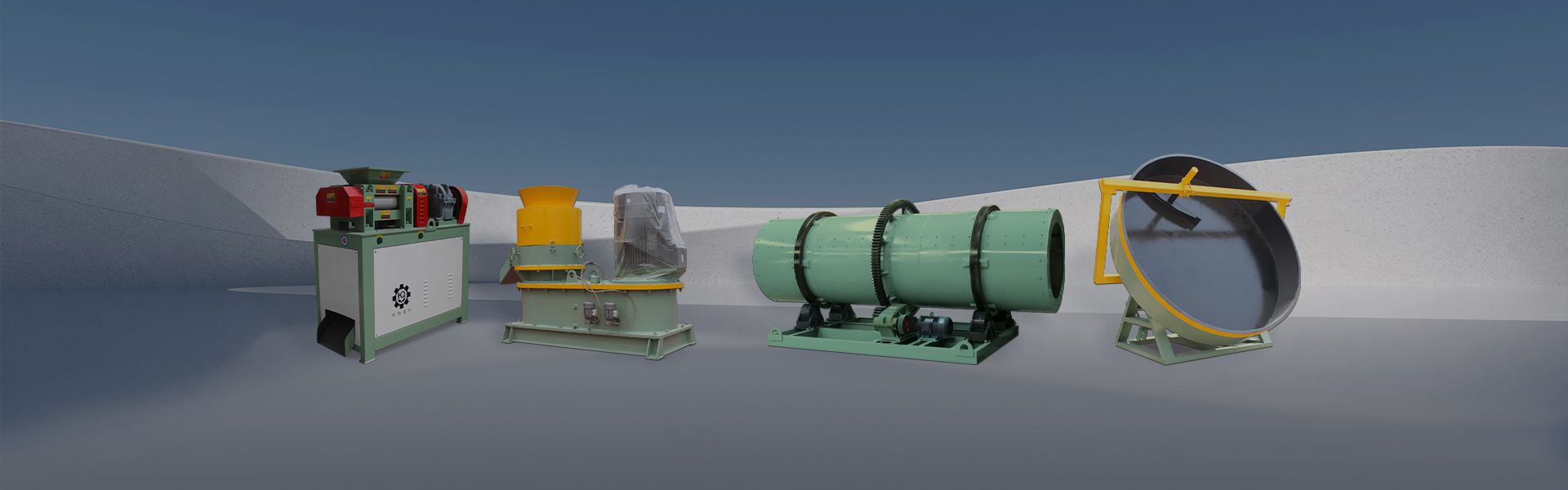
Have you ever seen materials instantly disintegrate into fine powder within high-speed rotating cages? The cage crusher is like an efficient “crushing arena”—material enters from the center and is violently impacted by two layers of steel cages rotating in opposite directions until it becomes fine powder. It serves as the “pioneer” on the organic fertilizer production line, paving the way for subsequent granulation.
Walking into an organic fertilizer production line, the first equipment to greet raw materials is often the crusher. The cage crusher, with its unique working principle, becomes a powerful tool for handling high-moisture and fibrous materials. It consists of two concentric steel cages rotating at high speed in opposite directions, each made of a ring of steel bars. When material is fed into the center, it is first struck by the inner cage, thrown outward, and then hit back by the outer cage. Repeatedly, the material flies and collides between the cages, being torn and crushed instantly. This “cage match” style allows materials with moisture content up to 30% to be easily crushed without clogging.
Crushing is the cornerstone of granulation. Without fine powder, the disc granulator or double roller press granulator cannot roll out uniform pellets. After the cage crusher, the material usually enters a mixer to blend thoroughly with various nutrients, then is sent to the granulator for shaping. Dryers, coolers, and screens follow closely, together completing the transformation from waste to commercial fertilizer. It can be said that although the cage crusher works silently, it is the “game changer” of the whole line—it breaks not only the lumps of material but also the bottleneck of efficient production.
Compared with traditional hammer mills, the cage crusher has no screen, so it never clogs; it runs at high speed with adjustable particle size; it is especially suitable for sticky and wet raw materials common in organic fertilizers, such as fermented manure, municipal sludge, and straw. Maintenance is simple: just regularly check the wear of the steel bars, and it can run steadily for years.
So, when you see the powder dancing on the disc turning into round pellets, don’t forget the pair of high-speed rotating cages—they use the most primitive force to kick off this “waltz.”