
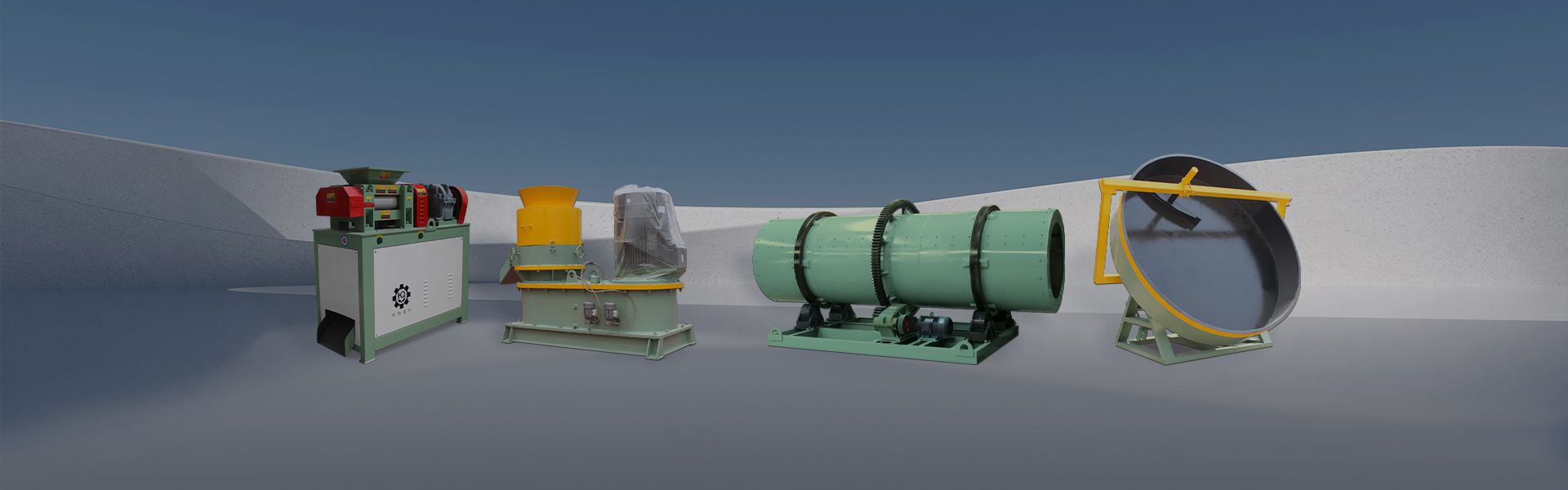
In organic fertilizer production, the choice of fermentation process—open-air windrow fermentation or closed-tank fermentation—directly determines equipment investment, operating costs, and environmental compliance. The selection of turning equipment must be deeply tied to the fermentation scenario: choosing the wrong equipment can halve efficiency at best, and paralyze the entire production line at worst. This article will analyze the equipment adaptation logic and practical configuration solutions for these two fermentation scenarios.
Open-air Fermentation (Winnowrow): A Flexible and Efficient Solution for Open Sites
Open-air windrow fermentation is the most classic and widely used fermentation process. Its core advantages lie in low investment, flexible operation, and low site requirements. Suitable equipment includes large wheeled turning machines, self-propelled turning machines, and windrow turning equipment.
Large wheeled turning machines are the mainstay of large-scale open-air fermentation. Their cross-row operation design allows them to travel directly on wide windrows, with a turning width of 4-12 meters and a turning depth of 1.5-2 meters, and a daily processing capacity of thousands of tons per machine. Employing four-wheel drive and hydraulic turning technology, it can operate stably even in muddy conditions. An Australian farm uses this equipment to process a mixture of cow manure and straw, with a daily processing capacity of 800 tons and a fermentation cycle of 20 days. The equipment’s energy consumption is 40% lower than traditional models.
Self-propelled turning machines excel in mobility and flexibility, making them particularly suitable for small to medium-sized farms or scattered agricultural waste treatment centers. They require no track foundation and can move freely between different stacks; a single unit can cover hundreds of acres of fermentation area.
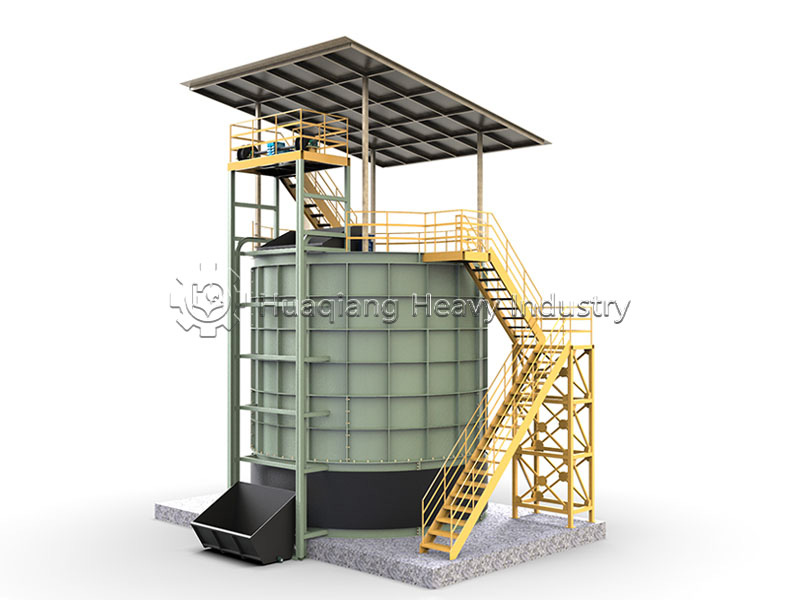
Closed Fermentation (Trough Type): Standard Configuration for Environmentally Sensitive Areas
Closed trough fermentation relies on fixed fermentation tanks. Its core advantages are strong controllability and environmental compliance. The compatible equipment is a trough turning machine, which travels back and forth along a track, with an adjustable turning depth of 0.8-1.8 meters.
The core value of trough fermentation lies in its environmental friendliness. Fermentation tanks can be equipped with roofs and exhaust gas collection systems to treat and release odorous gases such as ammonia and hydrogen sulfide, completely solving the pollution problems of open fermentation. A European dairy farm uses a trough-type fermentation system to treat cow manure, combined with a biological filter for deodorization, reducing ammonia emissions by 85% and ensuring the product meets EU RENURE standards.
Furthermore, trough fermentation offers a high degree of standardization. Fixed troughs ensure uniform material pile size, allowing for precise control of turning parameters, a stable fermentation cycle of 15-20 days, and uniform product maturity.
The core difference in selection lies in environmental requirements and site conditions. In environmentally sensitive areas (such as around farms or water sources), closed trough fermentation is the only option—its exhaust gas collection system can centrally treat odors, while open-air fermentation, even with functional membrane materials, still struggles to completely eliminate odor diffusion.
Large organic fertilizer bases with open sites far from residential areas can fully leverage the cost advantages of open-air fermentation. Open-air windrow fermentation eliminates the need for fermentation tanks, saving over 80% on civil engineering investment, and offers flexible capacity expansion—simply increase the number of windrows without constructing new troughs.
Open-air fermentation (50,000-100,000 tons/year): Self-propelled windrow turner (or large wheeled turner) + chain crusher + horizontal mixer + drum screen. Equipment investment: approximately US$150,000-300,000, occupying 5,000-10,000 square meters.
Closed-loop fermentation (30,000-50,000 tons/year): Trench turner (multiple troughs in parallel) + semi-wet material crusher + automatic batching system + waste gas collection and treatment device. Equipment investment: approximately US$250,000-400,000, occupying 2,000-3,000 square meters.

Our company provides customized solutions for different fermentation scenarios. Open-air fermentation can be equipped with an intelligent navigation system, enabling the equipment to operate autonomously along a preset trajectory; closed-loop fermentation can be equipped with a leachate collection system and variable frequency speed control as standard, precisely adapting to the fermentation needs of high-moisture materials. All equipment supports remote monitoring and fault diagnosis; overseas users can view the operating status and receive maintenance reminders in real time via a mobile APP.
The choice between open-air and trough fermentation is a foundational decision in implementing fermentation composting turning technology. For open-air windrow operations, the large wheel compost turner is a powerful and efficient agriculture waste compost fermentation machine, capable of processing massive volumes with a single pass over wide windrows. A windrow composting machine offers a more mobile, flexible alternative for smaller or more dispersed sites. In contrast, for operations requiring strict environmental control, trough-type aerobic fermentation composting technology is the preferred approach. This system uses a dedicated trough type composting turner that runs on fixed tracks within concrete channels, enabling the capture and treatment of exhaust gases. A robust chain compost turner is also a common choice for these trough systems, offering durable and effective turning. Both the open-air large wheel compost turner and the enclosed trough type composting turner are essential equipments required for biofertilizer production. The selection between them is not about which technology is superior, but about which implementation of fermentation composting turning technology is the optimal match for the specific site’s environmental sensitivity, space constraints, and scale of operation, ensuring efficient, compliant, and cost-effective conversion of organic waste into valuable biofertilizer.
From open fields to enclosed factories, from low-cost start-ups to high environmental protection requirements, our series of turning and turning equipment covers all scenarios. We welcome you to provide your raw material type, site conditions, and production capacity targets to obtain a customized configuration solution.