
In modern fertilizer production, every step—from mixing and granulation to packaging—demands precision and efficiency. If the bucket conveyor is the “efficient mover” of materials, then the rotary screener machine undoubtedly serves as the “meticulous quality inspector” on the production line. With its unique working principle and exceptional performance, it plays an irreplaceable role in fertilizer screening and grading, becoming a key component in enhancing final product quality and production efficiency.
Core Advantages: Precision, Efficiency, Reliability
The core value of the rotary screener lies in how its simple yet ingenious design solves complex material grading challenges.
Exceptional Screening Precision and Flexibility
Through the rotating motion of its drum, the rotary screener continuously tumbles and rolls materials within the screen mesh. This gentle and consistent screening action effectively prevents mesh clogging and ensures accurate separation of particles by size. By simply changing screens with different aperture sizes, a single machine can easily handle various grading needs—from fine powders to coarse granules—offering tremendous flexibility for producing fertilizer products of different specifications and grades.
High Processing Capacity and Durability
Its design for continuous feed and discharge grants it powerful continuous operation capability, making it particularly suitable for large-scale industrial production. The drum is typically constructed from wear-resistant steel, and the screen mesh is specially reinforced, enabling it to withstand long-term abrasion from fertilizer raw materials (including those with slightly corrosive properties). This significantly reduces maintenance frequency and long-term operating costs, achieving a union of reliability and economy.
Eco-Friendly and Low-Energy Operation
Modern rotary screeners commonly feature enclosed designs that effectively control dust dispersion during the screening process, protecting the work environment and complying with stringent environmental standards. Simultaneously, their drive mechanisms are usually well-engineered, ensuring screening efficiency while maintaining low energy consumption, aligning with the principles of green production.
Synergy on the Production Line: Beyond Just Screening
The value of the rotary screener multiplies when it works in concert with other fertilizer equipment.
Partnership with chain crusher: In the raw material pre-processing stage, initially crushed material can be fed into the rotary screener for grading. Oversized particles can be returned for re-crushing, ensuring uniform particle size for the next processing step.
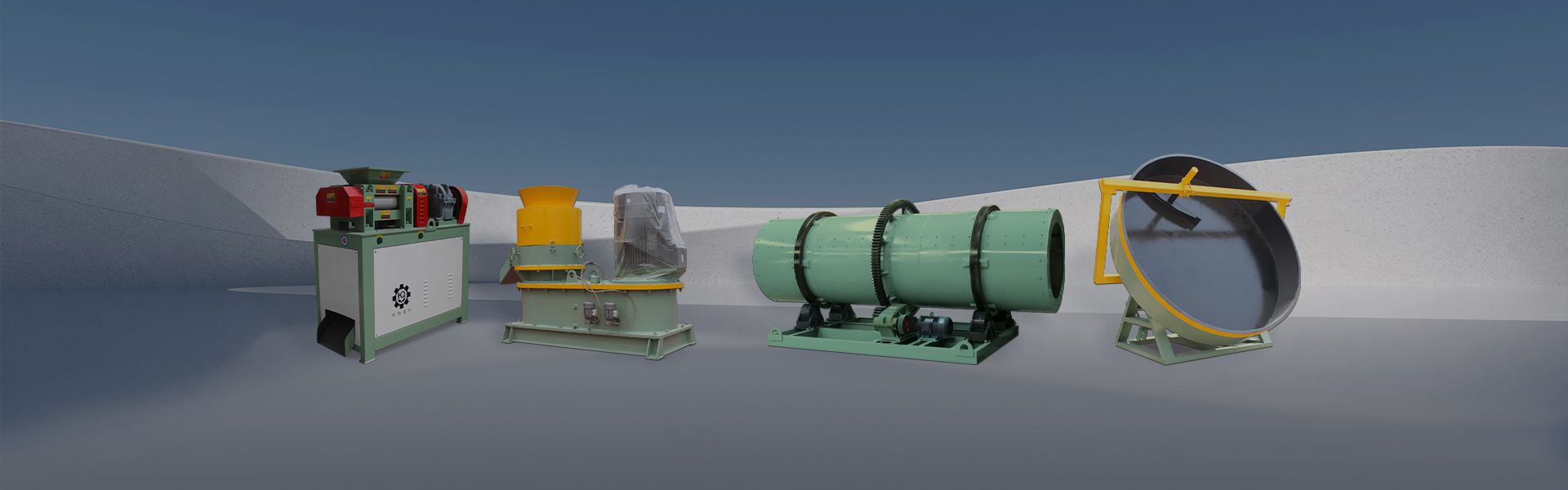
Linkage with rotary drum granulator: After granulation, particles often vary in size. The rotary screener can precisely screen out finished products of the particle size, while returning oversized or undersized particles to the granulation or crushing process respectively. This forms an efficient closed loop, greatly improving finished product yield and raw material utilization.
Coordination with Dryers and Coolers: Following drying or cooling processes, screening effectively removes fines or lumps that may have formed, ensuring the purity and consistent appearance of the final product.
The Outpost for Packaging Machines: The final screened, product is conveyed directly to the packaging line, guaranteeing stable quality in every bag of fertilizer shipped.
Conclusion
In summary, with its precise grading capability, robust processing efficiency, and outstanding reliability, the rotary screener solidifies its central role in modern fertilizer production lines. It is not merely a simple screening tool but a strategic piece of equipment that optimizes the entire production process, enhances product added value, and safeguards final quality. With the integration of smart sensor technology and automatic control systems, future rotary screeners will become even more “intelligent,” contributing even greater power to precision agriculture and efficient production.