
Have you ever used one of those hand-cranked pasta makers? You feed dough in at the top, turn the handle, and perfect shapes emerge from the die below. The flat die pellet machine works on a similar principle—except instead of pasta, it’s squeezing out fertilizer pellets, animal feed, or even biomass fuel. And trust me, watching it work never gets old.
Walk up to a flat die pellet machine on a production line, and you’ll notice something immediately: it’s compact. Unlike the sprawling drum granulators or towering prilling systems, this machine hugs the floor, taking up barely more space than a pickup truck. But don’t let its size fool you. Inside that unassuming housing, serious pressure is building.
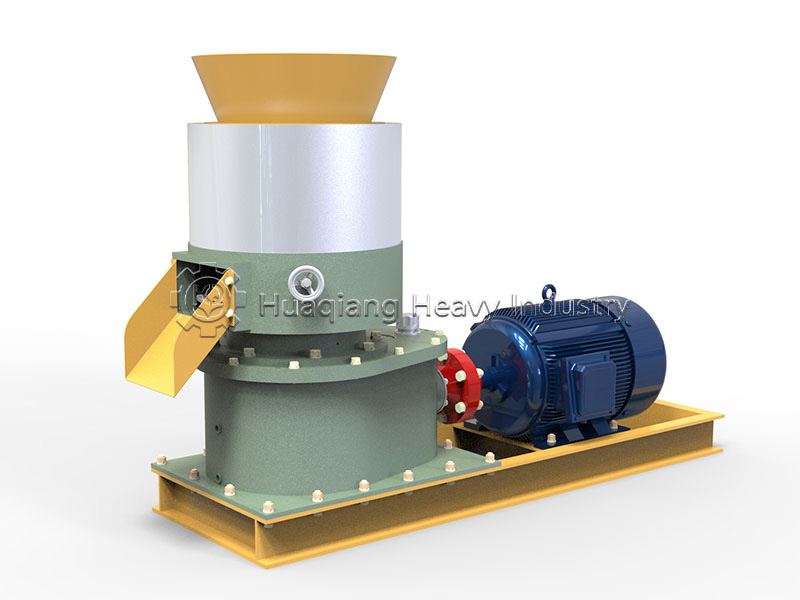
So how does this machine actually transform powder into pellets? Picture a flat, circular die plate with hundreds of tiny holes drilled through it. Above the plate, heavy rollers—usually two or three of them—rotate steadily, forcing powdered material down through those holes. Below the die, stationary knives wait like harvesters, cutting the extruded strands into uniform pellets. It’s continuous, it’s relentless, and it’s beautifully simple.
The pressure involved is staggering. Some flat die machines generate over 300 kilograms of force per square centimeter. That’s enough to compress agricultural powders until their particles physically lock together, forming dense, durable pellets without any need for binders or heat. The friction alone can raise temperatures enough to activate natural lignins in organic materials, creating a natural glue that holds everything together.
What makes the flat die design special, intervention? For one thing, it’s incredibly forgiving. Feed it inconsistent material—a little too wet, a little too coarse—and it’ll still produce usable pellets. Operators love this robustness because it means less time babysitting the machine and more time focusing on other parts of the line. The flat die also handles fibrous materials beautifully, which is why you’ll find these machines everywhere from organic fertilizer plants to wood pellet facilities.
But the flat die’s real superpower is accessibility. Because the die lies flat and exposed, changing pellet size or replacing worn parts takes minutes, not hours. Want to switch from 6mm fertilizer pellets to 8mm animal feed pellets? Swap the die, adjust the roller gap, and you’re back in business. This flexibility makes flat die machines ideal for small to medium operations that need to adapt quickly to changing orders.
Watch the machine run, and you’ll notice something else: the sound. It’s not the thunderous roar of a chain crusher or the whine of a vertical disc mixer. Instead, there’s a steady, rhythmic grinding—the sound of pressure doing its work. Occasionally you’ll hear the crisp snip of the cutoff blades as they slice through fresh extrusions. It’s almost musical in its consistency.
Behind every great flat die machine stands a carefully designed support system. A preconditioner often feeds the material, adding just enough moisture or steam to optimize compression. Below the die, a cooling conveyor catches the hot pellets fresh from extrusion, allowing them to harden before screening. Vibrating screens separate perfect cylinders from fines, sending the undersize back to the feed bin in a continuous loop that minimizes waste.
What kinds of products shine on a flat die line? Organic fertilizers top the list—composted manure, poultry litter, bio-solids all compress beautifully under those rollers. The process preserves beneficial microorganisms better than high-heat methods, which matters to organic farmers. Compound NPK formulations with high organic content also perform well, as the mechanical compression creates dense granules that resist dust and handle well in spreading equipment.