
Water-soluble fertilizers (WSF) are core products for precision fertilization in modern agriculture. The key lies in ensuring that trace elements (iron, zinc, copper, manganese, etc.) are in a chelated state to prevent precipitation with phosphate and sulfate ions, guaranteeing full water solubility and high absorption rates. The quality of the chelation technology directly determines the product quality. This article analyzes the production process requirements from three aspects: equipment material, chelation sequence, and finished product testing.
Reaction Vessel Material: Corrosion Resistance and Temperature Control Precision
The chelation reaction is usually carried out under acidic or alkaline conditions, with the temperature controlled between 60-90℃, which imposes strict constraints on the material of the reaction vessel.
Preferred Material: 316L stainless steel or Hastelloy (C-276). Ordinary 304 stainless steel is prone to pitting corrosion in chloride ion and acidic media, while chelating agents (such as EDTA, citric acid, and amino acids) have a complexing effect on metals, accelerating equipment corrosion. 316L stainless steel with added molybdenum improves chloride ion resistance by more than 3 times.
Glass-lined reactor: Suitable for strongly acidic chelation processes (pH < 3), but with low heat transfer efficiency and sensitivity to sudden temperature changes. Generally used for producing chelates such as EDTA-Fe that require high temperature and pressure.
Internal coil and agitator: The coil should preferably be made of duplex stainless steel (2205), and the agitator blades should be mirror-polished to prevent local residues from causing intergranular corrosion. The reactor body needs to be equipped with a precise temperature control system (temperature control accuracy ±1℃) and an online pH monitor, because the stability constant of the chelation reaction fluctuates significantly with pH.
Trace element chelation sequence: Avoid competitive precipitation. When multiple trace elements coexist, different metal ions have different affinities for chelating agents. Incorrect feeding sequence will result in low-affinity elements not being effectively chelated, forming insoluble precipitates.
Chelation affinity ranking (from strongest to weakest): Cu²⁺ > Fe³⁺ > Ni²⁺ > Zn²⁺ > Co²⁺ > Fe²⁺ > Mn²⁺ > Ca²⁺ > Mg²⁺.
Correct feeding order: First, dissolve the chelating agent (such as EDTA-2Na or EDDHA), adjust the pH to 6.0-7.0, and then add the trace element salts in order of affinity from weakest to strongest: first add manganese sulfate and magnesium sulfate (weak affinity), then add zinc sulfate and ferrous sulfate, and finally add copper sulfate. If the order is reversed, copper ions will compete for chelation sites, causing iron and zinc precipitation to fail.
Layered chelation technology: For high-concentration compound chelated fertilizers, a “stepwise chelation” method can be used—using EDTA to chelate copper and iron, using citric acid to chelate zinc and manganese, and then mixing them. This ensures complete chelation of each element while reducing costs.
Verification Method: Take a small amount of the reaction solution and add a phosphate solution (10% potassium dihydrogen phosphate). If there is no turbidity or precipitation, the chelation is complete.
III. Finished Product Water Solubility Test: Rapid Quality Inspection
The core indicator for water-soluble fertilizers is “complete solubility and no residue.” Standardized water solubility testing must be performed on the finished product before it leaves the factory.
Test Conditions: Weigh 10g of fertilizer and dissolve it in 90mL of deionized water (10% solution). The water temperature is 25℃, and the mixture is stirred for 2 minutes.
Pass Standard: After standing for 30 minutes, the solution should be clear and transparent, with no visible precipitate or suspended matter at the bottom. Filter through a 300-mesh filter; the dry weight of the residue should be ≤0.05g.
pH and Conductivity Recording: Different crops are sensitive to fertilizer pH. The pH of the finished chelated fertilizer should be controlled between 5.5 and 7.0. Conductivity reflects the total salt concentration and needs to be compared with the theoretical value of the formula. A deviation exceeding 5% indicates incomplete chelation or insufficient purity of the raw materials.
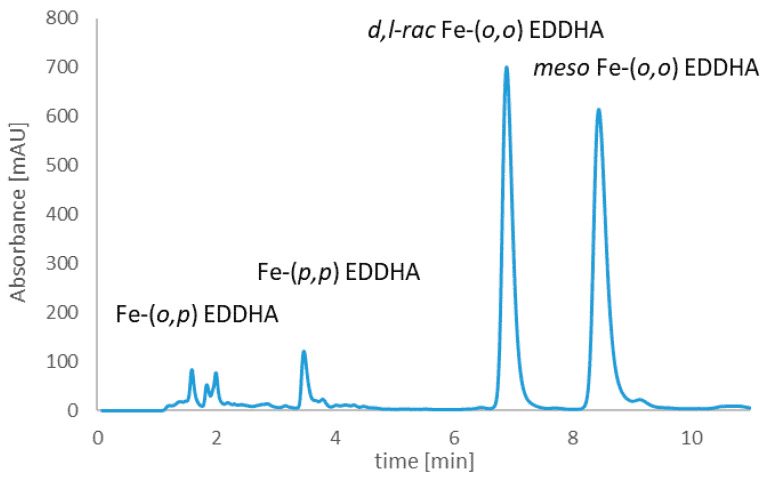
Accelerated stability test: Place the prepared 1% aqueous solution in a 50℃ oven for 48 hours and observe for flocculation or discoloration. If changes occur, it indicates an inappropriate selection of chelating agent or insufficient chelation strength, requiring the use of a more stable chelating agent such as EDDHA (especially for iron).
Summary: The chelation process for water-soluble fertilizers is a systematic project—selecting a corrosion-resistant 316L reactor, following a “weak to strong” chelation sequence, and conducting rigorous water-soluble residue testing are all indispensable. Only by meeting these standards can truly non-clogging, highly efficient, high-quality water-soluble fertilizers be produced, meeting the stringent requirements of modern irrigated agriculture.
The chelation process is the critical quality gate for water‑soluble fertilizers, ensuring that micronutrients remain soluble and bioavailable – a fundamental requirement for precision fertigation. From the selection of 316L reactor material and precise pH control, to the stepwise addition of metal ions following the affinity sequence, and finally rigorous water‑solubility testing, each step directly influences the final product’s clarity, stability, and field performance. These principles are not isolated; they are integral to the broader fertilizer production process, where every unit operation – mixing, reaction, filtration, and packaging – must be optimized for consistency and efficiency. In fact, the discipline of chelation reflects the same core values that guide the entire fertilizer manufacturing process: precise formulation, robust equipment, and strict quality assurance. For producers of conventional NPK grades, the same attention to raw material compatibility and process control is essential – making the npk fertilizer production process a natural parallel, where nutrient interactions must be managed to prevent precipitation and ensure homogeneous granulation. Moreover, the chelation technology can be adapted for bio-organic fertilizer production technology, where chelated micronutrients are blended with compost and beneficial microbes to create multifunctional products that improve both soil health and crop nutrition. Ultimately, mastering the chelation process not only guarantees premium water‑soluble fertilizers but also elevates the entire manufacturing operation, setting a benchmark for quality, traceability, and innovation across all fertilizer product lines.