
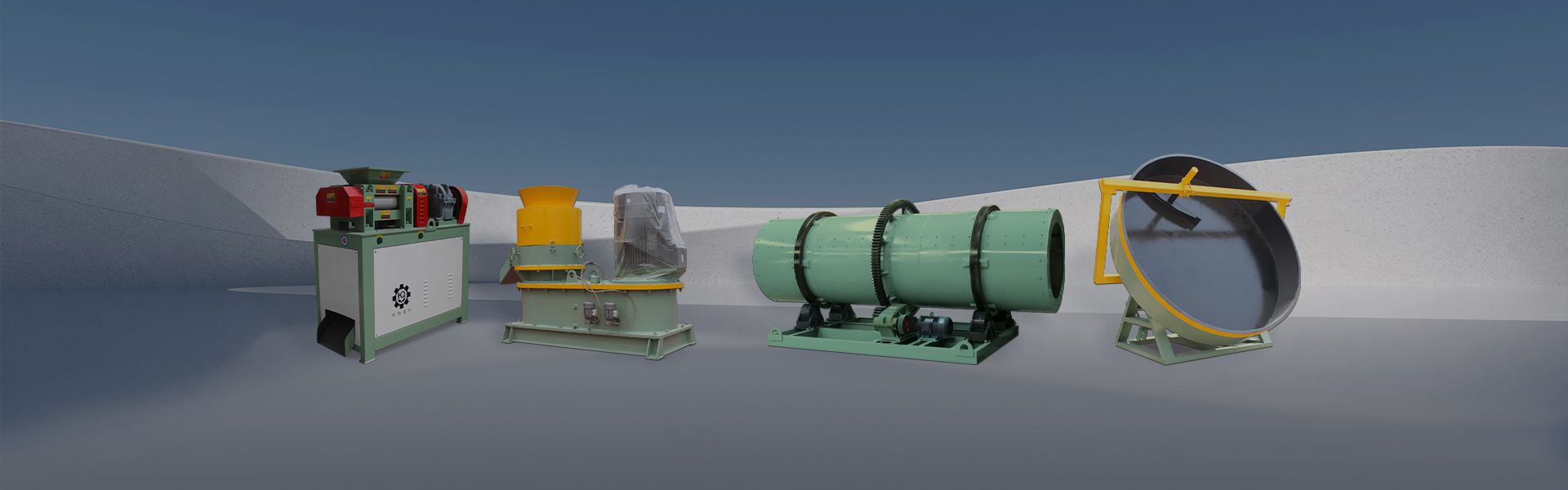
Have you ever watched a pile of leaves slowly decompose in the woods? It takes months, sometimes years, for nature to break down organic matter into dark, crumbly soil. Now imagine speeding up that process—compressing years into weeks—while eliminating pathogens, weed seeds, and odors. That’s exactly what fermentation composting technology does. And at the heart of this transformation sits a machine that literally breathes life into waste: the windrow compost turner.
The Science of Fermentation
Before we talk about the machine, let’s understand the magic it enables. Composting is essentially controlled microbial activity. Billions of bacteria, fungi, and actinomycetes consume organic materials—manure, crop residues, food waste—and release heat, carbon dioxide, and stable organic matter called humus. But these microbes are aerobic; they need oxygen to work efficiently. Without enough air, the pile goes anaerobic, producing foul smells and slowing decomposition.
This is where fermentation composting technology comes in. By managing moisture, carbon-to-nitrogen ratio, and most critically, aeration, we create ideal conditions for thermophilic (heat-loving) microbes. Temperatures rise to 55-65°C, hot enough to kill pathogens and weed seeds. The pile steams on cold mornings, a sign that life is hard at work. But maintaining that oxygen supply across a massive pile of material? That’s physically impossible without mechanization.
Enter the Windrow Compost Turner
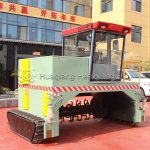
Picture a long, narrow ridge of organic material stretching across a concrete pad or field—this is a windrow. Now imagine a powerful machine straddling that ridge, moving slowly along its length. As it travels, a rotating drum or flail equipped with teeth or paddles digs deep into the pile, lifting, throwing, and mixing the material. In seconds, the cool outer layers are buried inside, while the hot core is exposed to fresh air. The entire windrow is aerated, homogenized, and rejuvenated.
That machine is the windrow compost turner. It’s not just a mixer; it’s the heartbeat of the entire fermentation process.
How It Works
Different designs exist—self-propelled, tow-behind, or hydraulic excavator-mounted—but they share a common mission: to fluff and oxygenate the pile. The turning mechanism spins at high speed, breaking up clumps and incorporating air into every particle. Moisture is evenly distributed, and hotspots are eliminated. After a pass, the windrow is transformed: lighter, fluffier, and steaming with renewed microbial activity.
Operators schedule turns based on temperature monitoring. When the core cools or oxygen drops, it’s time for another pass. Over three to eight weeks, depending on materials and climate, the original waste becomes dark, earthy-smelling compost—stable, nutrient-rich, and ready to enrich soils.
Why the Turner Matters
Without mechanical turning, large-scale composting would be impractical. Manual labor can’t achieve the thorough mixing and aeration needed. The turner ensures:
Uniform decomposition – No cold spots, no unfinished material.
Odor control – Aerobic conditions prevent methane and ammonia release.
Pathogen kill – Sustained high temperatures throughout the pile.
Speed – Weeks instead of months or years.
Quality – Consistent, high-value organic fertilizer.
From Waste to Resource
The windrow compost turner is more than a piece of equipment—it’s an enabler of circular agriculture. Farms and municipalities can transform mountains of organic waste into a product that restores soil health, reduces chemical fertilizer use, and sequesters carbon. The compost it produces feeds soil microbes, improves water retention, and slowly releases nutrients to crops.