
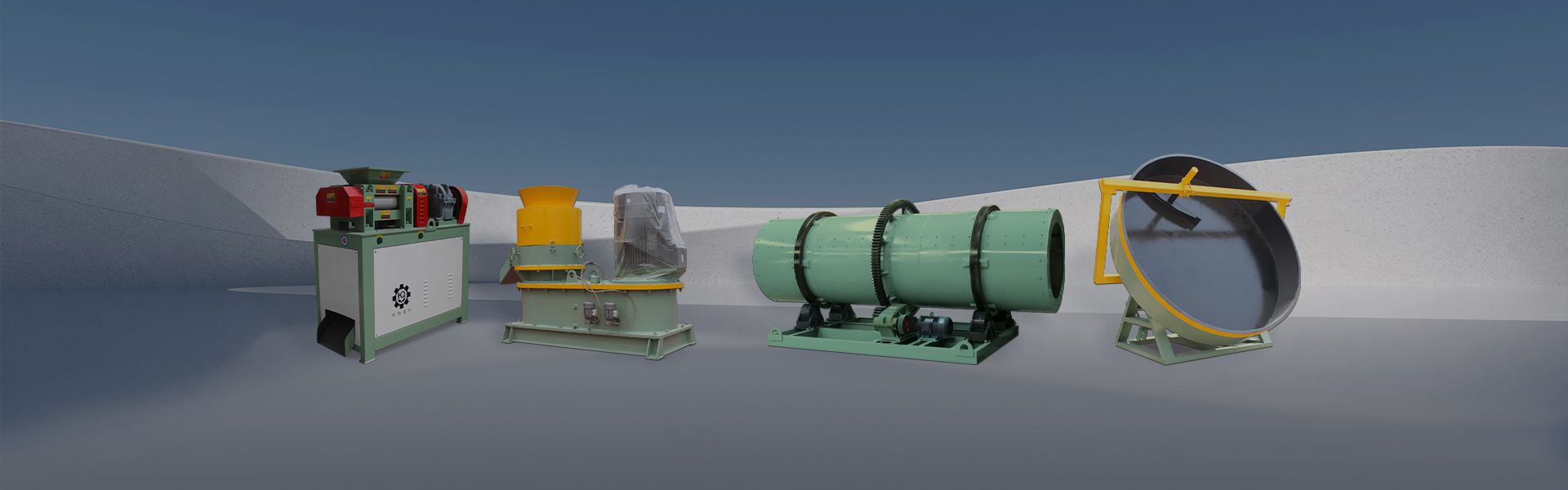
The Role of the large wheel compost turning machine in the Fermentation Process
The large wheel compost turning machine is the core equipment in the fermentation process of an organic fertilizer production line. Its function is to aerobically ferment pre-treated raw materials in windrows, completing the harmless and stabilization process. Compared to traditional trough fermentation, the large wheel compost turning machine solution requires no civil engineering and has a wider single-turn width, making it more suitable for large-scale production bases with relatively abundant land resources.
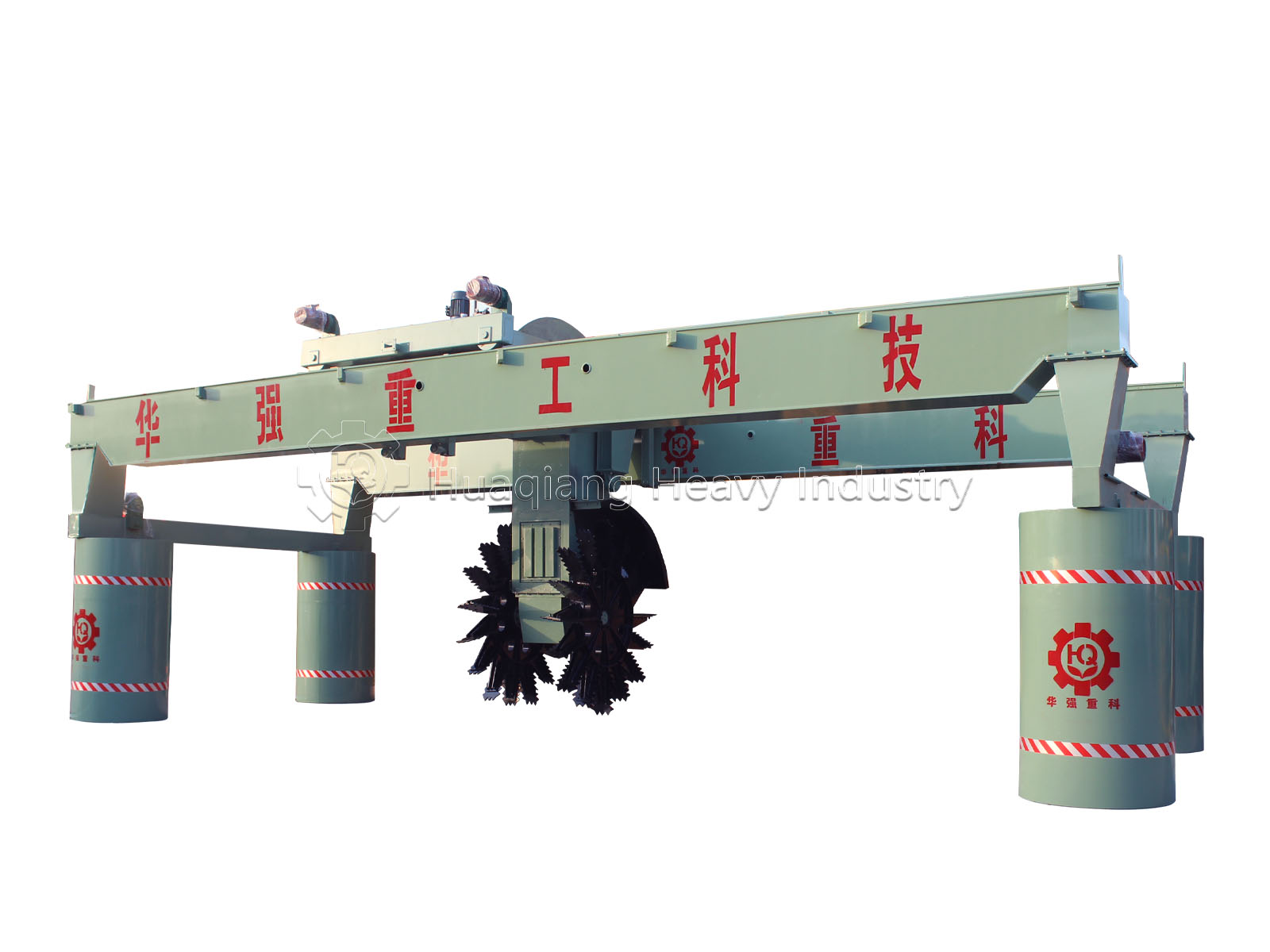
Four Key Stages of Fermentation Operation
The first stage is raw material pretreatment. Livestock and poultry manure undergoes solid-liquid separation to reduce the moisture content to below 70%. Straw is shredded to a length of 10 to 20 centimeters. Industrial waste needs to have impurities such as metal and plastic removed. The materials are mixed at a carbon-to-nitrogen ratio of 25 to 30 to 1, and the initial moisture content is adjusted to 55% to 60% by adding straw or manure. The second stage is windrow construction. The pre-treated materials are piled into windrows 5 to 8 meters wide and 1.5 to 2 meters high, with a 3 to 5-meter passageway between the windrows for equipment movement. The third stage is turning and fermentation. Start the large wheel compost turning machine, adjust the wheel height to be level with the top of the windrow, and slowly move the equipment along the length of the windrow. Initial fermentation lasts 1-3 days, with the first turning performed when the pile temperature reaches 50-60 degrees Celsius; the high-temperature period lasts 4-10 days, with turning every two days when the pile temperature reaches 60-70 degrees Celsius; the cooling period lasts 11-25 days, with turning every three- to four days when the pile temperature drops to 40-50 degrees Celsius. The entire fermentation cycle is 20-30 days. The fourth stage is maturity assessment. Maturity is complete when the pile temperature is close to ambient temperature, the material is dark brown, odorless, and has a faint earthy smell.
Quantitative Expression of Process Advantages: The large wheel compost turning machine can turn to a depth of 1.5-2 meters, ensuring thorough mixing of materials between layers and a temperature difference of no more than 2 degrees Celsius within the pile. Compared to manual turning or small equipment, it can reduce labor costs by 50-70%, and the energy consumption per unit of material is 20-30% lower than traditional equipment. We provide large wheel compost turning machines and complete fermentation process packages, from raw material pretreatment and proportioning to composting cycle control. We can also customize composting parameters and composting frequency schemes free of charge according to your raw material’s carbon-nitrogen ratio and moisture content, helping you achieve a stable and efficient fermentation cycle of 20 to 30 days with standardized operations.

Scaling Aerobic Fermentation with Precision Turning
The large wheel compost turning machine stands as a transformative enabler within modern fertilizer manufacturing process frameworks, particularly for operations managing high-volume organic waste streams. By integrating advanced fermentation composting turning technology into open-field windrow systems, this equipment eliminates the civil engineering burden of trough infrastructure while delivering industrial-grade aeration uniformity. A large wheel compost turner achieves 1.5–2 meter turning depths with intra-pile temperature differentials below 2°C, ensuring that thermophilic phases proceed efficiently across the entire composting process for animal manure. Compared to manual or small-scale alternatives, the windrow composting machine reduces labor expenditure by 50–70% and cuts unit energy consumption by 20–30%, making it the economically rational choice for large production bases with available land. When calibrated to raw material carbon-nitrogen ratios and moisture profiles, this technology compresses the standard 20–30 day fermentation cycle into a predictable, repeatable biological conversion stage—laying a stable, odor-free foundation for all downstream granulation and packaging operations in the organic fertilizer value chain.