
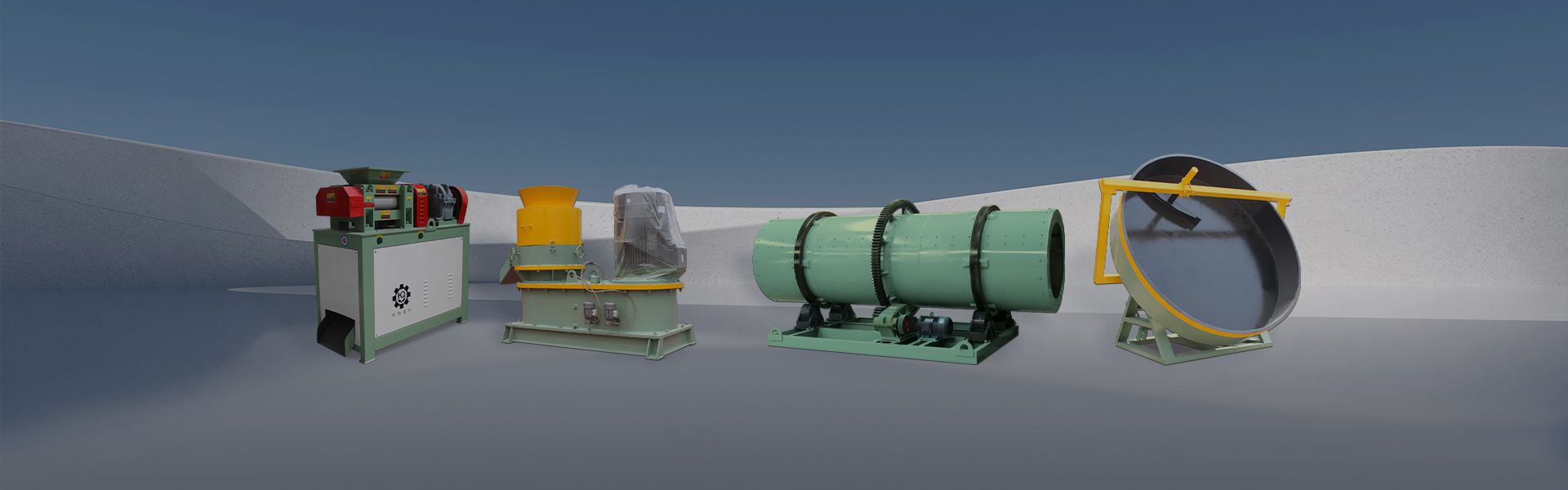
The double roller extrusion granulator is a dry granulation method, a classic machine suitable for both organic fertilizers and organic-inorganic compound fertilizers. Its biggest advantage is room temperature granulation, requiring no water or drying, and one-time forming, making it particularly suitable for the production of bio-organic fertilizers that are sensitive to high temperatures and humidity.
The core component of the double roller extrusion granulator is a pair of opposing rotating pressure rollers. The roller surfaces are covered with hemispherical molds, and the two rollers, when fitted together, form a complete spherical hole. After the material enters the extrusion chamber, it is forced into the mold under high pressure provided by the hydraulic system, forming high-density granules. The pressure is adjustable, ranging from a minimum of 3 tons to a maximum of 20 tons, adapting to different hardness requirements.
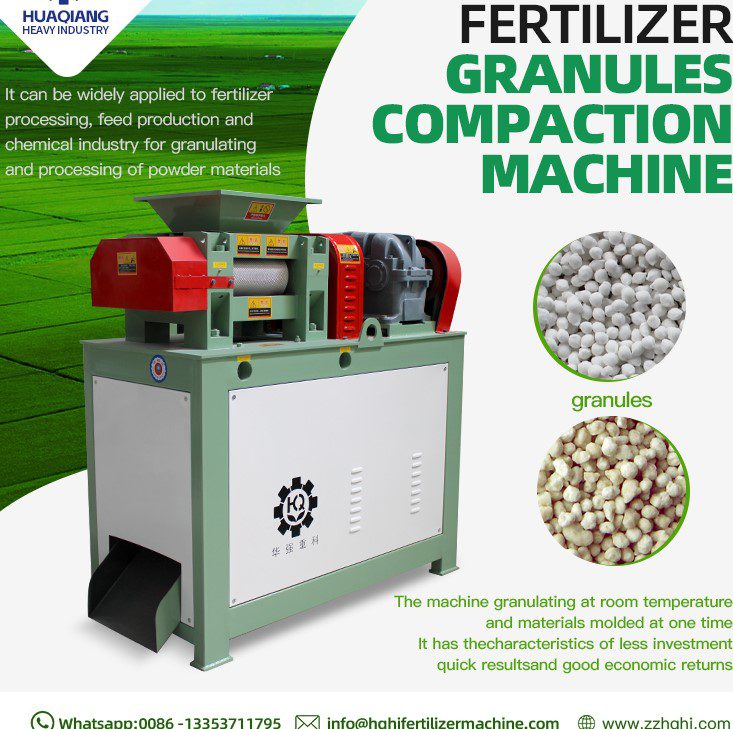
The most prominent advantages of the double roller extrusion granulator are: high granule density, non-loose, and non-hygroscopic. The strength of the finished granules meets packaging and transportation standards, and they do not clump after three months of storage; the production process is dust-free and environmentally compliant. The mold is made of alloy material, with a wear-resistant lifespan of 800-1200 hours. After wear, it can be flipped over and reused, significantly reducing costs.
It is particularly suitable for compound fertilizers with high nitrogen, phosphorus, and potassium content and high moisture absorption, as well as pure organic fertilizers. The disadvantage is that the granules are flat and round, making them less aesthetically pleasing than spherical ones. However, its advantages lie in its stability, durability, and extremely low failure rate, making it suitable for large-scale continuous production.