
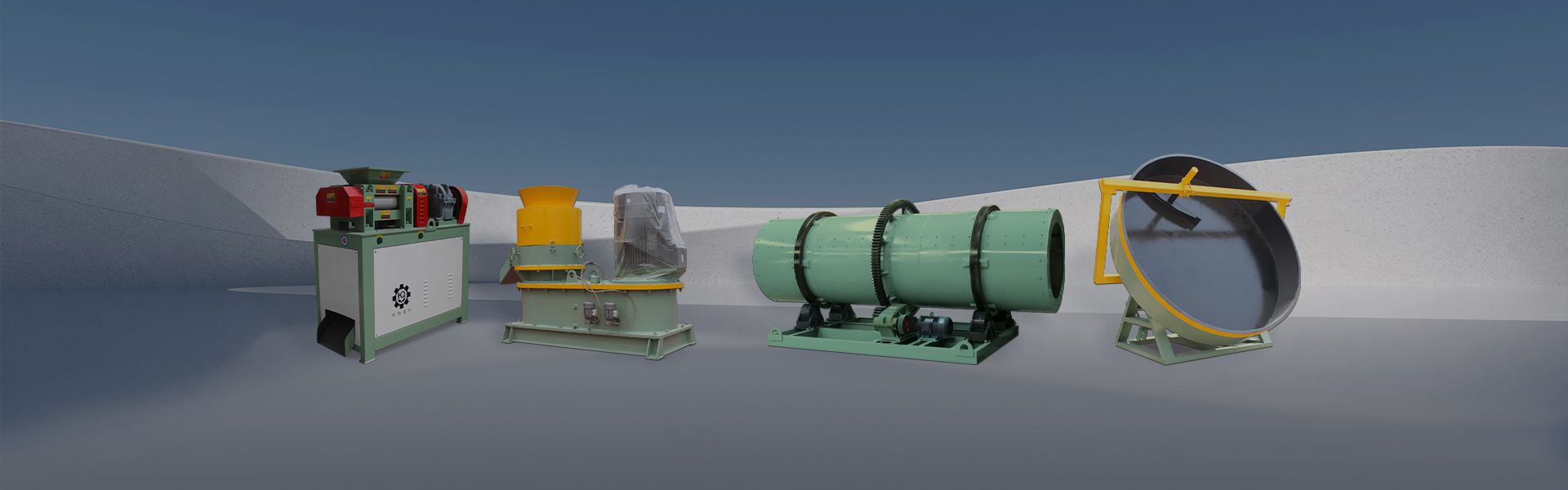
Forget everything you know about granulators that tumble, spin, or wet-mix. The double roller press granulator takes a different path it squeezes powder into pellets with the quiet confidence of a blacksmith forging steel. No drying, no binding agents, just pure pressure and a pair of counter-rotating rolls.
The line starts with a batching system. Several storage bins stand side by side, each holding a different raw material ammonium sulfate, potassium chloride, filler. An electronic belt scale weighs each ingredient as it falls onto a collection conveyor. The blend travels to a horizontal mixer, where twin paddles churn the powder until every speck of nitrogen, phosphorus, and potassium is evenly distributed. A moisture meter probes the mix. Too dry, and the granules will crumble. Too wet, and they will smear. The operator adjusts a water spray until the powder feels like slightly damp sand cohesive but not sticky.
Now comes the heart of the line: the double roller press. Two massive rolls sit parallel, their surfaces engraved with hundreds of small, symmetrical pockets. A hydraulic system pushes them together with up to 150 tons of force. The conditioned powder feeds into the gap between the rolls through a uniform feeder a device that forces material down, removing trapped air and ensuring a steady, dense stream. As the rolls rotate inward, the powder is dragged into the pockets and compressed into compact, almond shaped flakes. No heat, no chemical reaction just pure mechanical pressure fusing the particles together.

“What holds them together?” I asked the technician. He picked up a fresh flake and tried to break it with his fingers. It would not snap. “Van der Waals forces,” he said with a grin. “The molecules get so close they hold hands. No glue needed.”
Below the rolls, a flake crusher breaks the large sheets into smaller pieces. Then a vibrating screen with two decks takes over. The top deck catches oversized chunks and sends them back to the chain fertilizer crusher for another pass. The middle deck collects the perfect granules dense, smooth, and uniform, each one shaped like a tiny pillow. The bottom deck removes fine powder, which is recycled directly to the feeder hopper above the rolls. Nothing leaves the circuit except finished granules.
The good granules drop into a polishing drum a rotating cylinder where they tumble against each other, knocking off sharp edges and gaining a glossy, round finish. From there, a bucket elevator lifts them to a rotary cooler. Ambient air blows through the cooler, dropping the granules’ temperature from nearly 60 degrees Celsius down to ambient. “Warm granules are soft,” the operator explained. “Let them cool, and they become rock hard.”
Finally, the finished product reaches a packing scale. The granules pour out like black lentils identical, dense, and dust free. A sewing machine stitches the bags closed, and a robotic palletizer stacks them onto wooden skids. The whole line runs continuously, quietly, without a single dryer or boiler.
Installation day was all about alignment. The two rolls had to be parallel within 0.1 millimeters across their entire width. The fitter used a laser system to check the gap, adjusting hydraulic jacks by quarter turns of a wrench. “If they touch even slightly,” he said, “the roll surface will gouge. That is a ten thousand dollar mistake.” He checked the gap at three points left, center, right. Each reading matched perfectly. He wiped his brow and locked the bolts.
During the test run, the operator fed a blend of nitrogen and potash into the hopper. The vertical screw whined softly, packing the powder into a tight column. The rolls turned, the flakes fell, the screen vibrated. Within two minutes, perfect granules were rolling out of the chute. The technician crushed one between pliers it shattered into clean fragments. “Good hardness,” he said. “It will survive shipping, storage, and a fertilizer spreader.”