
In organic fertilizer production, the choice of fermentation process directly determines equipment investment, operating costs, and environmental compliance. trough type composting turners and windrow composting machines, as core equipment for two mainstream fermentation solutions, each have their irreplaceable suitable scenarios. Choosing between trough and windrow composting machines requires a comprehensive consideration of four dimensions: process differences, raw material characteristics, site conditions, and environmental requirements.
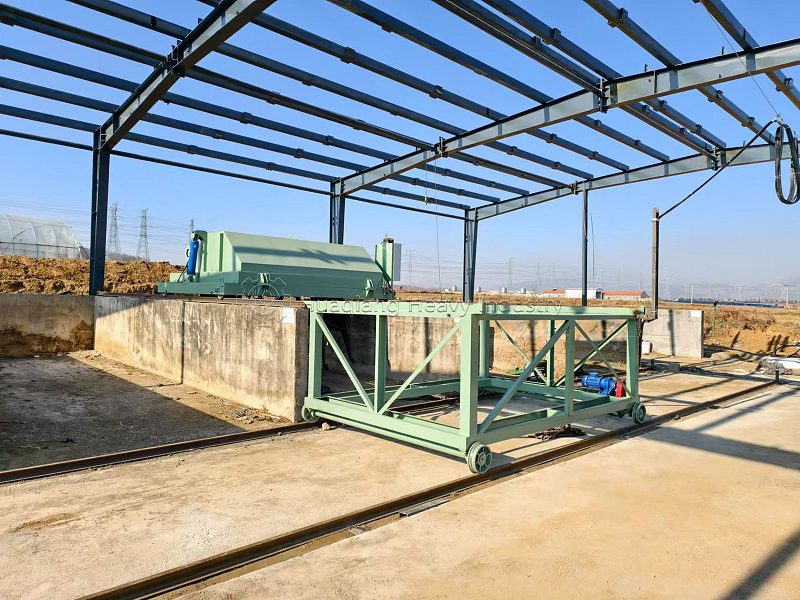
trough type composting turners operate within fixed fermentation troughs, with the equipment moving back and forth along a track to achieve standardized turning of materials. Its core advantage lies in its “closed and controllable” design—the fermentation trough can be equipped with a roof and exhaust gas collection system to collect and treat odorous gases such as ammonia and hydrogen sulfide before emission, completely solving the pollution problems of open fermentation. Simultaneously, the fixed trough size ensures consistent material pile specifications, allowing for precise control of turning parameters and a stable fermentation cycle of 15-20 days.
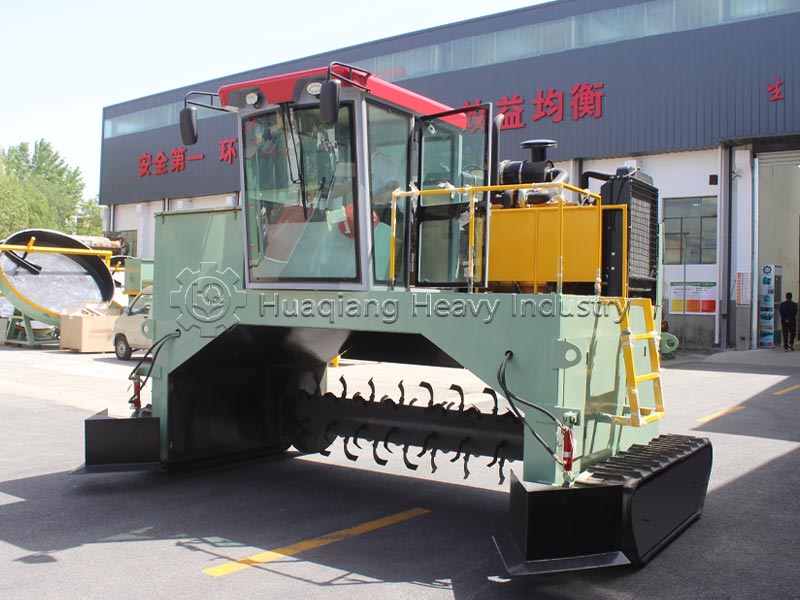
windrow composting machines (such as large wheeled turners) operate in an open-air mode, with the equipment moving directly on the windlass for turning. Its core advantages lie in its “openness and flexibility”—no fermentation tanks are required, site requirements are extremely low, and it can operate on both cement and mud floors; single-unit processing capacity is large, adaptable to fermentation sites of different shapes and sizes; the investment threshold is low, suitable for small and medium-sized enterprises in the start-up stage.
Site conditions are the primary consideration. If land resources are scarce, there are residential areas nearby, or environmental requirements are strict, trough fermentation is the only option—the closed structure effectively controls odor diffusion and complies with environmental regulations in the EU, North America, and other regions. If the site is open and far from residential areas, windrow fermentation has a greater cost advantage.
The type of raw material also affects the selection. High-moisture, easily perishable raw materials (such as fresh livestock and poultry manure, urban sludge) can be combined with a leachate collection system in trough fermentation to promptly remove excess moisture; high-fiber raw materials (such as straw, mushroom residue) are easier to mix evenly using large turning machines in windrow fermentation.
Environmental requirements are a rigid constraint. In environmentally sensitive areas, trough-type compost turners combined with biological filter deodorization systems can achieve emission standards. In areas with more lenient environmental regulations, windrow fermentation, by covering with functional membrane materials, can also effectively control odors.
Production capacity determines equipment specifications. For medium-sized production lines with an annual output of 30,000-100,000 tons, trough fermentation can be flexibly adapted through parallel connection of multiple troughs. For large-scale bases with an annual output of over 100,000 tons, the wide-area operation capability (single machine daily processing capacity of thousands of tons) of windrow-type compost turners offers a significant advantage.
When treating livestock and poultry manure, trough-type compost turners can be used with a trough bottom aeration system to accelerate composting through forced ventilation; windrow equipment requires controlling the height of the windrows (1.2-1.5 meters) to prevent excessive compaction. When treating straw-based raw materials, the high torque design of large windrow-type compost turners can effectively cut long fibers; trough equipment requires the straw to be crushed to below 5cm before being fed into the trough. When treating municipal sludge, the closed structure of trough fermentation is a prerequisite for compliance, and combined with a deodorization system, it can achieve harmless treatment.
Our trough-type compost turner features a patented hydraulic lifting design, allowing the turning depth to be dynamically adjusted according to the fermentation process (0.8-1.5 meters). An intelligent temperature control system monitors the compost pile temperature in real time and automatically adjusts the turning frequency to ensure microbial activity. Our large-scale wheeled windrow-type compost turner emphasizes mobility—no tracks or hardened ground are required; a single machine can complete the work on a hundred-acre fermentation site.
The selection between trough and windrow systems is a critical decision in implementing fermentation composting turning technology. A trough-type compost turner (or trough type composting turner) is the centerpiece of a controlled, enclosed system, ideal for operations where environmental compliance and process standardization are paramount. Its precision turning and ability to integrate with exhaust gas collection make it the preferred choice for processing high-moisture materials like fresh manure in sensitive areas. In contrast, a large wheel compost turner is the workhorse of open-air, large-scale operations, its massive wheels and powerful rotor designed for high throughput across expansive sites. A windrow composting machine (often tractor-towed) offers a flexible, lower-cost entry point, while a chain compost turner provides a durable, versatile option for both small windrows and trough applications. The decision is not about which technology is superior, but about which implementation of fermentation composting turning technology best aligns with the specific raw material characteristics (moisture, fiber content), site constraints (space, proximity to residences), and scale of operation. Understanding the unique strengths of the trough-type compost turner for controlled environments and the large wheel compost turner for open-air power is essential for building a successful and sustainable organic fertilizer production system.
From closed troughs to open windrows, there is no one-size-fits-all equipment for organic fertilizer fermentation, but there are precisely tailored optimal solutions.