
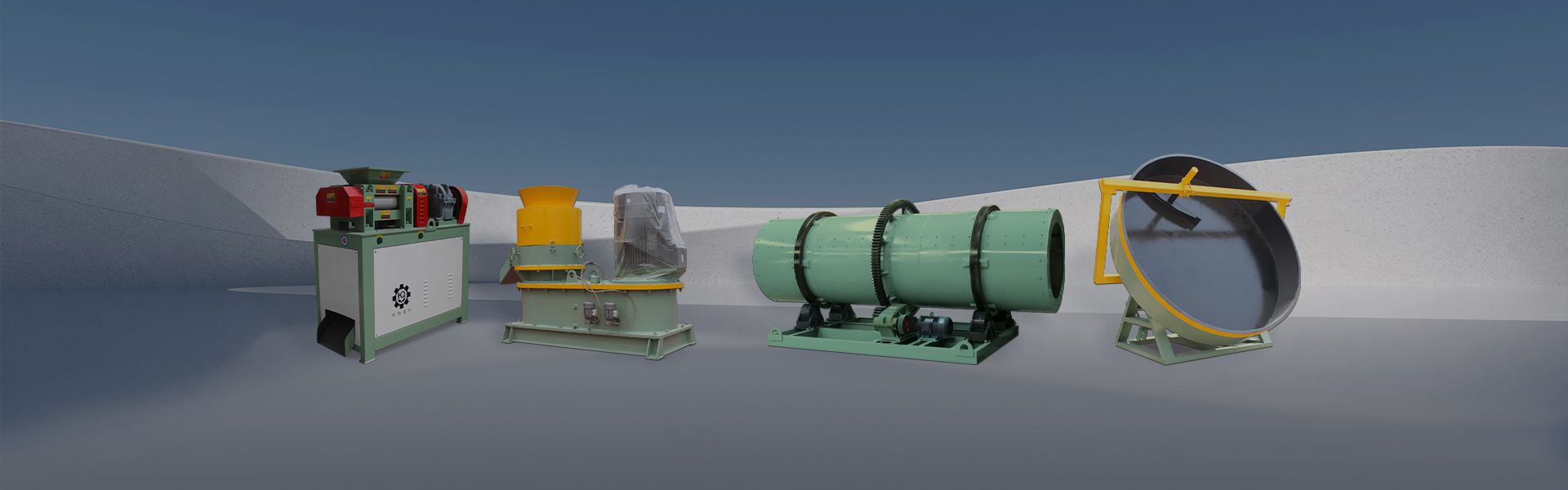
On a bio-organic fertilizer production line, fermentation turning equipment is undoubtedly the “workhorse.” Day after day, it operates at high intensity in a high-humidity, corrosive, and impurity-rich environment, with the blades constantly rubbing against the materials, and the walking system bearing a tremendous load. However, the more critical the equipment, the more meticulous its care. Scientific operation and maintenance can not only reduce the equipment failure rate by more than 70%, but also extend its service life by 3 to 5 years, providing a solid guarantee for continuous and stable production.
Daily Maintenance: The Effort Starts Every Day
Maintenance of fermentation equipment begins at the end of each production day. Material hardening is the biggest hidden killer of equipment, so cleaning after each day’s operation is crucial. Operators must promptly remove any residual fermentation material from the blades, chassis, and hoppers to prevent hardening and clumping, which could cause jamming the next day. At the same time, the walking system should be checked for any debris entangled.
Pre-operation checks are equally indispensable. This includes: observing the wear of the blade assembly, chain, and belt; confirming the lubrication level of the transmission system and the oil pressure of the hydraulic system are normal; and testing the sensitivity of the circuit and control system. Any loosening, wear, or oil leakage must be addressed immediately; operation of the equipment while malfunctioning is strictly prohibited. During operation, if abnormal noise is heard or increased vibration is felt, the machine should be stopped immediately for investigation.
Regular Maintenance: Implemented in Stages for Prevention
Regular maintenance should be implemented in stages—weekly, monthly, and yearly—based on equipment type and usage intensity.
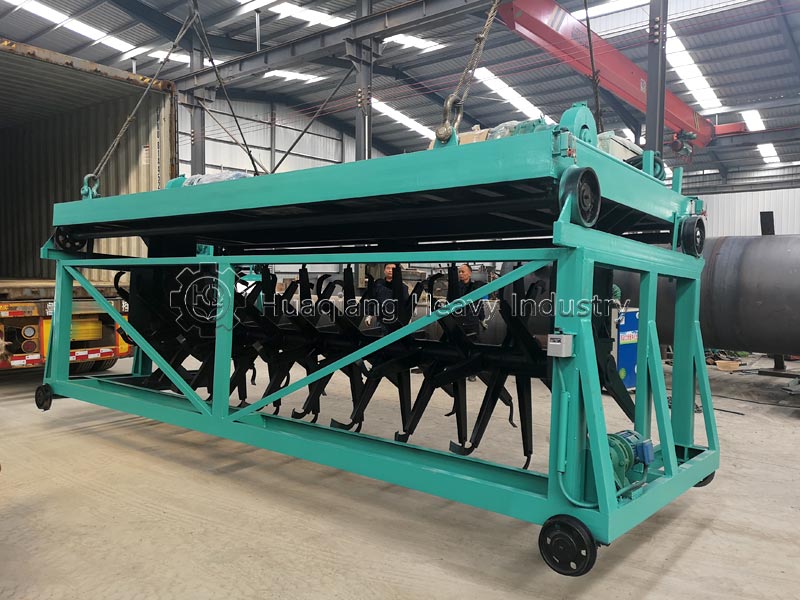
Weekly maintenance focuses on vulnerable parts and the transmission system. Key checks include the chain tension of chain-type compost turners, the hub bolts of large wheel-type compost turners, and the track pulleys of trough-type compost turners. Loose parts should be adjusted promptly, and all transmission bearings should be lubricated with grease.
Monthly maintenance targets core components. The wear of the blade assembly should be checked; slightly worn blades should be ground and repaired, while severely worn blades must be replaced; the steel structure of the machine body should be inspected for rust or deformation, and rust should be removed and painted promptly; the conveyor belt of the palletizer should be checked for aging and cracking.
Annual maintenance is a comprehensive overhaul. It requires disassembling and cleaning the transmission, hydraulic, and control systems; replacing aged seals and all fluids; calibrating operating parameters; and performing thorough anti-corrosion treatment on the entire machine to restore it to optimal condition.
Common Faults: Quick Troubleshooting, Precise Handling
Even with thorough maintenance, occasional faults are difficult to completely avoid. The key is mastering quick handling methods.
Cutlet jamming is the most common fault, often caused by the inclusion of hard objects such as stones or iron, or by dried materials. In this case, the machine should be stopped immediately for cleaning, and the cutter assembly should be checked for deformation. In cases of walking system faults, wheeled compost turners stuck in the track can be freed by laying steel plates; trough-type compost turners with stuck tracks need to have debris cleared and the pulleys inspected. Abnormal noises in the transmission system usually indicate insufficient lubrication or aging bearings; timely replenishment of lubricating oil or replacement of bearings will solve the problem. Hydraulic system oil leaks are often due to aging seals; replacing seals with the same specifications and replenishing hydraulic oil is standard operating procedure.
Besides equipment maintenance, personnel training is equally important. Enterprises should establish equipment operation and maintenance files, detailing usage time, maintenance content, and troubleshooting, to achieve full lifecycle management. Simultaneously, they should regularly provide professional training to operators and maintenance personnel to improve their ability to predict and handle faults.
Equipment, like a horse, needs both riding and maintenance. Only by integrating a scientific operation and maintenance system into daily production can fermentation and turning equipment continuously and stably perform effectively, ensuring the efficient production of bio-organic fertilizer.
The detailed maintenance and troubleshooting guide for the fermentation turner applies universally to all equipments required for biofertilizer production. Each machine, from the initial composting stage to the final packaging line, is an essential link in the chain. The specific fermentation composting turning technology employed dictates the type of turner and its unique maintenance needs. For large-scale windrow operations, a large wheel compost turner requires focus on its massive wheels and drive system. For more controlled environments, a trough-type compost turner or a robust chain compost turner operating within concrete channels needs regular inspection of its track system and chain tension. A flexible windrow composting machine (often tractor-towed) requires attention to its connection points and PTO shaft. Regardless of the technology—whether it’s a large wheel compost turner for massive windrows or a chain compost turner for intensive trough systems—the principles of daily cleaning, regular lubrication, and proactive wear-part replacement are the keys to maximizing uptime and ensuring the long-term, reliable operation of the entire biofertilizer production line.