
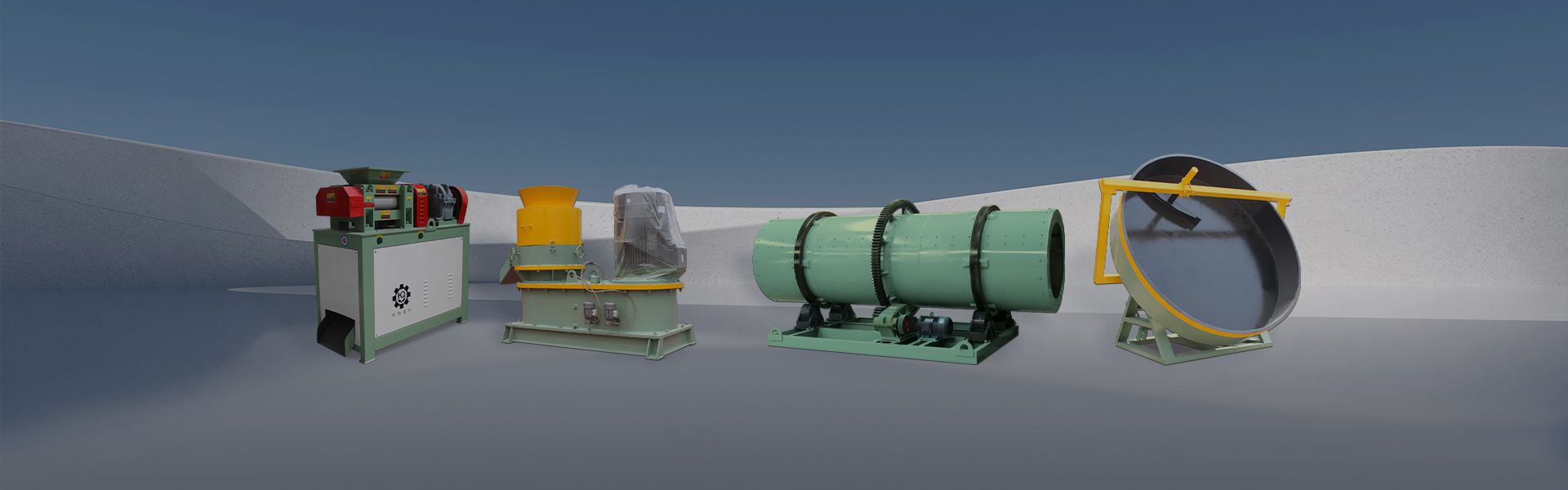
In the field of bio-organic fertilizer production, windrow composting has become the most widely used fermentation process globally due to its advantages such as low investment threshold, strong site adaptability, and flexible operation. However, traditional windrow composting often relies on manual stacking and rudimentary management, leading to problems such as long fermentation cycles and uneven maturity. To truly realize the potential of this process, the key lies in building a scientific supporting equipment system—the Windrow Composting Machine—to achieve a qualitative leap in the efficiency and quality of windrow composting through mechanized and standardized operations.
System Composition: More Than Just a Turning Machine
Many people mistakenly believe that windrow composting only requires a turning machine, but in reality, an efficient windrow composting system is an organic whole composed of multiple functional units. Its core is the windrow stacking machine, whose task is to stack the pre-treated raw materials into standard-sized windrows—typically 2 to 6 meters wide and 0.8 to 1.5 meters high. Standardized windrows ensure consistent air permeability and insulation within the material pile, laying the foundation for subsequent turning operations.
This is complemented by conveying equipment (such as belt conveyors and screw conveyors), which efficiently and continuously transport materials from the pretreatment workshop to the fermentation site, completely eliminating the inefficiency and labor of manual handling. The fundamental value of this system lies in replacing the randomness of manual labor with the precision of machinery, making the fermentation process controllable from the outset.
Matching Logic: Tailored to Production, Collaborative Operation
The windrow fermentation system is not a fixed combination but requires scientific matching based on production scale and core turning equipment to achieve a synergistic effect of “1+1>2”.
Large-scale capacity (over 100,000 tons per year): Equipped with wide-width windrow stackers, these stacks are formed into giant windrows 4 to 8 meters wide, maximizing the operational advantages of large wheeled turning machines. This combination can process thousands of tons per day, making it the preferred choice for large-scale production bases.
Medium-sized capacity (30,000 to 100,000 tons per year): The width of the windrows is controlled at 2 to 4 meters, working in conjunction with a medium-sized chain-plate turner or a small wheeled turner to achieve a balance between efficiency and investment.
Small-sized capacity (10,000 to 30,000 tons per year): Narrow windrows of 1.5 to 2 meters wide are prepared, suitable for small chain-plate turners. This requires low investment and consumes little energy, making it easy for family farms or small-scale farms to operate.
High-efficiency application techniques: Details determine fermentation success or failure
Owning the equipment is not enough; using it effectively is equally crucial. The following three application techniques can significantly improve fermentation efficiency and material maturity:
Standardized windrows are a prerequisite: The width of the windrows must be less than the operating width of the turner, and the height must not exceed the maximum turning depth of the equipment. Too wide a windrow will prevent the bottom from being turned, creating an anaerobic zone; too high a windrow will easily collapse, affecting ventilation. At the same time, the cross-section of the windrows should be trapezoidal, with a slightly flat top to facilitate rainwater runoff and insulation.
Precise timing of turning is crucial: Turning too frequently is not necessarily better. The optimal time for turning is when the pile temperature reaches 60-70℃. Turning at this point mixes the outer layer of material into the high-temperature zone to kill harmful bacteria, while preventing the core temperature from becoming too high and killing beneficial microorganisms. Turning should be done every 2-3 days in the early stages of fermentation, and this can be extended to 5-7 days in the later stages.
Differentiated treatment based on raw material characteristics: For livestock and poultry manure with high moisture content, care should be taken to keep the windrows loose during preparation. If necessary, straw or other auxiliary materials can be mixed in to increase porosity. For fibrous materials such as straw, the windrows can be appropriately compacted to facilitate heat retention.
With the development of IoT technology, more and more windrow fermentation production lines are introducing intelligent monitoring systems. By monitoring the pile status in real time through temperature and oxygen sensors, the windrow preparation and turning operations are automatically controlled, giving this traditional process a new lease on life. The windrow fermentation system, through standardization, is making organic fertilizer production simpler and more efficient.
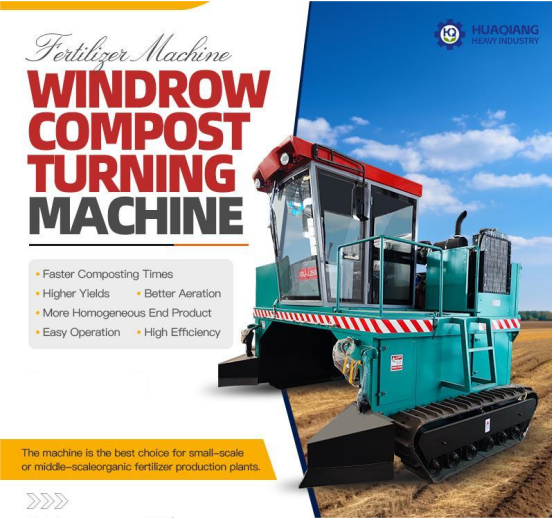
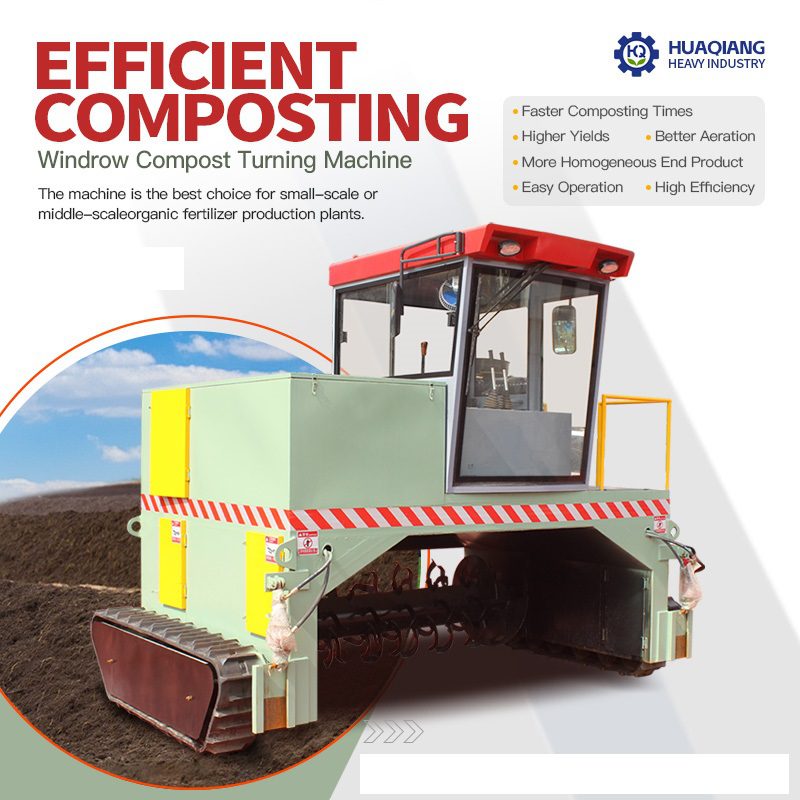
The windrow preparation and conveyor equipment are the essential supporting actors, but the true star of the windrow composting system is the windrow composting machine itself. This machine is the primary implementer of fermentation composting turning technology, serving as an efficient agriculture waste compost fermentation machine. Its core function is to traverse the pre-formed windrows, thoroughly aerating and mixing the material. A particularly versatile type is the self propelled compost production machine. These units are mobile and self-powered, capable of navigating between windrows without the need for fixed tracks or towing by a tractor. They offer exceptional flexibility for operations with varying pile layouts or multiple separate sites. By integrating the turning mechanism with its own locomotion, a self propelled compost production machine simplifies the composting process, allowing operators to efficiently manage fermentation with a single piece of equipment. This combination of standardized windrow formation and the powerful, flexible turning action of a self propelled compost production machine or a dedicated windrow composting machine transforms windrow composting from a rudimentary practice into a precise, controlled, and highly efficient industrial process.