
In the organic fertilizer production chain, raw material pretreatment is the crucial first hurdle. This step directly affects fermentation efficiency and product quality, and also relates to the operational stability and lifespan of production equipment. Livestock manure, straw, and other raw materials must undergo scientific and systematic pretreatment to truly transform into safe and efficient commercial organic fertilizer.
Fine Crushing: Releasing the Active Potential of Raw Materials
The first step in pretreatment is the physical transformation of the raw materials. Different raw materials require different crushing solutions: For high-fiber materials such as straw and branches, a chain crusher is typically used for initial crushing, followed by a semi-wet material crusher to refine them into uniform particles of 80 mesh or finer. This process significantly increases the specific surface area of the material, creating favorable conditions for sufficient contact and decomposition by microorganisms in the subsequent fermentation stage.
For wet-based raw materials such as livestock manure, moisture control is a critical prerequisite. Solid-liquid separation must be performed first to reduce the moisture content of the raw materials to below 55%, avoiding anaerobic putrefaction and odor caused by excessive humidity. Taking the semi-wet material crusher developed by Zhengzhou Huaqiang Heavy Industry as an example, this equipment is specifically designed for bio-fermentation of organic fertilizer. It can efficiently process mixed raw materials with a moisture content of 25% to 55%, achieving uniform distribution of moisture and materials during the crushing process, laying a physical foundation for efficient fermentation.
Scientific Proportioning and Moisture Control: Building an Ideal Home for Microorganisms
The raw material ratio is the core factor determining the nutritional value of organic fertilizer. The nitrogen, phosphorus, potassium, and organic matter content of raw materials such as livestock and poultry manure, straw, and bentonite from different sources varies significantly, requiring precise calculation and matching based on the nutrient requirements of the target product. Simultaneously, by adding specialized fermentation agents, the carbon-nitrogen ratio of the materials is adjusted to the ideal range of 25:1 to 30:1. This ratio ensures rapid microbial reproduction while effectively reducing nitrogen loss during fermentation.
Moisture control is equally crucial. Practice shows that controlling the moisture content of raw materials between 40% and 60% is most suitable: excessive moisture easily creates an anaerobic environment, producing foul-smelling substances; excessive moisture inhibits microbial metabolic activity. Modern pretreatment production lines are often equipped with intelligent spray humidification systems, enabling precise moisture adjustment based on real-time monitoring data to ensure each batch of raw materials is at its optimal fermentation starting point.
Intelligent Equipment Integration: Achieving Efficient Continuous Production
The selection of equipment in the pretreatment stage directly impacts production efficiency and stability. The current industry trend is towards integrated pretreatment systems, such as a combination of a chain crusher, a semi-wet material crusher, and a twin-shaft mixer, achieving continuous operation from raw material receiving, crushing and screening, proportioning and mixing to moisture adjustment. This integrated design not only reduces material transfer losses but also ensures the consistency of processing across batches of raw materials.
It is noteworthy that intelligent control systems are playing an increasingly important role in the pretreatment stage. By using sensors to monitor material moisture, temperature, and mixing uniformity in real time, and automatically adjusting equipment operating parameters, the pretreatment process shifts from experience-driven to data-driven.
The Value of Pretreatment: Enhanced Efficiency and Quality
The benefits of scientific raw material pretreatment are significant: fermentation cycles can be shortened by 20%–30%, greatly improving equipment utilization; granulation rate increases by over 15%, reducing material return and energy consumption; and the nutrient uniformity and biocompatibility of the final product are fundamentally guaranteed. These improvements directly translate into reduced production costs and enhanced product competitiveness.
From an industry perspective, advancements in raw material pretreatment technology are driving the transformation of organic fertilizer production from extensive processing to refined manufacturing. Especially with the large-scale development of livestock and poultry farming and increasingly stringent environmental requirements, efficient, energy-saving, and intelligent pretreatment technologies will become essential capabilities for the sustainable development of organic fertilizer enterprises.
The Complete Production Chain: Pretreatment, Fermentation, and Granulation
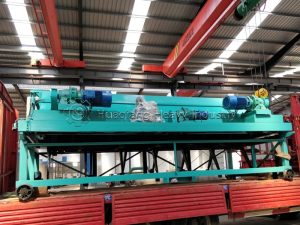
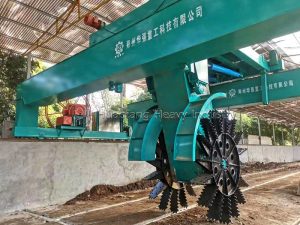
Following scientific pretreatment, the prepared raw materials enter the core organic fertilizer fermentation process. This stage leverages advanced fermentation composting technology for organic fertilizer to achieve efficient aerobic decomposition. The technology is executed by specialized equipment such as a windrow composting machine or a large wheel compost turning machine for open windrows, or a more controlled trough-type aerobic fermentation composting technology system. This entire mechanized system, often referred to as an agriculture waste compost fermentation machine, embodies modern fermentation composting turning technology, ensuring optimal temperature, aeration, and moisture for microbial activity.
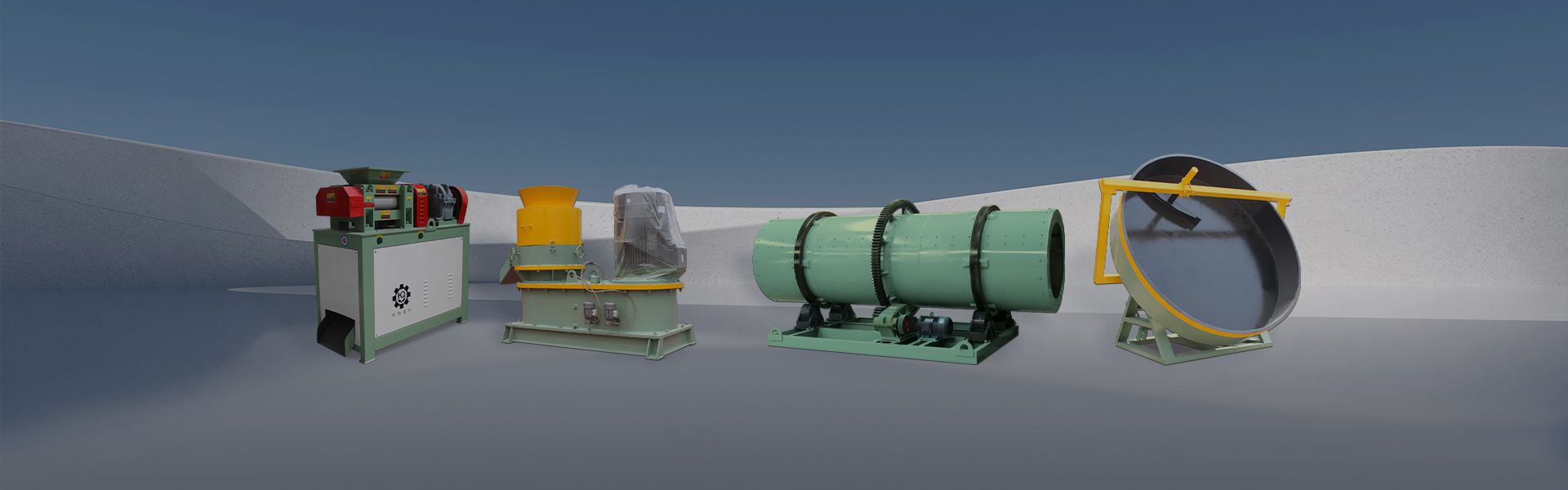
The cured compost produced is then ready for the final stages of the equipments required for biofertilizer production. To transform the compost into a marketable, easy-to-apply product, it is fed into a granulation line. A common and effective method is the disc granulation production line, which shapes the moist compost into uniform, spherical pellets through a tumbling action. This integrated pathway—from meticulous pretreatment and controlled fermentation to precision granulation—ensures the transformation of raw organic waste into a consistent, high-value fertilizer.
Therefore, each stage is interdependent: proper pretreatment enables efficient fermentation, and high-quality compost is essential for successful granulation. Mastering this complete chain is key to producing commercial-grade organic or bio-organic fertilizers that meet both agronomic and environmental standards.
While raw material pretreatment is the initial stage in organic fertilizer production, it is a crucial factor determining the product’s fate. It is not merely a simple physical process but also involves a deep understanding and systematic integration of material characteristics, microbial requirements, and process parameters. Only by establishing a solid foundation in pretreatment can subsequent fermentation, granulation, and other processes proceed smoothly, ultimately producing high-quality organic fertilizer that meets the needs of modern agriculture. For organic fertilizer producers, investing in advanced pretreatment technology is investing in the core competitiveness of product quality.