
Choosing the right compost turning equipment is half the battle in the organic fertilizer treatment of livestock manure. Trough compost turners and large Large Wheel compost turners are currently the two most common choices for large-scale livestock farms. They differ significantly in construction costs, turning depth, processing efficiency, and fermentation cycle. Choosing the wrong type can lead to wasted investment or even fermentation failure. This article compares and analyzes them from four dimensions to help you make an accurate decision.
Construction Costs: Trough Compost Turners Require Infrastructure, Large Large Wheel Compost Turners Require Zero Construction
Trough compost turners require the construction of fixed concrete fermentation troughs. The cost of a brick-concrete fermentation trough is approximately 10,000 to 30,000 yuan, and the cost will increase further for large-scale deep trough designs. However, once the troughs are built, multiple troughs can share one machine, making long-term cost amortization controllable. Large Wheel compost turners use windrow fermentation, requiring no trough construction or ground hardening; materials can be piled directly on the ground for operation. Initial construction investment is almost zero, making it highly attractive to livestock farms with limited funds.
Turning Depth: Large Wheel Turners Offer Significant Advantages in Deep Turning
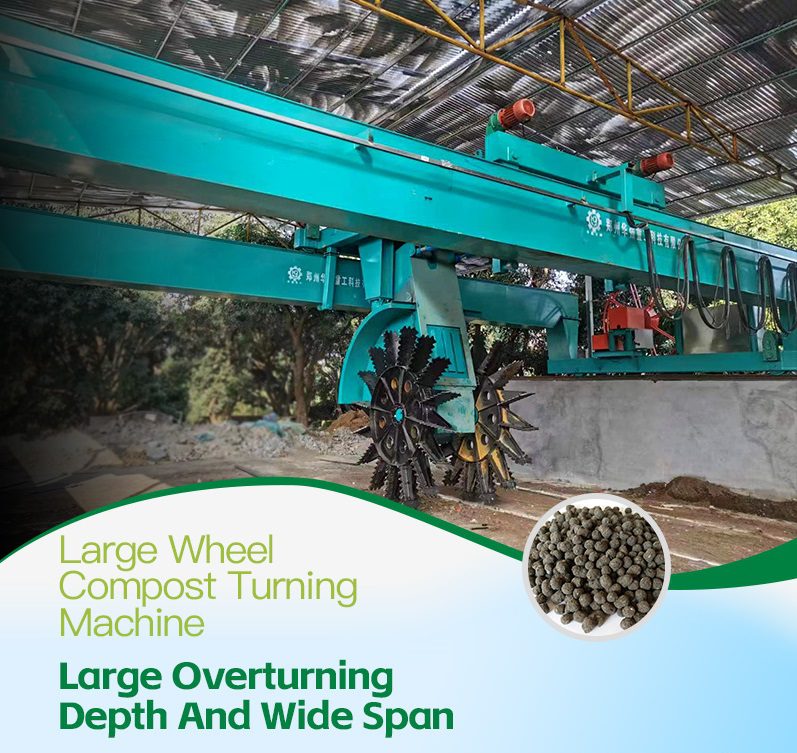
Trough-type compost turners typically have a turning depth of 0.8 to 1.8 meters. Large Wheel turners, with their large-diameter Large Wheel s, can reach a turning depth of 1.5 to 3 meters. For farms requiring deep trough fermentation, Large Wheel turners can thoroughly turn over the material at the bottom of the trough, avoiding uneven fermentation caused by large temperature differences between the top and bottom. If the fermentation trough depth exceeds 1.8 meters, trough turners may not be sufficient.
III. Turning Efficiency: High-Speed Large Wheel Turners, Stable Trough Turners
Large Wheel turners rotate at a high speed of 200 to 400 revolutions per minute, throwing the material from the bottom of the pile to the surface, achieving integrated turning and crushing. A single unit can cover a fermentation trough 8 to 15 meters wide, with a daily processing capacity of over 500 tons. Trough-type compost turners operate at a low speed of 30 to 60 revolutions per minute, with rake teeth penetrating deep into the bottom of the pile for turning, typically with a daily processing capacity of 100 to 500 tons. The Large Wheel -type compost turner excels in speed, while the trough-type compost turner excels in stability.
Fermentation Cycle: Large Wheel -type for Speed, Trough-type for Uniformity
The powerful oxygen supply provided by the high-speed turning of the Large Wheel -type compost turner can shorten the fermentation cycle from the conventional 15 days to 7-10 days. The fermentation cycle of the trough-type compost turner is generally 7-8 days, with some processes claiming to achieve 7 days. Because the trough-type compost turner thoroughly turns the compost without dead corners, the finished product qualification rate can reach over 98%, making it more suitable for refined production with strict requirements for fermentation uniformity.
Selection Recommendations
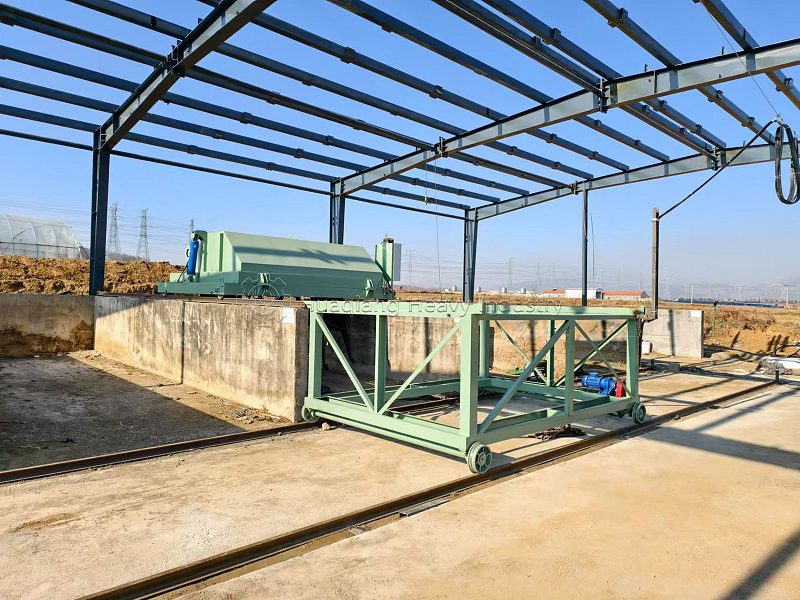
Trough-type compost turner: Suitable for medium-sized production lines with a daily processing capacity of 100-500 tons, where space is limited but strict requirements for fermentation uniformity are needed, and where civil engineering investment is acceptable.
Large Large Wheel -type compost turner: Suitable for large-scale production lines with a daily processing capacity of over 500 tons, where extreme fermentation speed is pursued, where there is ample space and a sufficient budget.
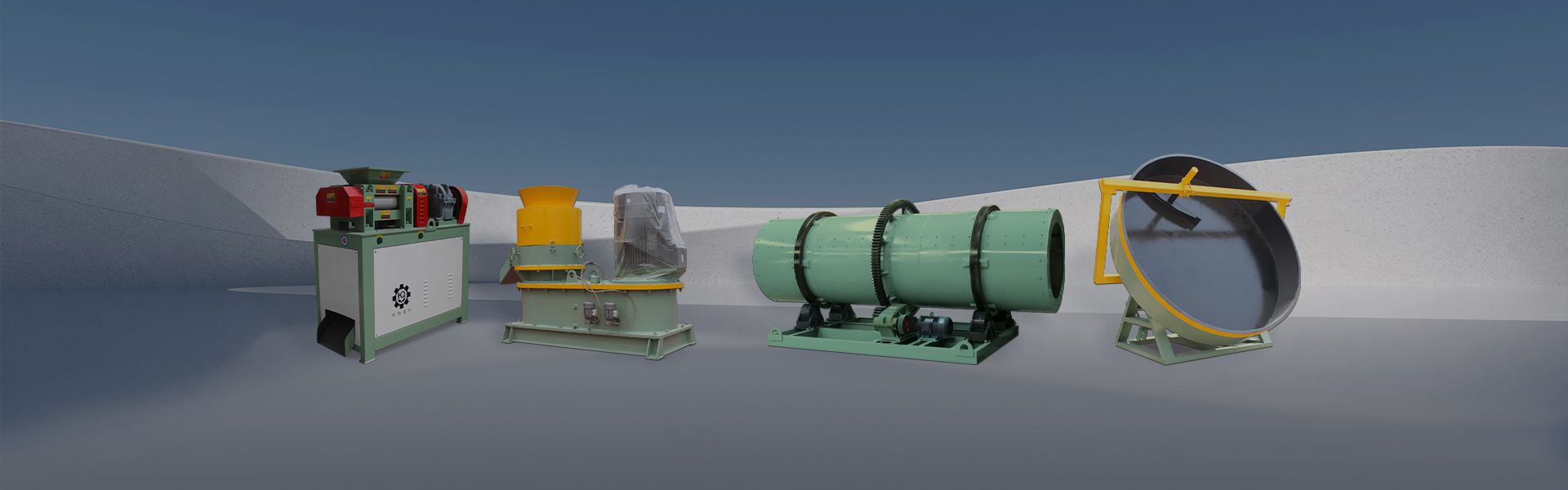
The choice between a trough-type compost turner and a large wheel compost turner is not merely about equipment preference—it is a strategic decision that directly impacts the efficiency and quality of the entire composting process for animal manure. Both machines embody advanced fermentation composting turning technology, but they serve different operational priorities: the trough-type compost turner excels in uniform aeration and consistent fermentation for medium‑scale facilities, while the large wheel compost turning machine offers unmatched speed and depth for large‑scale, high‑throughput operations. Regardless of the choice, proper turning is a critical step in the broader fertilizer manufacturing process, ensuring pathogen elimination, odor control, and organic matter stabilization. For farms that also integrate downstream processing, the matured compost from either turner can be fed directly into an organic fertilizer granulator series to produce commercial pellets, completing the value chain from waste to marketable product. Ultimately, the decision hinges on your site constraints, daily throughput, and budget—but in all cases, a well‑chosen animal manure compost turner will accelerate decomposition, reduce odors, and deliver a consistent, high‑quality compost that forms the foundation of successful organic fertilizer production.
We specialize in the research and development and manufacturing of composting equipment for organic fertilizer production from livestock farms, covering two major series: trough type and large Large Wheel type – ranging from 100 tons/day to over 500 tons/day. Our professional team provides you with precise four-dimensional selection to ensure that composting efficiency and fermentation quality are just right, so that your investment is not wasted and fermentation is successful.