
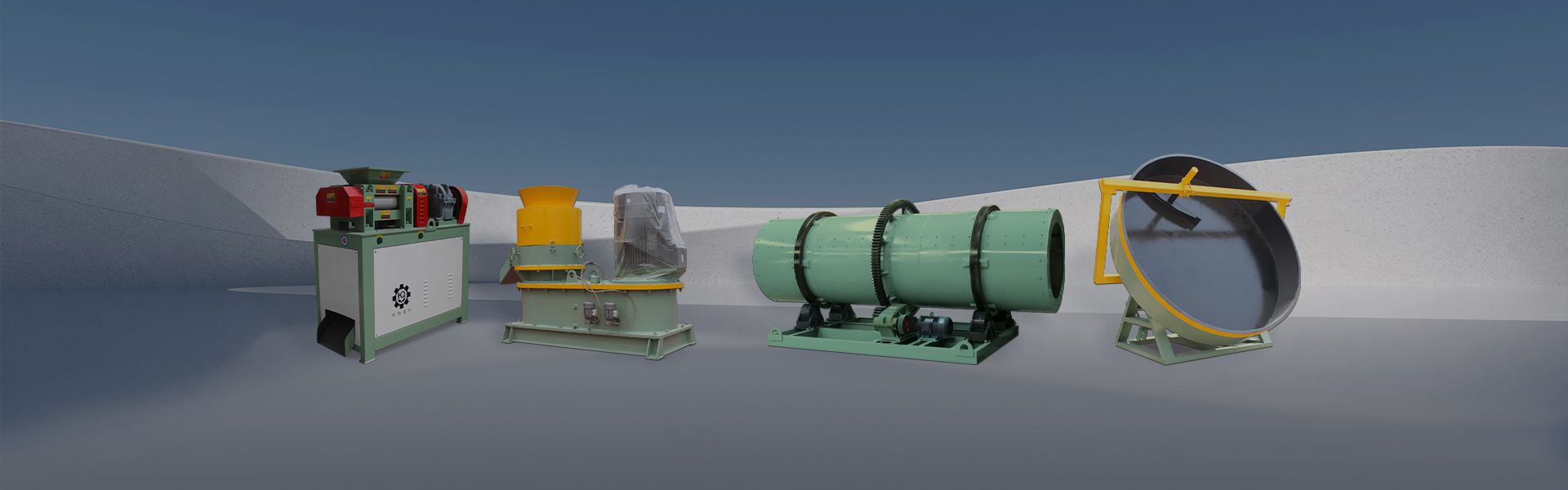
You’ve shaped your granules. They’re uniform, beautiful, and full of nutrients. But there’s one problem: they’re wet. And wet granules don’t store. They don’t flow through spreaders. They cake, they mold, they spoil. Before your fertilizer can meet the world, it needs to meet the drum fertilizer dryer.
What Does a Drum Dryer Do?
Think of it as a giant, rotating oven. Wet granules enter one end, tumble through a long, heated cylinder, and emerge dry, cool, and ready for packaging. Along the way, moisture evaporates, hardness increases, and your product transforms from fragile to durable.
How It Works
A drum dryer is a large steel cylinder, slightly inclined so material gradually moves from the inlet to the outlet. Inside, lifting flights pick up granules and shower them through a stream of hot air. This cascading action exposes every particle to the drying air, ensuring uniform moisture removal.
Heat comes from a furnace at the discharge end—burning natural gas, coal, biomass, or even waste oil. Hot air is drawn through the drum by a powerful fan, picking up moisture as it travels. At the outlet, a cyclone or baghouse captures any dust before the air releases to the atmosphere.
Why Your Line Needs One
Moisture Control – Granules straight from a rotary drum granulator can contain ten to fifteen percent moisture. For safe storage, you need below two percent. The drum dryer bridges that gap reliably, day after day.
Hardness and Durability – Drying doesn’t just remove water. It strengthens granules, making them resistant to breakage during handling, transport, and spreading. Your customers get whole granules, not dust.
Prevents Caking – Moisture is the enemy of storage. Dried granules resist clumping, even in humid conditions. They flow freely through spreaders and out of bags.
Consistent Quality – A well-designed drum dryer delivers uniform moisture throughout every granule, not just on the surface. That means predictable performance in the field.
Built for the Tough Stuff
Fertilizer is harsh. It’s corrosive, abrasive, and often sticky when hot. That’s why drum dryers are built with durability in mind.
Shells are thick carbon steel, sometimes stainless where corrosion is severe. Lifting flights are wear-resistant and replaceable. Seals at both ends keep dust in and cold air out. Trunnions and thrust rollers support the massive rotating drum, with bearings designed for continuous duty.
And because fertilizer dust can be explosive, safety features are non-negotiable: explosion vents, temperature monitoring, and spark detection systems where needed.
The Complete Drying System
A drum dryer never works alone. It’s part of a coordinated team:
Furnace generates the heat, with precise temperature control
Fan pulls air through the drum, creating negative pressure that contains dust
Cyclone dust collector or baghouse cleans exhaust air before discharge
Ductwork connects everything, with dampers to balance airflow
Control panel monitors temperatures, pressures, and motor loads
Cooling: The Next Step
After drying, granules are hot—often too hot for bagging. That’s why most lines pair a dryer with a rotary cooler. Cool air moves through a similar drum, bringing granule temperature down to safe levels. Some coolers even recover heat for pre-warming combustion air, improving overall efficiency.
Fuel Flexibility
What you burn matters. Modern drum dryers adapt to available fuels:
Natural gas or propane for clean, consistent heat
Coal or petcoke where gas isn’t available
Biomass like rice husks or wood chips for sustainable operations