
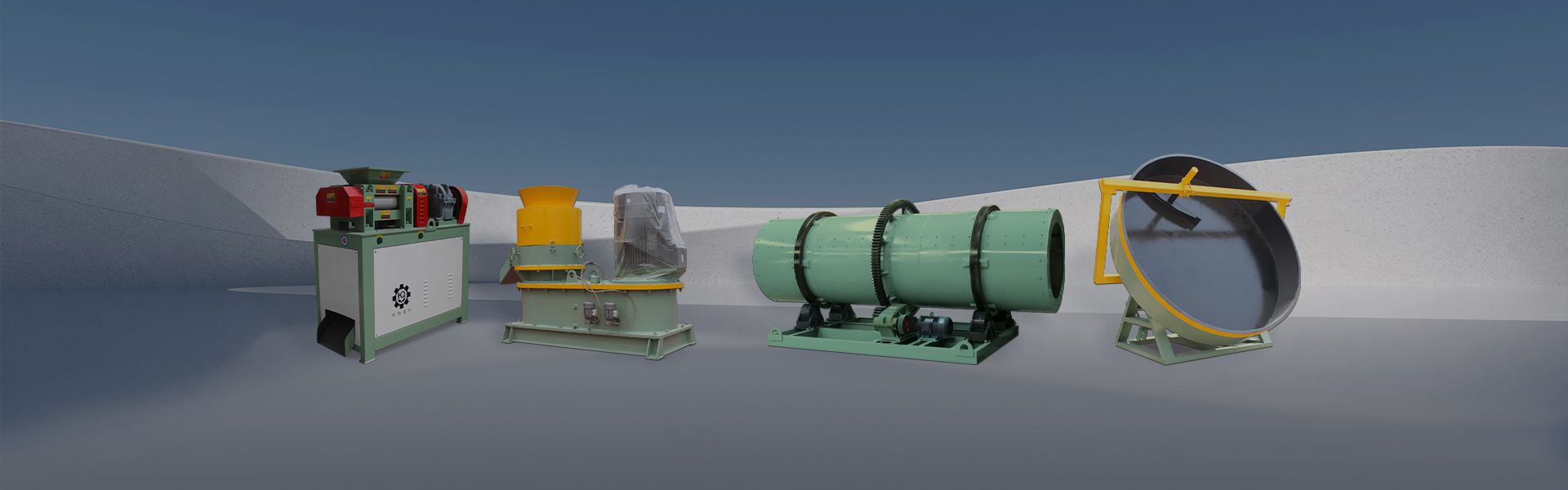
There is a rhythm to every fertilizer plant—a steady, pulsing heartbeat that drives the transformation of dusty powders into life-giving granules. That rhythm comes from the rotary drum granulator. It is the oldest, most trusted, most beloved machine in the business. And when it runs, the whole plant breathes.
The Machine That Refuses to Be Replaced
For decades, engineers have tried to unseat the rotary drum granulator. They have invented pans, discs, extruders, and presses—each claiming to be faster, smaller, or more efficient. And yet, walk into any large-scale fertilizer facility today, and you will find the drum still turning. Why? Because nothing else does quite what it does.
The rotary drum granulator handles volume. Not just tons per hour, but hundreds of tons. It accepts the messiest feeds—sticky, wet, uneven—and turns them into uniform product. It integrates heat, moisture, and chemical reactions in a single rotating vessel. It is forgiving, adaptable, and nearly indestructible. In short, it is the workhorse that built the modern fertilizer industry.
What Happens Inside the Drum
Step close to a running granulator, and you will hear it before you see it: a low, rumbling growl, the sound of tons of material tumbling inside a steel shell. Look through an observation port, and you will witness something remarkable.
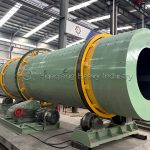
The drum is a long cylinder, slightly inclined—perhaps three or four degrees from horizontal. At the higher end, raw materials enter: a continuous stream of powder, precisely blended from nitrogen, phosphorus, potassium, and whatever else the formulation demands. At the same time, a fine mist of water or steam sprays into the drum, along with perhaps a binder solution.
Inside, the drum rotates slowly, perhaps ten to fifteen revolutions per minute. Lifters—steel flights or specially shaped liners—catch the material and carry it up the rising side of the drum. Higher and higher it climbs, until gravity wins and it cascades back down in a curtain of falling particles. This tumbling action is the soul of the process.
As particles tumble, they collide. When they collide, the liquid on their surfaces creates tiny bridges—capillary forces that pull them together. Particle joins particle, layer builds upon layer, and granules begin to form. They grow like rolling snowballs, gradually increasing in size as they travel the length of the drum. By the time they reach the discharge end, the dusty feed has become a stream of moist, spherical granules.
Wet Granulation: Why Water Works
The “wet” in wet granulation is not an accident or an afterthought. Water—or steam, or a binder solution—is the active ingredient that makes the magic happen. It serves several essential purposes.
First, it creates the liquid bridges that bind particles together. Without moisture, particles simply bounce off each other. With just the right amount, they stick, forming the nuclei from which granules grow.
Second, water can dissolve soluble components, creating a saturated solution that recrystallizes as the granules dry. This chemical bonding adds strength far beyond simple mechanical adhesion.
Third, steam adds heat, which increases solubility and promotes chemical reactions within the drum. In many NPK processes, the reaction between ammonia and phosphoric acid generates significant heat—heat that drives granulation forward without external energy.
The art lies in controlling the moisture. Too little, and granules won’t form—the discharge remains dusty and unsatisfying. Too much, and the drum becomes a sticky mess, material plastering to the walls and forming mudballs instead of granules. The perfect granulation curve—that narrow window of optimal moisture—is different for every formulation, and experienced operators learn to find it by feel, by sight, by the sound of the drum itself.
The Granules Take Shape
Watch the discharge of a well-tuned granulator, and you will see beauty in motion. A continuous stream of moist pellets pours from the drum, each one round and whole, ranging from perhaps one to five millimeters in diameter. They are soft enough to be shaped further, but firm enough to hold together as they tumble into the dryer.
These are not yet finished product. They will travel through drum fertilizer dryer and cooler, vibration screener machine and coaters, before they reach the bagging line. But the essential work—the creation of granules from powder—has already been done. Everything that follows is refinement.