
What is NPK Fertilizer Solubility?
NPK fertilizer solubility refers to the rate and extent to which nitrogen, phosphorus, and potassium compound fertilizer granules disintegrate in water and release soluble nutrients. Solubility directly determines whether nutrients can be quickly absorbed by crop roots and is a core admission indicator for drip irrigation systems and fertigation facilities. Insufficiently soluble granules will accumulate and clog sprinklers or drippers, causing equipment malfunctions and nutrient waste.
Raw Material Purity: The First Threshold for Solubility
Water-insoluble matter in raw materials is the primary culprit for decreased solubility. Industrial-grade monoammonium phosphate should have less than 0.5% water-insoluble matter, while agricultural-grade may have as high as 2% to 3%. Using phosphorus sources produced by the thermal phosphoric acid process instead of wet-process phosphoric acid products can reduce water-insoluble matter from 1.5% to below 0.3%. For potassium sources, fully water-soluble potassium sulfate or potassium nitrate should be preferred, avoiding the use of low-end potassium chloride containing magnesium chloride impurities. Before raw materials are stored, an additional solubility test is added—the sample is dissolved in 40°C warm water at a 1:10 ratio and stirred for 2 minutes, then visually observed for any turbidity or sediment. For every 1% reduction in water-insoluble matter, the dissolution time of the finished product can be shortened by 15% to 20%.
Granulation Process: From Physical Structure to Disintegration Rate
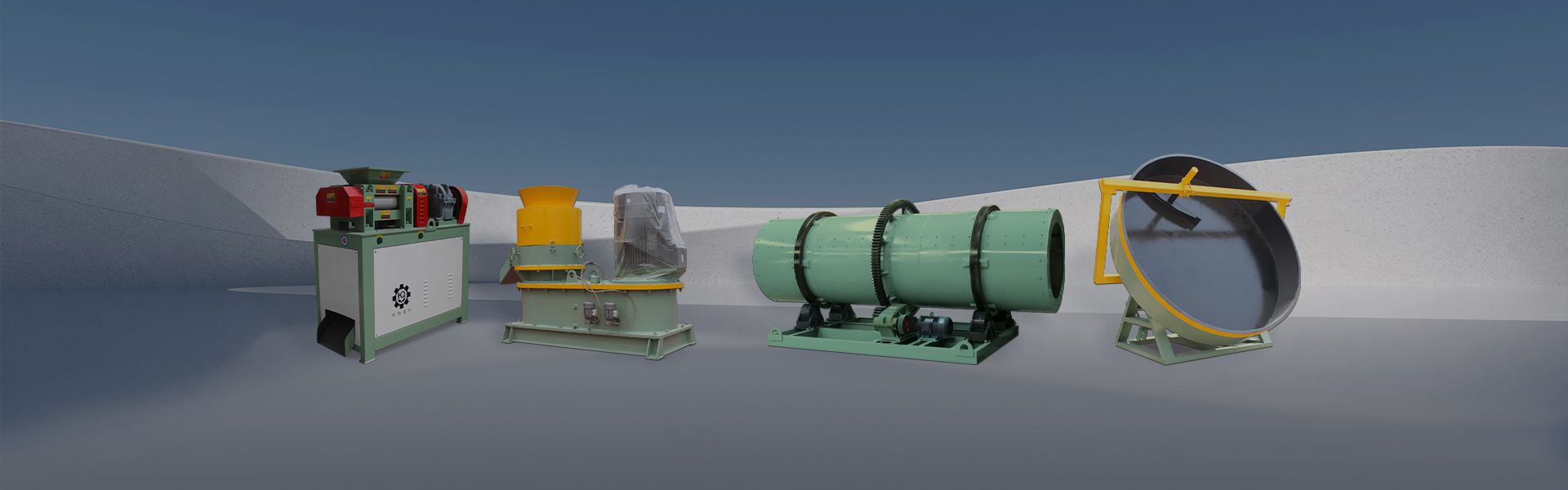
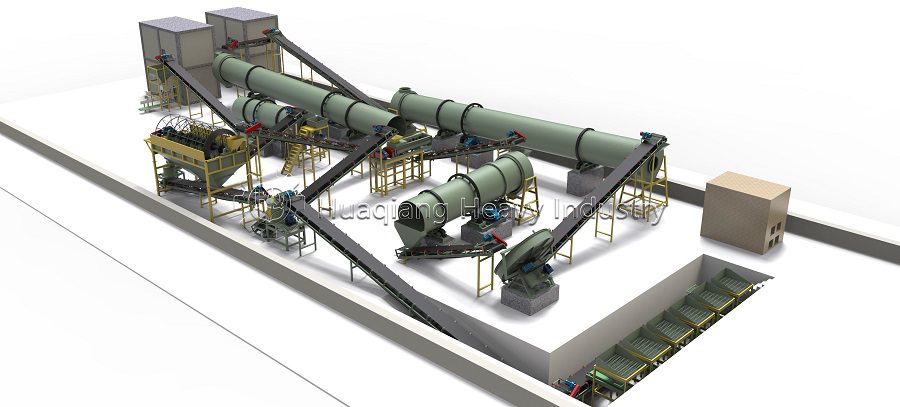
Traditional steam drum granulation produces dense spherical particles with low internal porosity and long water molecule penetration paths, requiring 8 to 15 minutes for complete dissolution. Using a roller extrusion granulation process results in particles with a porous, irregular structure, increasing the specific surface area by 40% to 60%, and reducing the dissolution time to 3 to 5 minutes. If drum granulation must be used, 3% to 5% urea can be introduced into the formulation as a granulation aid—urea dissolves rapidly in water, forming microporous channels inside the particles and accelerating nutrient release. Another approach is to reduce granulation density: decreasing the filling rate of the drum granulator from 25% to 18% and adjusting the steam pressure from 0.3 MPa to 0.2 MPa increases particle porosity by approximately 12 percentage points, correspondingly accelerating the disintegration rate.
Ultra-fine grinding: Breaking through the dissolution rate bottleneck
For the high-end water-soluble fertilizer market, granule solubility requires achieving a “fully water-soluble” standard—complete dissolution within 2 minutes without residue. This necessitates adding an air-jet milling process before granulation, finely grinding the mixture to 150-200 mesh (particle size 0.075-0.1 mm). After ultra-fine powder granulation, the internal crystal size is small, the water molecule diffusion path is short, and the dissolution rate increases exponentially. Air-jet milling uses high-pressure air (0.6-0.8 MPa) to cause particles to collide and break apart, with a material temperature rise of less than 10 degrees Celsius during the process, avoiding degradation of heat-sensitive components. A matching vortex classifier automatically returns coarse powder to the grinding chamber, ensuring consistent output fineness. Although this process increases energy consumption by approximately 80 to 120 kWh per ton, the product premium can be 2 to 3 times that of ordinary granular fertilizer, making the economic benefits still valid.

Formula Fine-tuning: Chemical Synergy Accelerates Dissolution
Introducing chelated trace elements (EDTA iron, zinc, manganese) into the basic nitrogen, phosphorus, and potassium formula not only improves nutrient availability, but the chelating agent molecules can also complex with calcium and magnesium ions, preventing the formation of insoluble precipitates of phosphates in hard water. For areas with high calcium and magnesium water quality, adding 0.5% to 1% citric acid or ammonium polyphosphate as a co-solvent can increase the clarity of the dissolved solution from 85% to over 98%. The pH value of the formula is controlled within the range of 5.5 to 6.5; a slightly acidic environment is conducive to maintaining the dissolved state of phosphate ions, preventing their conversion to citrate-soluble calcium phosphate under alkaline conditions.
Achieving optimal NPK fertilizer solubility demands a systems-level approach that permeates every stage of the NPK fertilizer production process, from raw material procurement through finished product testing. Within the NPK fertilizer manufacturing process, the interplay between fertilizer formula processing precision and fertilizer granulation technology selection determines whether granules meet basic dissolution standards or achieve premium water-soluble grades. While conventional drum granulation via a rotary drum granulator remains the workhorse of compound fertilizer production technology for its superior throughput and spherical particle formation, producers targeting fertigation markets must strategically modify process parameters—reducing drum fill rates, optimizing steam pressure, and incorporating rapid-dissolution additives—to overcome the inherent density limitations of thermal agglomeration. Ultimately, the convergence of ultra-fine grinding, chelation chemistry, and intelligent process control within modern manufacturing frameworks enables producers to engineer solubility profiles that satisfy the most demanding drip irrigation specifications, transforming solubility from a compliance metric into a competitive differentiator in the precision agriculture marketplace.