
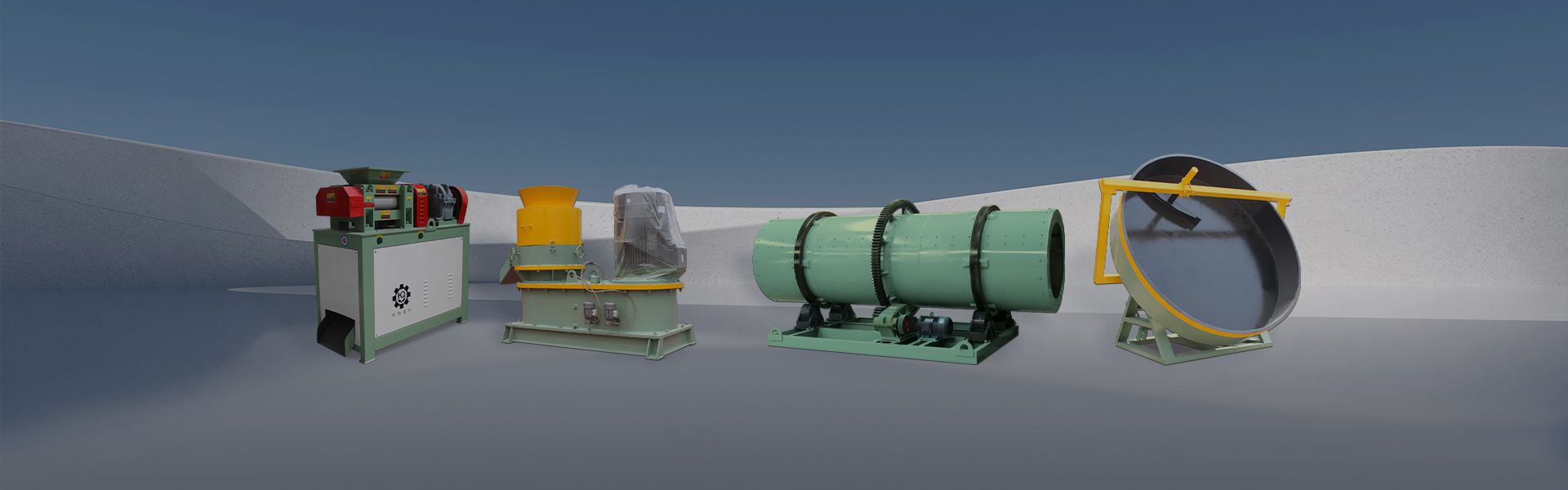
What is Bio-organic Fertilizer?
The core difference between organic fertilizer and bio-organic fertilizer lies in whether it contains specific functional microorganisms. Ordinary organic fertilizer refers to compost that has undergone aerobic or anaerobic fermentation and decomposition, mainly derived from animal and plant residues, livestock manure, etc. Its function is to provide organic matter and improve soil structure. Bio-organic fertilizer, on the other hand, is fertilizer made by inoculating specific functional microbial strains (such as Bacillus) onto decomposed organic fertilizer.
The standards they adhere to are also drastically different: Organic fertilizer follows NY/T 525-2021, requiring organic matter ≥30% and total nutrients ≥4%; bio-organic fertilizer follows NY 884-2012, requiring an effective live bacteria count ≥0.2 billion/gram and organic matter ≥40%. Bio-organic fertilizer not only provides organic matter but also achieves three core functions through the metabolic activities of functional microorganisms: resistance to soil-borne diseases, promotion of root growth, and improvement of fertilizer utilization.
Three Key Technologies for Adding Functional Microbial Agents to Production Lines
Functional microorganisms are extremely sensitive to high temperature, high pressure, and strong shear. The timing and process of addition directly determine the survival rate of live bacteria in the product. The following three technologies are indispensable:
- Microbial Activity Protection Technology
The granulation stage is the biggest threat to microbial survival. Frictional heat from crushing, extrusion pressure during granulation, and high temperatures (65-100℃) during drying all severely affect the activity of the microbial agent.
Low-temperature granulation is a fundamental guarantee—flat die granulators have a temperature 15-20℃ lower than ring die granulators, and increasing the die diameter can also reduce the extrusion temperature. More importantly, there is the “post-addition method of microbial agents”: the organic material is first granulated and cooled to below 40℃, and then the microbial solution is evenly sprayed using a roller sprayer. This “form first, add microorganisms later” process avoids the high-temperature section, and the activity retention rate can reach over 80%. Furthermore, microencapsulation technology can encapsulate the bacterial strains within a protective layer, achieving a survival rate of over 90% at room temperature for 30 days. Protective agents such as trehalose, diatomaceous earth, and biochar also provide “heat insulation” for the bacterial cells.
- Secondary Mixing Process There are two routes for adding the bacterial agent.
Route 1: Secondary Mixing Before Granulation – After the raw materials are crushed and mixed, the bacterial agent is mixed again before granulation. The bacterial agent is encapsulated inside the granules, and the high surface temperature during drying does not damage the interior, resulting in a high activity retention rate.
Route 2: Secondary Inoculation After Fermentation – When the primary fermentation temperature drops to around 40℃, functional bacterial agents such as nitrogen-fixing, phosphorus-solubilizing, and potassium-solubilizing agents are added to the compost at a 1% inoculation rate for secondary fermentation. After 7 days of secondary fermentation, the number of beneficial live bacteria in the product can reach 6.2 × 10⁹ CFU/g, far exceeding the national standard.
For powdered bio-organic fertilizer, the process is simpler: simply mix the well-rotted organic powder and the bacterial agent in a twin-shaft mixer at room temperature for 15-20 minutes. 3. Packaging Temperature Control
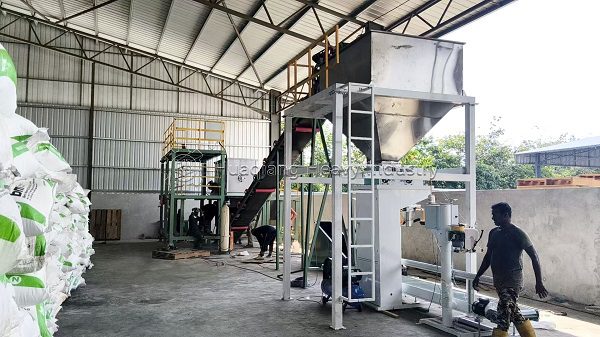
The packaging process is equally crucial. The granule temperature must be below 40℃ before packaging; otherwise, residual heat will continue to damage the microbial inoculum. Storage conditions also directly affect the shelf life of the microorganisms: temperature should be controlled between 5-30℃, avoiding exceeding 35℃; relative humidity ≤70%; use inner plastic and outer woven moisture-proof packaging. Apply as soon as possible after opening to prevent contamination by other microorganisms.
Bio-organic fertilizer is not simply an addition of “organic fertilizer + microorganisms,” but a comprehensive system encompassing microbial inoculum protection, secondary mixing, and temperature-controlled packaging. If you are building a bio-organic fertilizer production line, please contact us—we provide a complete set of equipment and process solutions for low-temperature granulation, post-addition spraying of microbial agents, and intelligent temperature-controlled packaging. A professional team will be on-site for commissioning, helping you achieve high-quality production with a viable bacteria retention rate of over 80% and an effective viable bacteria count far exceeding national standards.
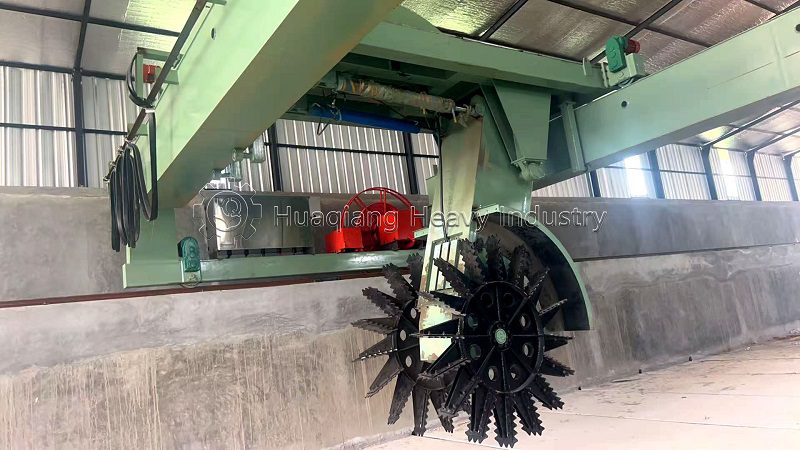
The successful production of bio‑organic fertilizer depends on the seamless integration of upstream composting, precise bacterial inoculation, and downstream packaging. It all begins with advanced fermentation composting turning technology, where a large wheel compost turning machine or animal manure compost turner ensures thorough aeration and temperature control during the composting process for animal manure, transforming raw manure (e.g., via a chicken manure fertilizer machine) into mature, pathogen‑free organic matter. This decomposed material then enters the bio‑inoculation stage, where functional strains are added through low‑temperature granulation or secondary mixing – a critical step in the overall fertilizer production process that protects microbial viability. With modern bio-organic fertilizer production technology, the live bacteria count can consistently exceed 0.2 billion/g, and microencapsulation or protective agents further enhance shelf‑life stability. Finally, the product is accurately weighed and sealed using an automatic fertilizer packing machine with moisture‑proof liners, ensuring that the beneficial microbes remain viable until application. By integrating these technologies – from turning and composting to inoculation and packaging – manufacturers can produce high‑quality bio‑organic fertilizer that not only enriches soil organic matter but also delivers targeted biological benefits, meeting the growing demand for sustainable, functional agricultural inputs.